





















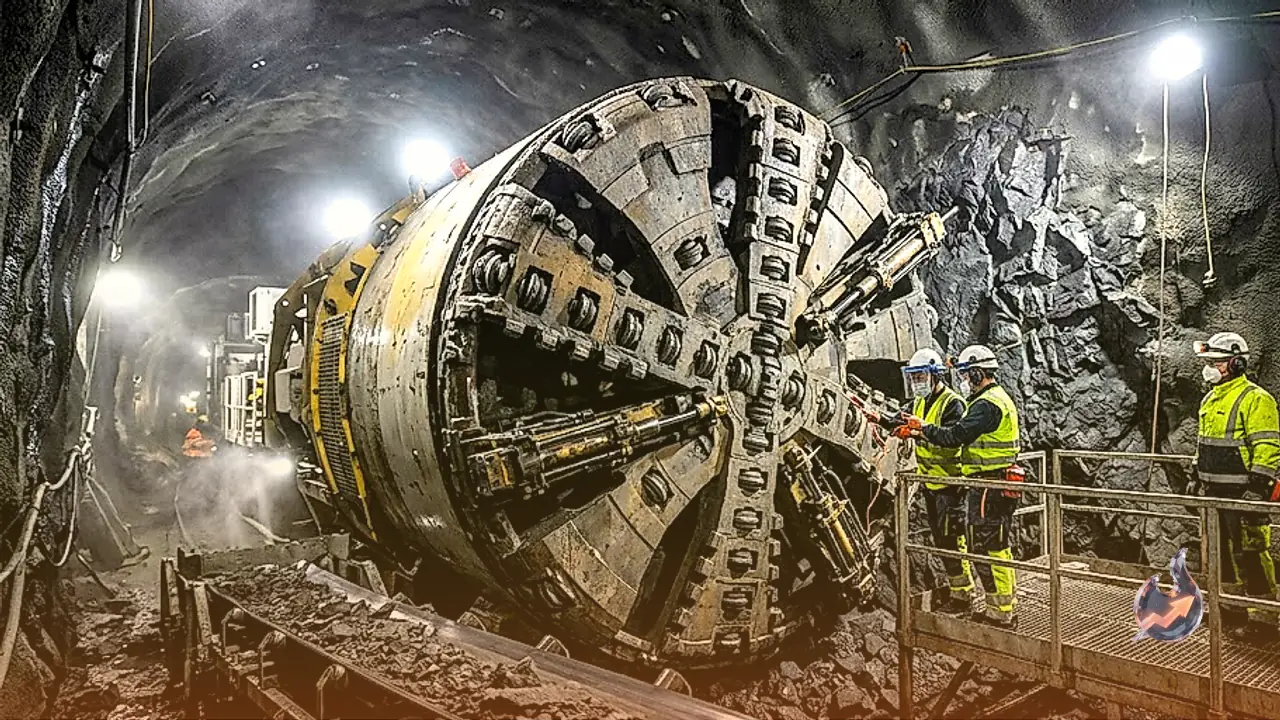

A powerful subterranean engineering equipment has been built in Wuhan, the capital of Hubei province, designed to drastically alter how deep tunnels are carved through formidable mountain ranges. Known as the Xianglong, this system represents the world's first hybrid tunnel boring and blasting machine, integrating traditional rotary cutting tools with automated drill-and-blast explosive technology within a single structure. While the technological breakthrough promises to accelerate complex infrastructure projects, subterranean safety experts have raised significant concerns regarding the operational hazards of combining high-voltage heavy machinery with live explosives underground.
Dual Mechanism: How the Xianglong Hybrid System Operates
Underground tunnel construction has historically relied on two distinct methods. The first is the conventional Tunnel Boring Machine (TBM), which utilizes a rotating cutter head to grind through rock layers gradually and extract debris. The second is the traditional drill-and-blast method, where boreholes are drilled into rock faces, packed with explosives, and detonated to clear space. The Xianglong machine integrates both approaches into a unified 4.5-meter diameter framework.
Developed jointly by Tsinghua University and a specialized division of the state-owned conglomerate China Railway Group, the machine was manufactured in Wuhan according to statements issued by the Hubei provincial government. Standard TBMs frequently encounter operational delays when striking ultra-hard rock formations or unstable, fractured geological zones, which can dull cutter heads or trap equipment inside tunnels for months or years. The Xianglong overcomes these bottlenecks by instantly switching to drill-and-blast mode upon encountering resistant strata, accelerating excavation speed through hard rock by an estimated 30%.
Safety Hazards: Why Engineers Warn of Massive Explosion Risks
Despite being lauded as an engineering milestone, technical safety specialists warn that operating a hybrid blasting machine deep inside subterranean passages carries severe operational risks. Housing high-voltage electrical distribution systems, heavy drilling apparatus, and controlled explosive stores within a single closed frame creates a volatile environment where minor mechanical faults could trigger catastrophic failures.
Experts highlight three primary hazards associated with the machine
- Electrical and Explosive Proximity: Operating high-voltage power lines adjacent to volatile explosive charges introduces a constant threat of accidental ignition via electrical arcs or short circuits.
- Methane and Friction Gas Risks: Subterranean mountain geological formations frequently conceal pockets of flammable methane gas. Heat and sparks generated by heavy mechanical friction during drilling could ignite these gases if they come into contact with stored explosives prematurely, turning the machine into a massive bomb.
- Geological Instability and Collapse: Repeated explosive blasts inside underground shafts risk fracturing surrounding rock structures beyond intended boundaries. Such structural weakness could cause total tunnel collapse, trapping and endangering hundreds of underground workers.
Strategic Infrastructure and Border Operations
The deployment of such technology comes amid extensive infrastructure projects in challenging terrain, including high-speed rail lines, hydroelectric dam complexes, and strategic subterranean facilities. Constructing deep tunnels across the Himalayan region adjacent to Tibet and border zones has long posed immense engineering obstacles due to extremely hard rock formations and unpredictable geological shifts.
The development of the Xianglong hybrid system underscores a push to complete difficult mountain projects within condensed timelines. By combining continuous mechanical cutting with targeted explosive clearing, the machine is designed to press through hard rock barriers where traditional equipment stalls. However, balancing rapid construction timelines against subterranean safety and geological stability remains a critical concern for engineers monitoring the technology.