





















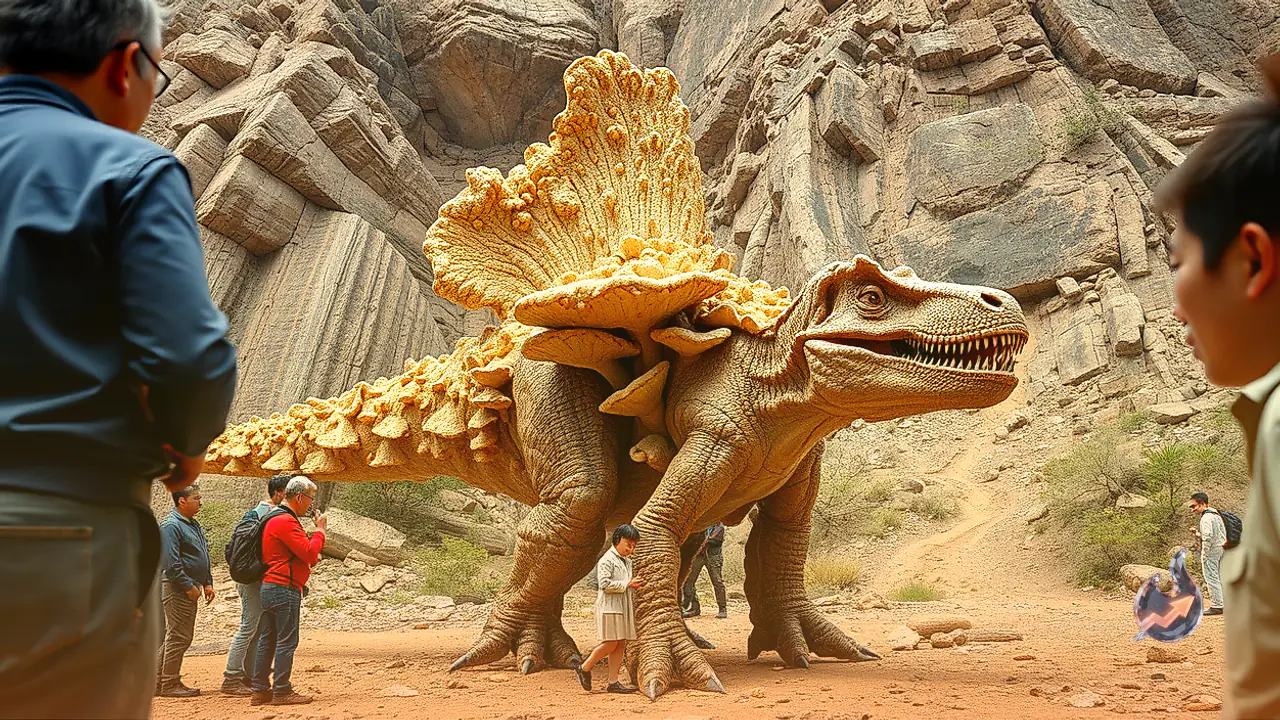

A remarkable evolutionary relic tracing back to the immediate aftermath of the dinosaurs has surfaced from the wilderness of southwestern China. Mycological researchers surveying remote woodlands have documented an exceptionally massive fungal species that remained hidden for approximately 6.5 crore years, or 65 million years. Designated as Dianjunus rex and colloquially referred to as D-rex, the newly characterized organism fundamentally challenges traditional thresholds regarding the physical dimensions achievable within the phylum Ascomycota. The fungus develops towering, upright fruiting bodies that climb to heights of 50 centimeters or 20 inches, reaching a total mass of 2.2 kilograms, which equates to nearly 4.9 pounds. Genetic lineage reconstruction reveals that this unprecedented decomposer trace its ancestral origin to just 10 lakh years, or 1 million years, following the global extinction that obliterated the non-avian dinosaurs.
Botanical Expeditions Across Yunnan Woodlands
The discovery emerged from methodical fieldwork conducted by scientists affiliated with the Kunming Institute of Botany across varying microclimates in Yunnan province. Research parties combed through temperate coniferous tracts situated near Damaidi and Yipinglang, while concurrently carrying out specimen sampling inside tropical rainforest zones near Nanbang. During these surveys, researchers encountered prominent, stark-white reproductive structures known as stromata protruding directly from the rhizosphere. These organisms were actively colonizing the woody root systems of Chinese cork oak trees, anchoring themselves firmly beneath the soil surface before pushing upward into the forest understory.
Within the fungal kingdom, ascomycetes constitute the single most expansive lineage, encompassing more than 64 thousand recognized species. Unlike standard agaric mushrooms that form umbrella-like caps, members of this division release their spores from specialized, microscopic sac-like cavities developed either across the outer surface or embedded within their robust stromata. The field team cataloged and transferred these specimens into the institute herbarium collection, subsequently isolating viable spores to observe growth morphology in laboratory settings alongside comprehensive whole-genome sequencing.
A Royal Moniker and a Novel Taxonomic Family
Morphological scrutiny combined with detailed phylogenomic mapping confirmed that the specimen represents an entirely novel genus and species nested inside the order Xylariales. Even more significantly, the finding warrants the erection of Dianjunaceae, an entirely distinct fungal family previously unrecorded in biological literature. Investigators selected the name Dianjunus rex to commemorate the ancient regional Dian kingdom while acknowledging the imposing, king-like grandeur of its physical form. In terms of evolutionary lineage, the closest known relative to D-rex is Graphostroma platystoma, an organism widely distributed across the northern hemisphere where it colonizes dead timber.
Dr. Indunil C. Senanayake, an associate professor at the Kunming Institute of Botany, remarked that this extraordinary species represents the new family Dianjunaceae and provides an exceptional window into the evolutionary dynamics of fungal gigantism. He emphasized that the finding underlines the sheer volume of undocumented mycological diversity that remains concealed across East Asian ecosystems. Fungi categorized under Xylariales are recognized for synthesizing specialized secondary metabolites and robust suites of extracellular enzymes. These biological agents break down resilient plant polymers, granting D-rex the physiological capability to digest seasoned, decaying wood with exceptional efficiency.
The Ecological Shift Following the Dinosaur Cataclysm
By applying molecular clock dating algorithms to the sequenced genome and comparing divergence markers against hundreds of existing fungal lineages, researchers traced the emergence of Dianjunaceae back approximately 6.5 crore years. This temporal window falls almost exactly 10 lakh years after the Cretaceous-Paleogene mass extinction event. That planetary cataclysm eliminated the dinosaurs alongside an immense fraction of terrestrial flora, triggering profound shifts in global biomes.
As explained by Dr. Senanayake, the massive die-off of global forests left an unprecedented accumulation of dead botanical matter across ground surfaces. This sudden surge in organic debris generated an ecological windfall for wood-rotting organisms, paving the way for specialized lineages to proliferate. Towering fifty centimeters above the surrounding detritus and ground cover provided D-rex with a distinct aerodynamic advantage, allowing its reproductive spores to catch passing air currents above the stagnant forest floor. While synthesizing such substantial biomass demands significant metabolic energy, the evolutionary payback in spore dispersal appears to have far outweighed the biological expenditure.
Hidden Mycological Wealth in Subtropical Woodlands
Published in the academic journal Frontiers in Fungal Biology, the study highlights the untapped biodiversity sheltered within China's subtropical wilderness. The region features intricate topography and stable microclimates that together act as an evolutionary incubator for complex fungal forms. Historically, investigative focus has gravitated toward commercially cultivated or medicinally valuable fungi, while the sheer physical difficulty of navigating rugged wilderness terrains hampered exhaustive sampling.
The identification of Dianjunus rex underscores how prehistoric ecological disruptions shaped surviving lineages that persist quietly in contemporary ecosystems. By piecing together the timeline of this colossal decomposer, botanists have gained valuable perspectives on how ancient catastrophes restructured terrestrial food webs and fueled adaptive milestones that endure across millions of years.