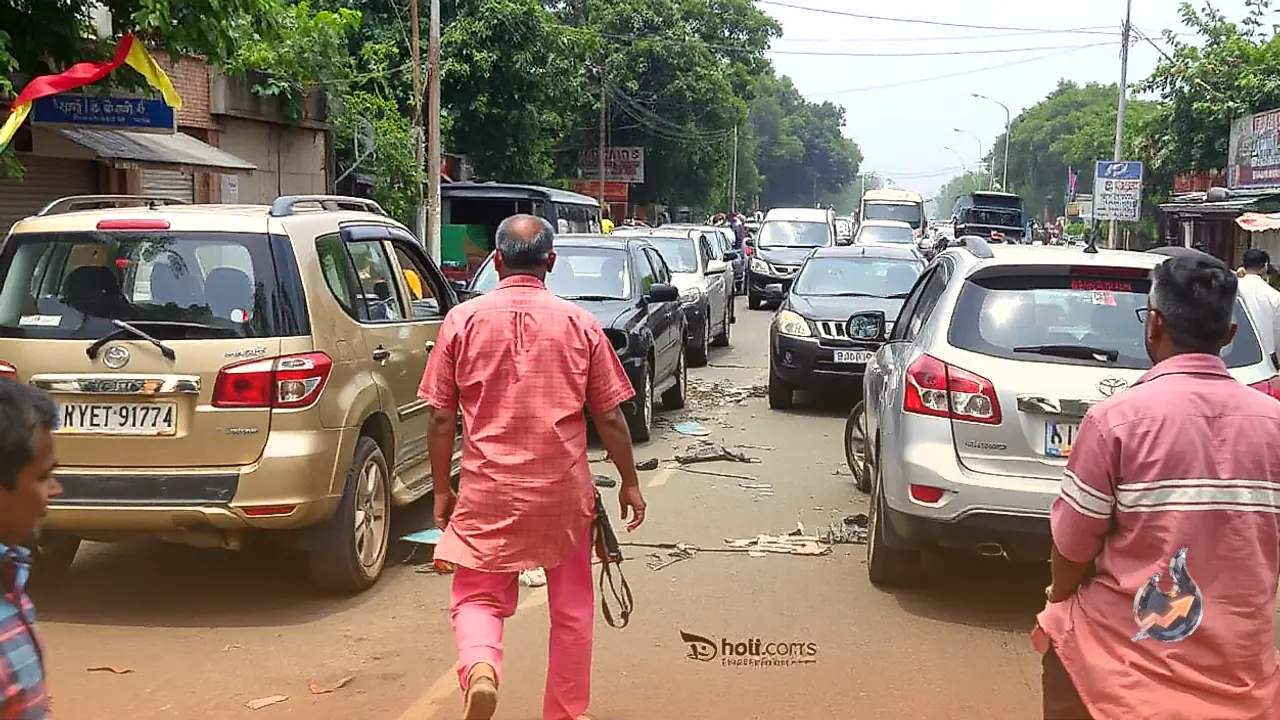
























A sophisticated cybercrime syndicate targeting vehicle owners through deceptive traffic challan notifications has been uncovered following an extensive technical probe. The investigation gained traction after a vehicle owner received an SMS demanding challan clearance, clicked the embedded hyperlink, and discovered that ₹2,21,000 had been siphoned directly from their credit card. An FIR was registered at the cyber police station on 28 November 2025, triggering inquiries that exposed a massive scam extending far beyond an isolated compromise.
Investigation Unearths 544 Complaints and ₹10 Crore in Losses
As cyber investigators analyzed technical trails, they determined that approximately 3,300 malicious text messages had been dispatched to potential victims. A broader review of national records revealed around 544 formal complaints sharing the same operational blueprint. Law enforcement verified that the criminal network had collectively cheated citizens out of more than ₹10 crore by exploiting people's desire to quickly settle traffic fines and clear pending regulatory liabilities without verification.
Multiple Deceptive Baits Used to Target Digital Users
The perpetrators designed multiple pretexts to mislead the public, leveraging routine everyday services and regular digital transaction habits. While bogus traffic challan notices served as the primary lure, the fraudsters also circulated phishing links masquerading as parcel delivery verification alerts and promotional reward point schemes. Recipients eager to verify pending parcels or settle supposed penalties fell into the trap, inadvertently exposing their personal credentials and credit facilities to unauthorized withdrawals.
Automated Dispatch Network Operated via ‘Vingo Cash’ App
A central breakthrough in the inquiry revealed the operational mechanics used to distribute thousands of phishing text messages simultaneously. The syndicate leveraged a mobile application called ‘Vingo Cash’. Whenever an ordinary smartphone user attempted to redeem rewards on this platform, the application automatically commandeered the device to dispatch between 9 and 12 text messages within roughly 30 seconds. The users were paid a nominal sum of ₹1 to ₹3 in exchange, unaware that their mobile devices were being weaponized to broadcast illicit phishing links to wider audiences across the country.
Financial Trails Trace to Kuwait National Bank and Mumbai Firm
Tracking the illicit monetary movement led investigators outside typical consumer banking channels. The financial investigation identified funds routed toward an account associated with a National Bank of Kuwait. In addition, transaction networks directly involved bank accounts registered to a Mumbai-based entity named Shree Balaji Enterprises. Scrutiny of corporate banking activity showed that accounts belonging to Shree Balaji Enterprises handled transactions involving more than 41,000 individual user accounts over an exceptionally condensed window of just three days.
Five Key Operatives Arrested Along With Massive Cache of Evidence
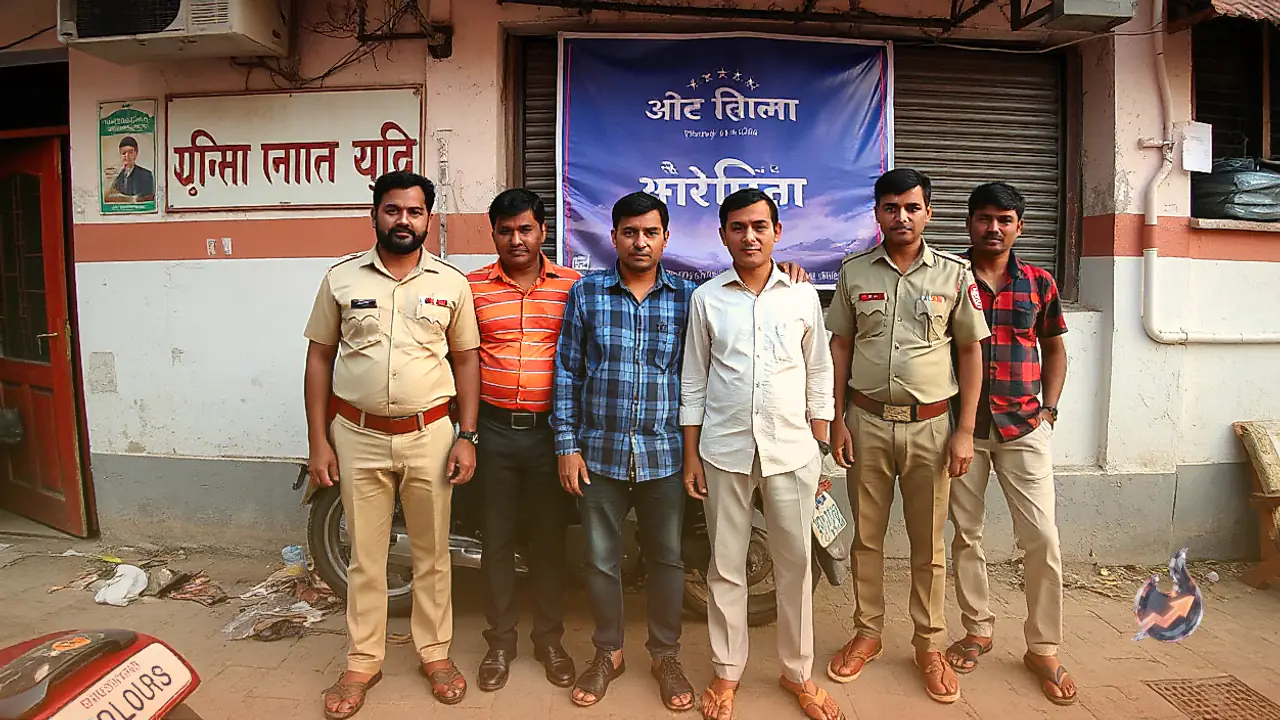
Police officers took five individuals into custody for coordinating distinct layers of the fraudulent operation. The arrested men have been identified as Moti Singh Baghela, Harshpal, Vicky, Vishal Das Vaishnav, and Brajesh Kumar. Formal allegations state that these suspects were actively involved in arranging mule bank accounts, producing fake corporate paperwork, and managing illicit fund transfers across multiple channels.
Raids conducted on the suspects yielded substantial physical and digital evidence. Officers seized 15 mobile handsets, a tablet computer, 59 active debit cards, 52 bank passbooks and chequebooks, alongside 14 corporate rubber stamps. The recovery also included 5 POS terminals, 8 QR code scanners, a gold chain, and a motor vehicle used by the syndicate, formally bringing the operations of this ₹10 crore phishing ring to an end.