





















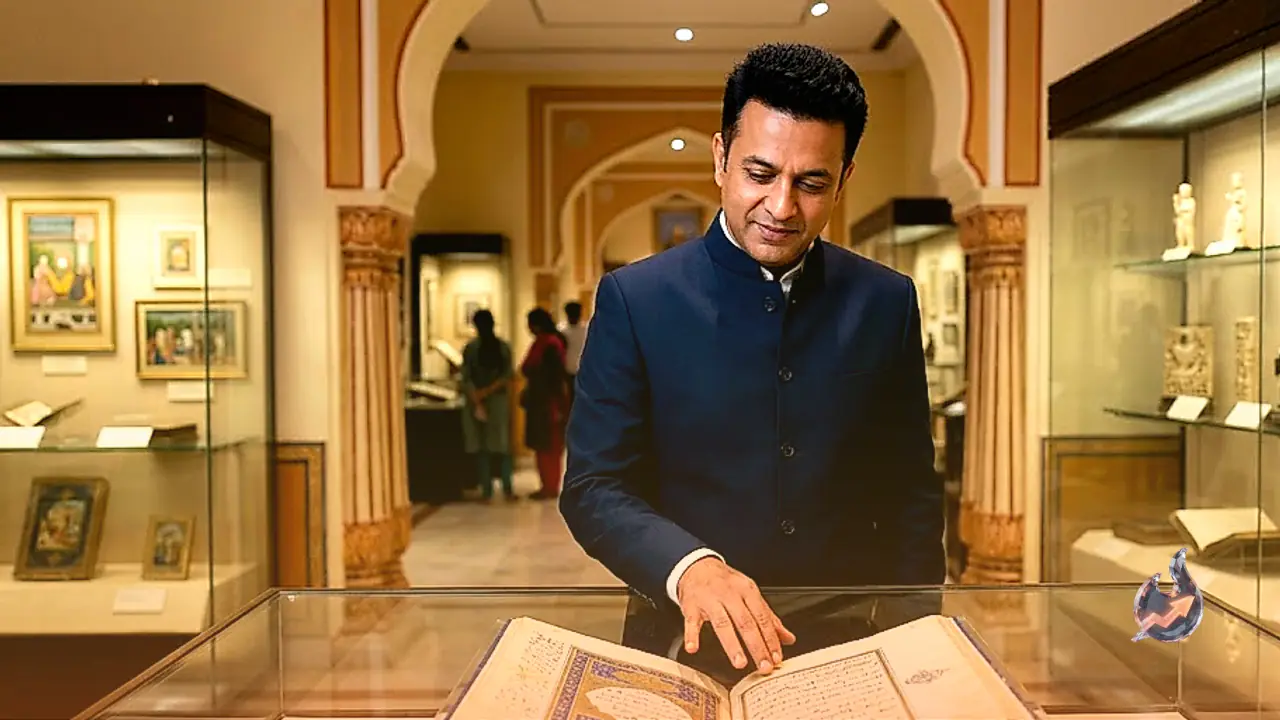

Walking through the halls of Hyderabad's Salar Jung Museum, few visitors realise that every single artefact on display carries the weight of one man's four-decade obsession. It is among the rare museums anywhere in the world that was not built by a government or an institution, but assembled entirely by a single individual.
A collector who spent four decades chasing rare treasures
At the heart of this extraordinary collection was Nawab Mir Yousuf Ali Khan, better known to the world as Salar Jung III. He served as the Prime Minister of the Hyderabad State, yet alongside his official duties he spent more than 40 years hunting for and acquiring rare objects from across the globe. He poured a large share of his considerable personal fortune into buying artefacts, historical texts, paintings and manuscripts from Europe, the Middle East, the Far East and various Asian countries. According to Nagendra Reddy, Director of the Salar Jung Museum, that relentless passion is why the museum today holds more than 43,000 rare artefacts and nearly 50,000 rare books and manuscripts, a collection so vast that it still leaves scholars and visitors astonished.
From the Veiled Rebecca to the Musical Clock
Several historic pieces inside the museum continue to draw travellers from around the world. Chief among them is Italy's celebrated marble statue, "The Veiled Rebecca," which remains one of the most sought-after exhibits. Alongside it sit France's double wooden statue "Mephistopheles and Margaretta," jewel-studded weapons that once belonged to Mughal emperors, and the famed 19th-century "Musical Clock." Rounding out the display are porcelain pieces gathered from various Asian countries and finely carved ivory work, both of which add to the museum's remarkable variety.
Declared an institution of national importance in 1961
After Salar Jung III passed away in 1949, a special trust was set up to look after his priceless private collection so that it would not be scattered or lost. Once the trust was formed, the collection was opened to the public. A few years later, in 1961, an Act of the Indian Parliament declared it an institution of national importance, cementing its significance further. Standing on the banks of the Musi River, the museum today is no longer just a symbol of Hyderabad's pride; it has grown into a cultural heritage of global standing.
Salar Jung III's story is a reminder that when genuine passion, patience and dedication drive a single person's pursuit, that one individual can end up writing a piece of history all on their own.