























Located near Aurangabad district in Maharashtra, the Ajanta Caves stand as an extraordinary testament to ancient Indian architecture and Buddhist heritage. Dating back nearly 2,000 years, this monolithic cave complex continues to captivate visitors and historians worldwide through its masterfully carved rock structures and exquisite wall paintings. Cut directly into the cliff faces, the site represents one of the finest achievements of ancient craftsmanship.
Rock-Cut Architecture: Chaityas and Monastic Viharas
The engineering marvel of the Ajanta Caves lies in their construction, as artisans excavated solid rock without using modern machinery or external building materials. The complex primarily comprises two types of structures: Chaitya-grihas, which served as vaulted congregational prayer halls, and Viharas, which functioned as residential monasteries. Inside these spaces, massive hand-carved pillars, elaborate stupas, and impressive statues of Buddha demonstrate remarkable spatial planning and stone-cutting precision. Beyond their ritual significance, these caves served as an active intellectual hub where Buddhist monks resided, studied scriptures, and practiced meditation, forming a vibrant sanctuary for religious learning.
Masterful Murals Depicting Jataka Tales and Ancient Life
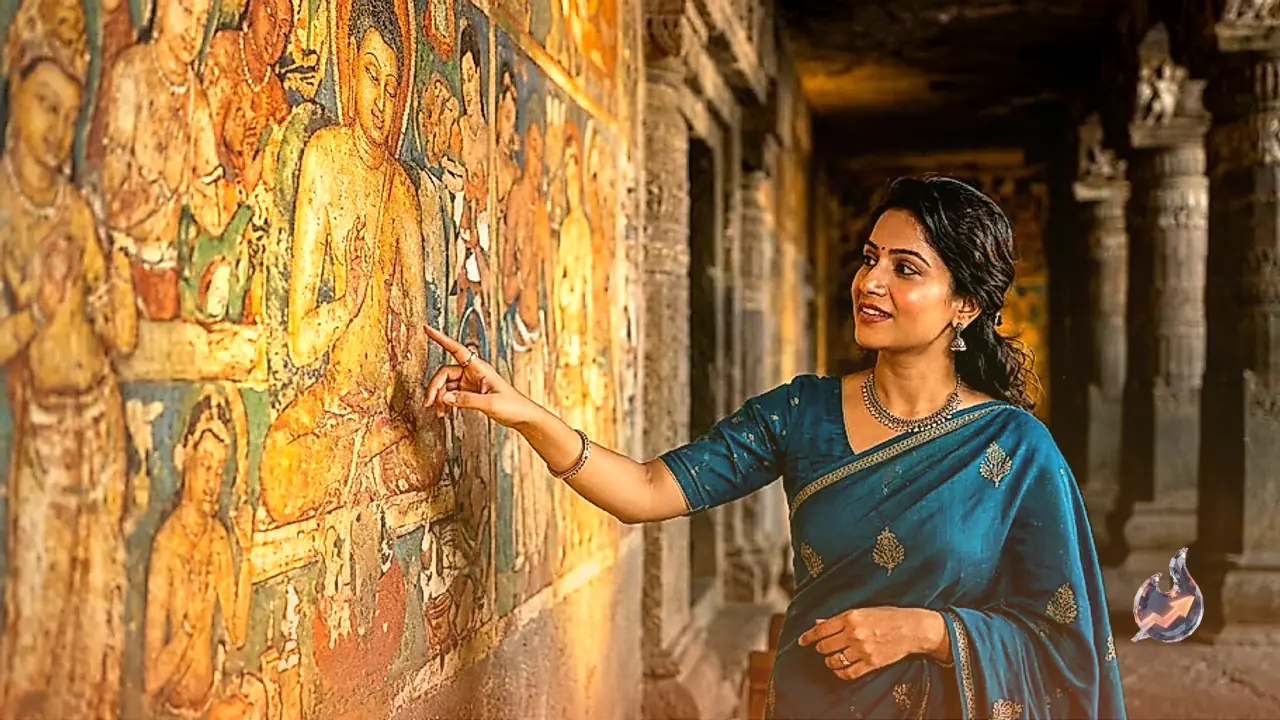
While the stone carvings display monumental architecture, the delicate wall and ceiling murals of Ajanta elevate the complex to a pinnacle of global art history. The frescoes vividly depict key milestones from the life of Buddha along with various Jataka tales, which narrate his previous incarnations. Remarkably, these artworks also provide a rare historical lens into the daily life of ancient Indian society, capturing contemporary fashion, ornate jewelry, hairstyles, court scenes, and social customs. Renowned for their delicate linework, expressive emotional depth, and masterful blend of natural pigments, the Ajanta paintings remain a cornerstone in the evolution of Indian visual arts.
Chronological Evolution and UNESCO World Heritage Legacy
The development of the Ajanta Caves spanned multiple distinct historical eras rather than a single construction campaign. The earliest Buddhist sanctuaries date back to the 2nd and 1st centuries BCE. Centuries later, during the golden age of the Vakataka dynasty, a major revival led to the creation of some of the most elaborately decorated caves. This multi-phase evolution reflects the shifting aesthetic and cultural trends of ancient India. In recognition of their unparalleled artistic significance and historical value, UNESCO designated the Ajanta Caves as a World Heritage Site in 1983. Today, Ajanta's artistic legacy continues to inspire architectural and painterly traditions across Asia and the rest of the world.