






















Law enforcement authorities are confronting a sophisticated model of cross-border underworld operations following another targeted execution on the streets of South Delhi. On Monday, an individual was fatally attacked in the Aya Nagar locality, triggering immediate security alarms across the capital. Shortly after the killing, an online message surfaced wherein Himanshu Bhau, an operative currently based in the United States, purported to claim accountability for orchestrating the hit. The incident marks the second major killing within approximately a month to be linked to the overseas-directed network.
Spate of Attacks Alarms Capital's Security Apparatus
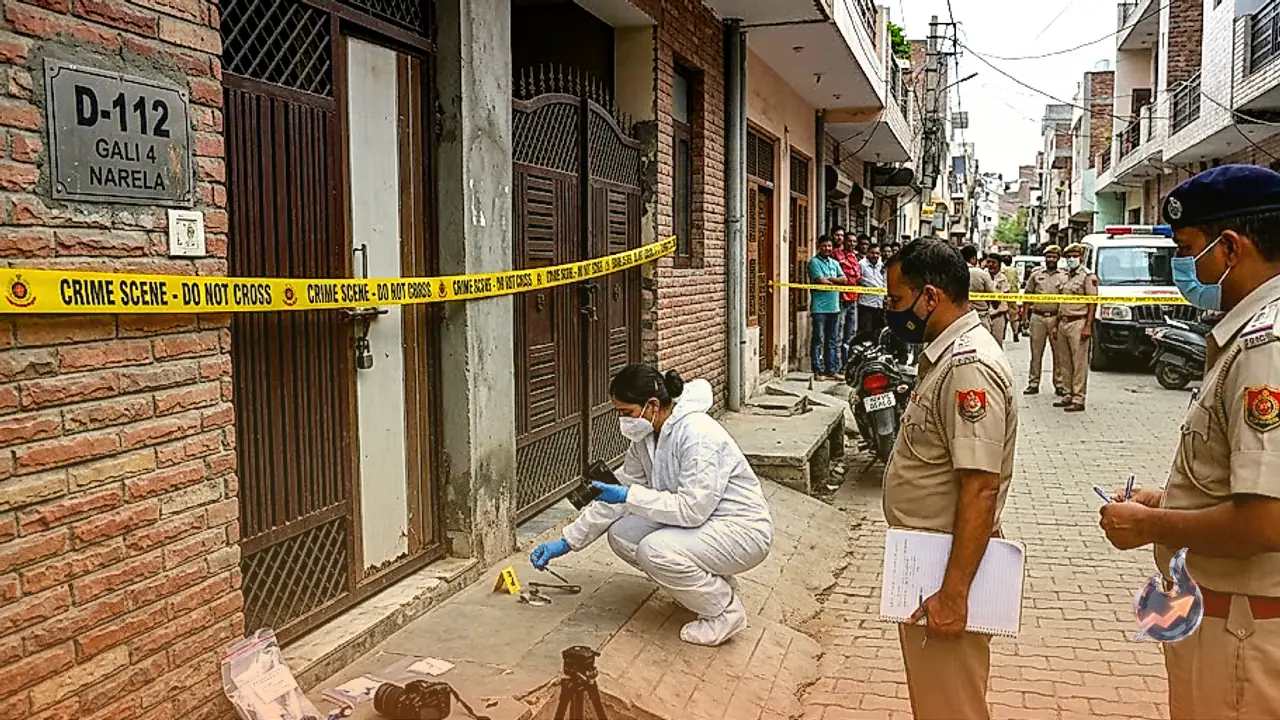
The Aya Nagar incident follows closely on the heels of an earlier strike in the Narela neighborhood, where a property dealer was killed in broad daylight. In that case as well, the exact same syndicate claimed credit through digital platforms shortly after the crime. The rapid succession of these two violent episodes has intensified vigilance across specialized investigation wings. Inquirers are focusing their resources on dissecting how an individual residing overseas manages to orchestrate ground-level operatives and shooters situated thousands of miles away in India.
Detectives are examining the authentic nature of the online declaration to identify the digital intermediaries responsible for disseminating it. A central thrust of the probe remains pinpointing the actual shooters deployed at the scene, tracing their supply lines, and uncovering who transmitted their instructions. Intelligence personnel suspect that masterminds stationed abroad depend on fragmented operational chains, ensuring that financial support, weaponry, and surveillance coordinates reach locally recruited hitmen through insulated channels without exposing the core leadership.
Extortion Waves, Open Shootings, and Stringent MCOCA Sanctions
Pattern assessments by investigative wings reveal that across 2025 and 2026, the syndicate's footprint was repeatedly detected during inquiries into threatening calls, extortion schemes, and intimidation firings across sectors of Delhi and adjoining Haryana. Modern gang dynamics reveal that key organizers do not require physical proximity to the target area. Instead, relying on secured telecommunication conduits from foreign sanctuaries, they assign designated assignments to subordinate coordinators, who then mobilize local recruits to carry out street-level violence.
To dismantle this multi-tiered infrastructure, the Delhi Police Crime Branch invoked the rigorous Maharashtra Control of Organized Crime Act against the network. Their wide-ranging inquiry identified multiple affiliated hitmen, logistical couriers, and underground collaborators, bringing nearly a dozen accused under direct prosecutorial scrutiny. Officials emphasize that the threat extends beyond an isolated group, reflecting a web of tactical alliances negotiated among varied regional factions.
Strategic Alignment to Challenge Dominant Gang Blocs
Law enforcement is closely tracking the emerging coalition dynamics surrounding the syndicate. Intelligence records indicate recurring touchpoints connecting the outfit with networks led by Sahil, Neeraj Faridpur, the Bambiha crew, Kaushal Chaudhary, Neeraj Bawana, Yogesh Kadyan, and Tillu Tajpuria associates. Authorities are analyzing the operational depth of these bridges to determine how intelligence, safe houses, and illicit resources are exchanged between them.
Specialized cells view this consolidation as a calculated attempt to erect an alternative criminal coalition capable of countering the expansive footprint of the Lawrence Bishnoi cartel. Nonetheless, investigators caution that the precise durability and operational scope of these multi-gang treaties remain an active subject of ongoing intelligence gathering, as detectives ascertain whether the pacts function as mere temporary arrangements or durable syndicates.
Network Maintained via Dozens of Handsets and Covert Money Trails
Technical inquiries spearheaded by the Crime Branch highlighted the extensive reliance on foreign-based telecommunications to direct domestic illegal enterprises. Disclosures from the ongoing investigation revealed that a key figure associated with the syndicate utilized approximately 35 mobile handsets while operating in the United States. These devices were constantly cycled to distribute instructions, transmit target files, and coordinate ground assignments without generating easily detectable patterns.
Concurrently, sleuths are tracing the monetary mechanics facilitating these cross-border operations. Investigators are evaluating the conduits through which informal hawala channels transfer funds to sustain shooters, lease hideouts, and procure sophisticated firearms. Disrupting these cash pipelines remains a pivotal objective for agencies striving to cripple the logistics behind sudden violent strikes.
Early Induction into Crime and Global Tracking Efforts
Himanshu Bhau, originating from Ritoli village in Haryana's Rohtak district, entered the underworld at the remarkably young age of 17. Bureau dossiers record that in 2020, he engineered an escape from a juvenile observation home. Following that breakout, he steadily accumulated an extensive dossier containing more than two dozen criminal charges spread across Haryana jurisdictions.
His rap sheet quickly evolved from localized delinquency to grave offenses, including charges of murder, attempted murder, and illegal weapons possession, propelling him onto the radar of national intelligence bodies. His international operations prompted raids by the National Investigation Agency at his ancestral residence and affiliated properties. He is currently subject to an active Interpol Red Corner Notice, as Indian external affairs and security bodies pursue legal and diplomatic pathways to secure extradition and dismantle his cross-border criminal enterprise.
Scrutiny on Key Accomplices Abroad
The wider probe also maintains a sharp focus on identified close confidants, notably Yogesh Kadyan, hailing from Haryana's Jhajjar district. Having drawn law enforcement attention at an early age due to alleged complicity in serious offenses, Kadyan is suspected of securing passage to the United States using forged travel credentials and a counterfeit passport. From abroad, he is believed to play a critical role in sustaining logistics and coordination for the network, making him a major target in the continuing international crackdown.