




















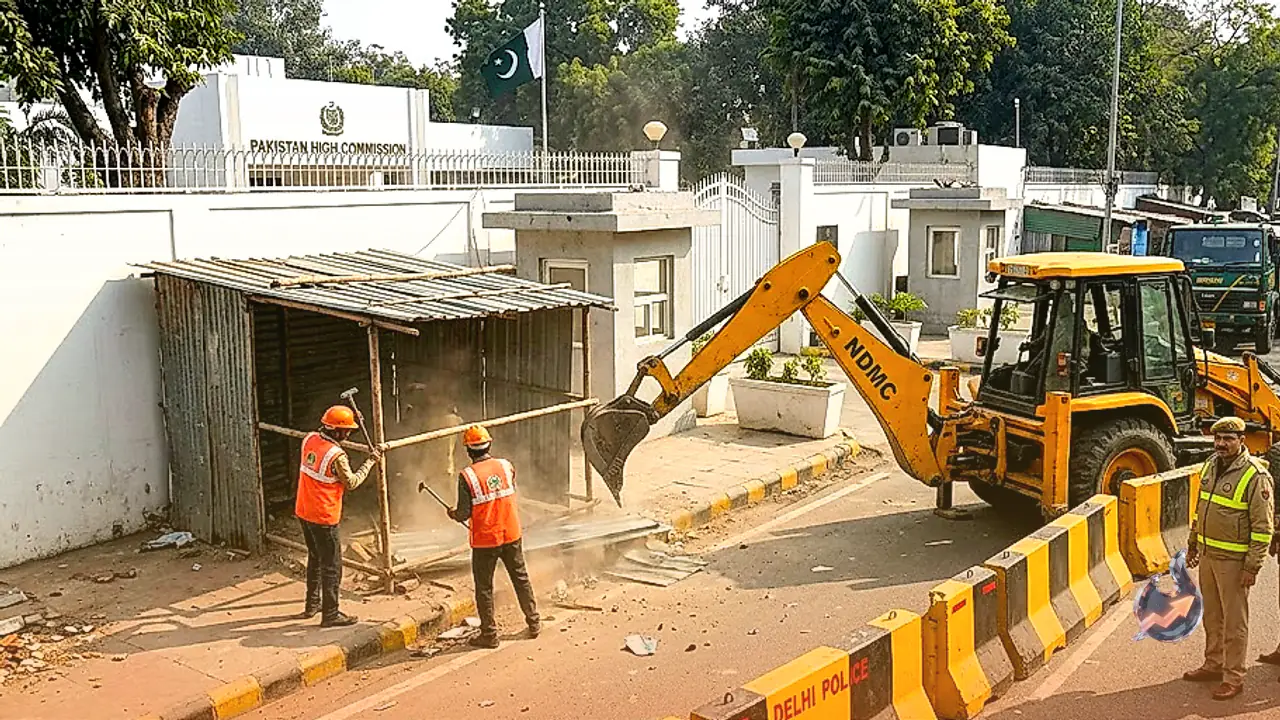

Illegal encroachments located right outside the Pakistan High Commission in New Delhi have been completely cleared away, alongside major adjustments to the outer security perimeter. This development occurred exactly three days after security structures outside the Indian High Commission in Islamabad were arbitrarily removed. Senior diplomatic sources revealed that India's action represents a well-calculated, deliberate, and balanced tit-for-tat response. Both nations frequently adjust outer security arrangements surrounding diplomatic missions to exert diplomatic pressure. New Delhi's decisive posture underscores its readiness to address any form of provocation without delay.
Background and Drivers of the Retaliatory Action
Diplomatic friction between India and Pakistan has historically remained a sensitive affair. The immediate trigger for the present standoff emerged from Islamabad, where local authorities removed security barricades standing outside the Indian High Commission without offering any valid rationale. Reacting firmly, India initiated parallel administrative measures in New Delhi. Unauthorized structures had persisted outside the Pakistan High Commission premises for several years. By clearing these encroachments immediately, the administration delivered an unambiguous message that diplomatic engagements operate strictly on parity. The swift action signals to Pakistan that unilateral disruptions will not pass unaddressed.
Historical Context of Diplomatic Pressure Tactics
Modifying physical security layers or clearing external encroachments remains an established instrument of quiet diplomatic leverage. Historically, both countries have resorted to similar measures without issuing formal public statements. Previous instances of mutual pressure have included downsizing diplomatic personnel and support staff contingents on a reciprocal basis. Other recurring tactics comprise removing traffic blockades, curtailing parking privileges, intensifying vehicular inspections around mission premises, and instituting localized administrative restrictions. Top intelligence and diplomatic analysts note that while these actions avoid direct kinetic confrontation, they effectively convey a stern diplomatic stance to the counterparty.
Implications for Bilateral Relations and Mission Operations
This latest diplomatic episode highlights the ongoing vulnerability of bilateral ties. Officials point out that altering physical security structures serves as a mechanism to apply controlled diplomatic pressure. Because such administrative actions are fully reversible, the security arrangements can be adjusted or restored whenever circumstances demand. Crucially, these steps are executed without interrupting the core operational functioning of the diplomatic missions. Through this clear-cut response, New Delhi has demonstrated operational resolve and firm administrative capacity.