





















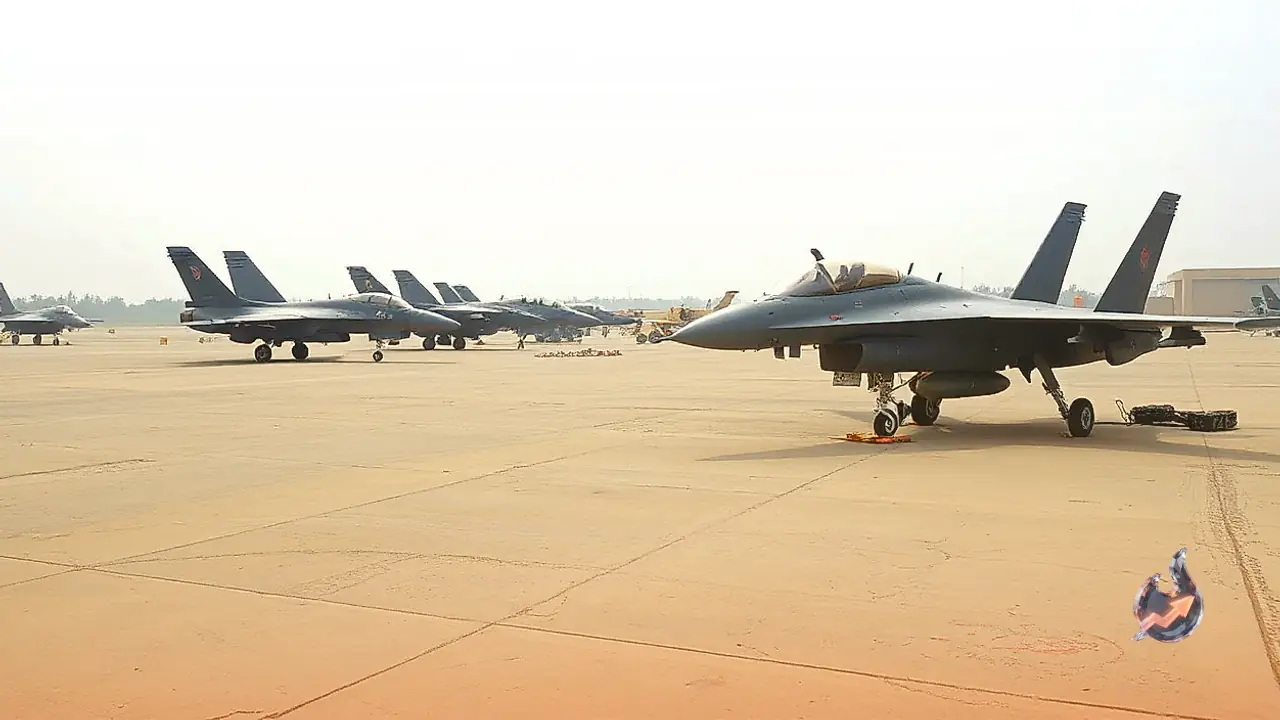

Unmanned and automated systems are set to play a decisive role in future aerial campaigns, prompting the Indian Air Force to accelerate efforts to upgrade its combat capabilities. The military branch has officially presented its long-term roadmap for unmanned and autonomous systems to the domestic defense sector. This comprehensive plan incorporates 16 distinct varieties of advanced drone systems, categorized neatly into four separate groups. A special meeting held at Vigyan Bhawan in New Delhi brought together senior defense ministry officials alongside representatives from over 100 industrial firms. The core objective of the Air Force is to foster cutting-edge technology creation from within the country. By combining traditional fighter aircraft with the sheer strength of drone technology, military planners intend to erect an impenetrable aerial defense shield.
Categorization of drone systems and the Pokhran connection
Modern warfare can no longer be fought relying solely on conventional fighter jets, which has driven the Air Force to significantly broaden its strategic scope. The newly released roadmap identifies 16 distinct system types categorized across strategic, operational, tactical, and low-cost applications. This framework serves as the direct logical progression of the Dronathon event held in Pokhran on September 14, 2026. The entire blueprint has now been formally communicated to startups and MSMEs through an informative booklet. This initiative directly communicates to young innovators the specific kinds of weaponry and gadgets the military will require in the coming days so they can align their research accordingly.
How the combination of crewed and uncrewed aircraft changes combat
Future operations will witness crewed and uncrewed aircraft executing joint coordinated strikes against hostile targets. The Air Force envisions creating networked systems where fighter pilots can directly issue operational commands to entire drone swarms. This capability will effectively confuse and overwhelm enemy radar networks and air defense systems stationed across the border. During the Vigyan Bhawan gathering, industrial leaders were informed of the urgent requirement for indigenous propulsion systems and autonomous software. Manufacturing these core technologies domestically eliminates reliance on foreign suppliers, ensuring that supply chains remain entirely uninterrupted during any potential emergency.
The push for self-reliance and timely technological integration
Air Marshal Premkumar Krishnaswamy, Director General of Weapon Systems at Air Force Headquarters, presented the overarching strategy to the public. He stated bluntly that achieving self-reliance in drones and autonomous systems is no longer just a conceptual idea but an operational necessity. The Air Marshal made it clear that India's air power is rapidly accelerating toward comprehensive automation. He urged defense manufacturers and research institutions to expedite their workflows. The ultimate goal is to ensure that every innovation developed within a laboratory quickly transitions into active military operations, thereby securing the nation's borders through timely technological deployments.