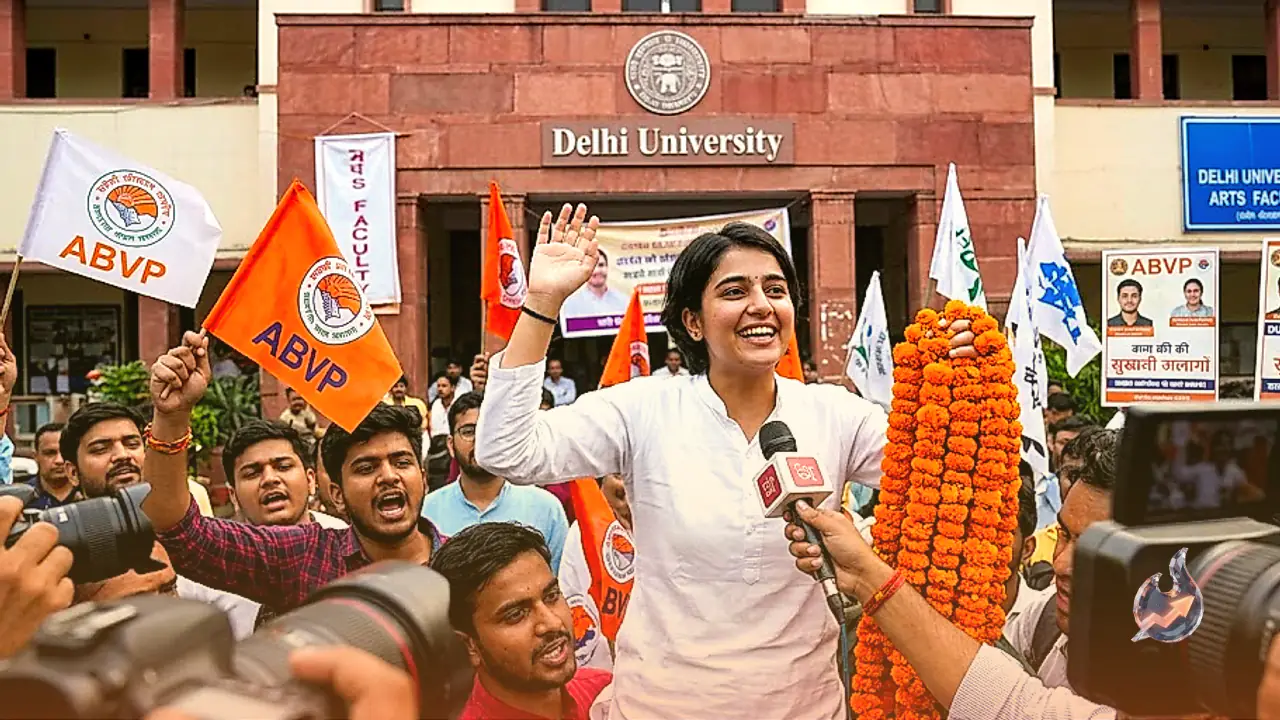





















Every September, the sprawling campus of Delhi University transforms into an intense political arena that rivals mainstream legislative elections in sheer scale and visibility. With colorful campaign pamphlets carpeting walkways, posters covering public boards, and student organizations chanting spirited slogans, the pursuit of student union leadership becomes a high-stakes competition. The fiercely fought battle for the top four executive posts, comprising the president, vice president, secretary, and joint secretary, generates massive excitement across the youth landscape of the national capital.
To an outside observer, it often appears that every single institution under the university banner automatically participates in this central political exercise. The ground reality, however, reflects a far more intricate administrative network. Spanning the historic North Campus, the vibrant South Campus, and dozens of colleges scattered across various corners of the city, the university houses institutions that follow fundamentally different governance models. While a majority of mainstream colleges form the core voting base of the central union, several premier institutions intentionally keep their distance and manage internal democratic mechanisms entirely on their own.
Institutions Powering The Central Student Union Ballot
The central student union represents the collective student body of standard, non-professional undergraduate colleges and central faculties operating under the university. These colleges provide the bulk of voters as well as the active political cadre that powers campus campaigns.
The institutions actively participating in this central framework include
- North and South Campus colleges: Historic institutions such as Hindu College, Hansraj College, Kirori Mal College, Ramjas College, Miranda House, and Daulat Ram College play an instrumental role in every election cycle. They are joined by southern institutions like Sri Venkateswara College, Atma Ram Sanatan Dharma College, and Deshbandhu College, ensuring strong representation across multiple geographical clusters.
- Voting qualifications: Regular students enrolled in their first and second years across these participating institutions exercise their franchise directly to elect the central office-bearers. Additionally, enrolled students across central academic departments, spanning arts, sciences, and social sciences faculties, actively participate in casting their ballots for the central panel.
Key Institutional Reasons For Opting Out Of Central Campus Politics
Despite the pervasive festive atmosphere of election season, certain premier academic institutions remain completely detached from central campaigning. Their decision to step back stems from foundational administrative autonomy, distinct educational priorities, and specific institutional charters.
The primary structural reasons behind this separation include
- Autonomous and minority status: Elite institutions like St. Stephen's College maintain a deliberate distance from central campus politics to safeguard their institutional independence and distinctive internal administration. Similarly, colleges managed by Sikh minority governing bodies follow their own specialized management guidelines and prioritize internal organizational selections over centralized student union elections.
- Internal councils in women's colleges: Premier women's institutions, most notably Lady Shri Ram College, consciously avoid the high-spending environment and aggressive rhetoric associated with central campaigning. They favor structured internal student councils and focused collegiate debates, ensuring an uninterrupted and peaceful academic environment on campus.
- Specialized medical and technology wings: Professional schools like Maulana Azad Medical College, University College of Medical Sciences, and the Faculty of Technology operate under dedicated professional regulations and rigorous training frameworks. Their demanding clinical and technical schedules make participation in mainstream student politics unfeasible.
- Distance education exclusions: Learners enrolled under the School of Open Learning represent a massive proportion of the total student body. Because they pursue their academic credentials through non-formal and correspondence streams, they are structurally excluded from participating or voting in the central campus election.