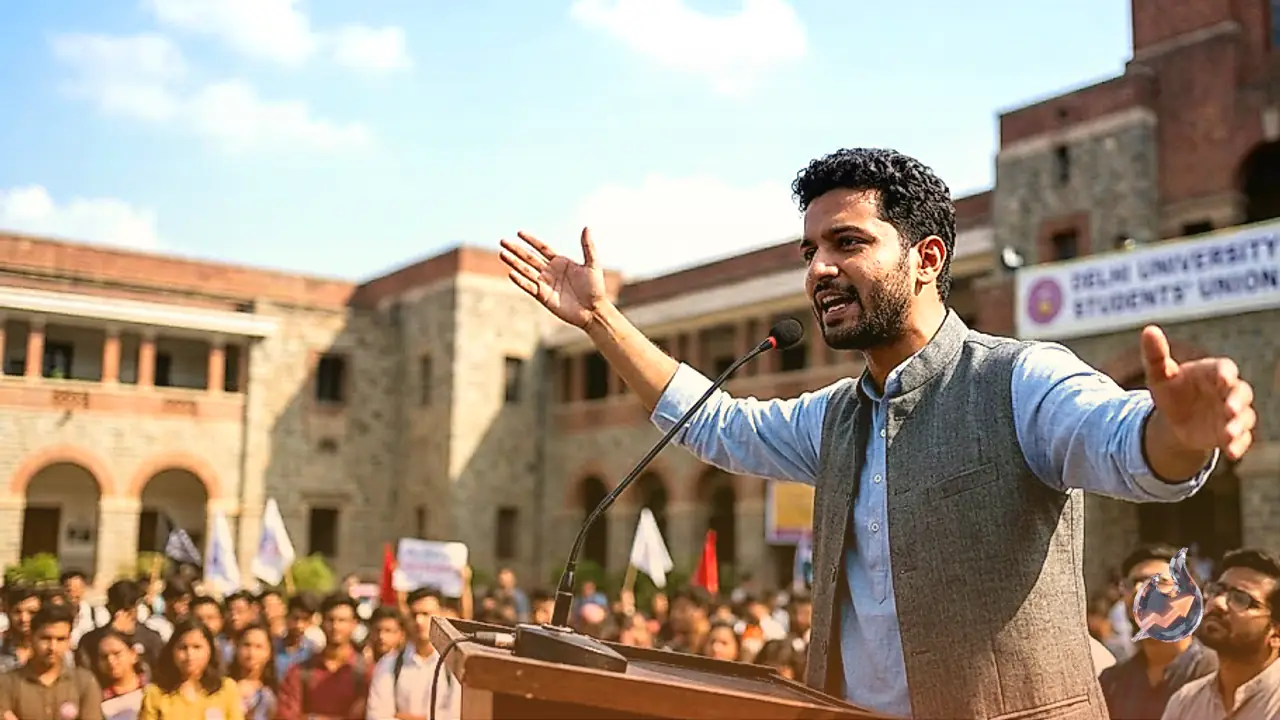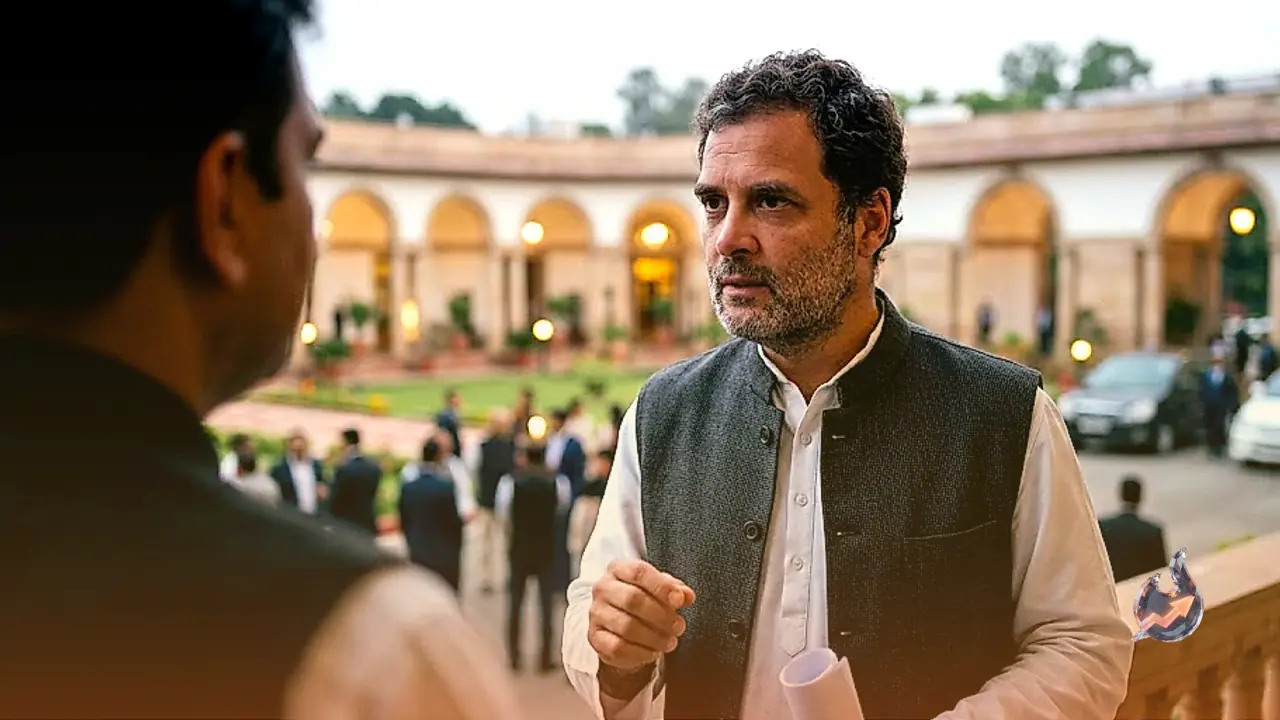





















A sharp political confrontation has broken out following statements made by former Vice President Hamid Ansari during a commemorative gathering at the India Islamic Cultural Centre in New Delhi. Addressing the third AG Noorani Memorial Lecture on September 18, Ansari referred to a historical remark by former Prime Minister Jawaharlal Nehru, stating that the primary hazard confronting India is not communism or leftist thought, but right-wing communalism. The remarks triggered swift and intense counterattacks from prominent Bharatiya Janata Party figures and right-wing organisations, who questioned Ansari's intentions and perspective.
The AG Noorani Connection and Nehru's Historical Precedent
Reflecting on the legacy of constitutional expert, author, and political commentator AG Noorani, Ansari highlighted his intellectual contributions. He specifically referenced Noorani's 2019 book, 'The RSS: A Menace to India', noting that it stood out as perhaps the author's final major published work. Drawing directly from the context laid out in the book's preface, the former Vice President revisited a crucial observation originally made by former Prime Minister Jawaharlal Nehru.
According to Ansari, Nehru had addressed a gathering of External Affairs Ministry officials regarding the key challenges ahead for the nation. During that interaction, Nehru had asserted that the true challenge confronting India did not stem from left-wing movements or communism, but from Hindu right-wing communal forces. Ansari brought this historical assessment into focus to draw parallels with modern governance and social dynamics in India.
Concerns Over Civic Nationalism Giving Way to Cultural Hegemony
Ansari broadened the scope of his address beyond historical quotations, expressing grave concern regarding the broader transition taking place in contemporary Indian polity. He warned that the nation appears to be steadily moving away from its foundational principles of civic nationalism toward cultural nationalism. According to Ansari, patterns of governance and political conduct have emerged in recent times that directly subvert well-established tenets of constitutional and civic unity.
He elaborated that an electoral majority is increasingly being interpreted and projected as a religious majority, creating an environment that seeks to establish a monopoly over political authority. Such approaches, Ansari pointed out, result in the categorisation and division of citizens along religious lines, fueling intolerance while breeding alienation, insecurity, and distance among minority segments of the population. Highlighting several recent developments across the country, he emphasized that such ideological shifts require determined resistance on both legal and political fronts.
Union Minister Kiren Rijiju and BJP Leaders Issue Fierce Rebuttals
The remarks drew an immediate backlash from the ruling Bharatiya Janata Party leadership, with several figures openly challenging Ansari's track record and rhetoric. Union Minister Kiren Rijiju criticized the former Vice President, arguing that such political stances represent a selective and partisan lens. Taking direct aim at the remarks, Rijiju stated, “That is the biggest problem. They will not speak a single word about fundamentalists, religious fanatics, extremists and separatists.”
Joining the offensive, BJP leader Pradeep Bhandari sought to link Ansari's assertions to the broader ideological playbook of the Congress party. Bhandari claimed that Ansari's critique mirrors the sustained political narrative championed by Congress strategists over the years. Pointing back to a 2009 episode involving remarks linked to Rahul Gandhi, Bhandari accused the principal opposition party of attempting to build political capital around the concept of 'Hindu terror'. He asserted that Ansari's speech was merely an extension of that same long-running political strategy.
In a parallel criticism, BJP leader Neelam Sonkar described the remarks as unfortunate and unwarranted. She remarked that Ansari has previously engaged in rhetoric centered on Hindu-Muslim divides and communal fault lines, urging him to look at the ground reality of social cohesion and nation-building rather than making divisive assertions.
VHP Emphasizes India's Deep-Rooted Culture of Pluralism and Tolerance
The Vishva Hindu Parishad also weighed in with strong objections through its senior leader Surendra Jain. Rebutting Ansari's claims, Jain underlined that Indian civilization is fundamentally anchored in tolerance, inclusivity, and accommodation for diverse faiths and practices. Challenging the premise of Ansari's thesis, Jain questioned how Ansari could have risen to such prominent public offices and voiced his opinions freely if Hindu society were genuinely communal, rigid, or intolerant.
Jain also recalled past remarks made by Ansari, alleging that such frequent commentary undermines social harmony and weakens the bonds among diverse communities across the nation. The VHP leader called on Ansari to refrain from offering assessments that risk straining communal peace, insisting that public figures who have served in high constitutional offices bear a responsibility to foster harmony rather than division.