





















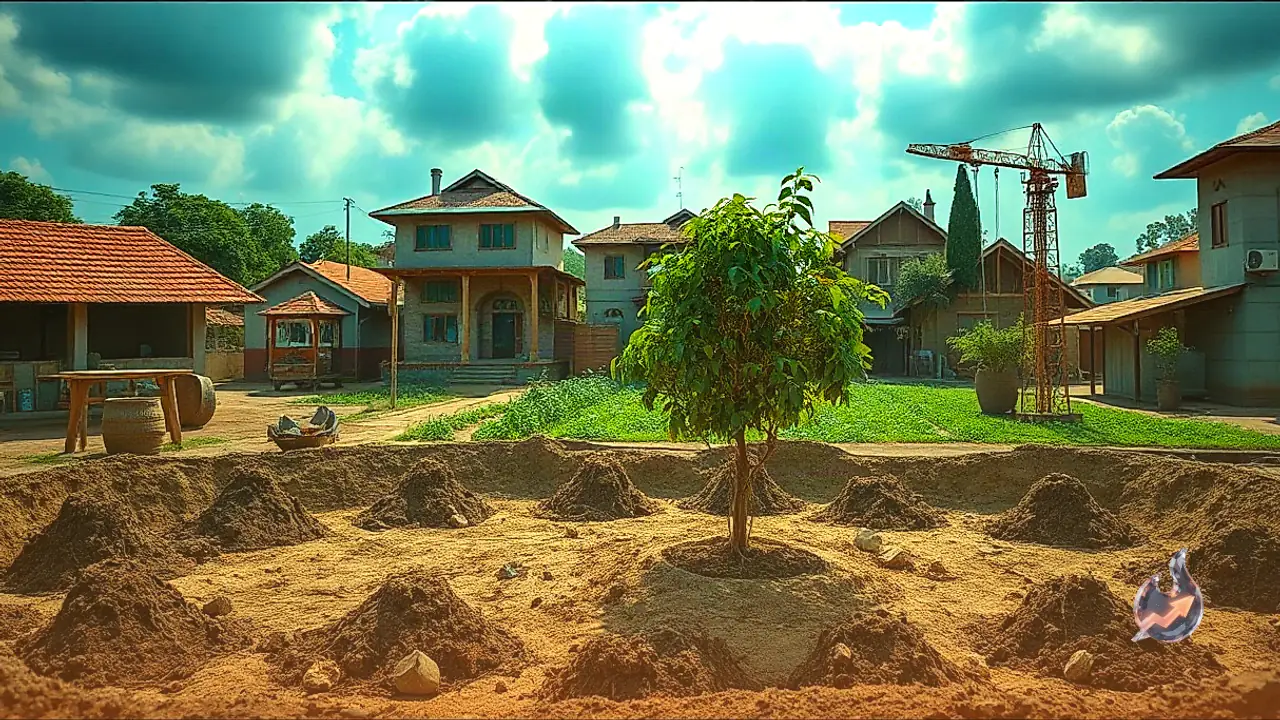

Constructing a tree basin, widely known as a thavla, is an essential cultural practice in orchards to ensure the robust growth of fruit-bearing trees. When built correctly, this circular depression directs irrigation water straight to the root zone and makes the application of organic manure and chemical nutrients far more efficient. However, failing to observe proper techniques during its layout and maintenance can reverse these benefits and cause substantial harm to the orchard. In particular, excessive moisture accumulation directly around the main trunk and mechanical damage to feeder roots can severely impair overall tree health and yield.
Never Build the Basin Wall Flushing Against the Trunk
Agriculture expert Bajrang Singh notes that the most crucial guideline when fashioning a basin is to keep its interior structure well away from the tree trunk. When water and damp soil stay in persistent contact with the trunk collar, the likelihood of collar rot, fungal proliferation, and bark degradation surges drastically. Basins should generally be dug in a balanced circular pattern around the plant, with their circumference expanding gradually to match the age and canopy spread of the tree. Furthermore, the surrounding peripheral bund must be kept sturdy, uniform, and level so that valuable irrigation water does not spill over, erode, or go to waste.
Avoid Deep Soil Digging Near Active Surface Roots
Excavating the soil too deeply while preparing or renewing the basin can lead to unintended structural damage. In mature and larger fruit trees, the vast majority of active feeder roots responsible for nutrient and moisture uptake reside close to the surface layers of the soil. Aggressive digging cuts through and bruises these vital roots, immediately disrupting the plant's metabolic processes and stunting its growth. Gardeners and orchard managers should therefore restrict digging to the shallow surface soil, taking immense care to leave the underlying root web undisturbed.
Keep Direct Drip Irrigation Away from the Central Stem
Even in modern orchards equipped with drip irrigation lines, basin architecture remains equally vital. The objective of micro-irrigation is to sustain an optimal moisture zone throughout the root spread, but water droplets should never fall directly on the central stem. Drip emitters must be positioned strategically so that water percolates uniformly across the feeding root zone rather than pooling against the base. Eliminating moisture build-up directly adjacent to the bark is critical to warding off persistent moisture-induced plant diseases.
Waterlogging Depletes Soil Oxygen and Triggers Root Rot
Irrigation volume and scheduling must always be calibrated against soil texture, prevailing weather patterns, plant age, and specific crop requirements. High summer temperatures naturally accelerate transpiration and necessitate frequent watering, whereas winter intervals between irrigations can be expanded considerably. Allowing standing water to remain stagnant inside a tree basin for prolonged periods chokes the root zone by displacing soil air. This sudden deprivation of oxygen damages delicate root hairs and fosters the rapid development of destructive root rot diseases.
Maintain Proper Distance When Applying Manure and Fertilizers
Distributing organic inputs and synthetic fertilizers inside the basin calls for strict spatial discipline. Farmyard manure, compost, or vermicompost should never be piled right against the tree trunk. Instead, these amendments should be broadcast evenly along the outer perimeter of the basin where active feeder roots are concentrated, followed by light hoeing into the topsoil. Concentrated chemical fertilizers like urea and potash must also never touch the trunk base, as direct chemical contact can burn tissues, whereas peripheral placement ensures safe and rapid nutrient uptake.
Scale Basin Dimensions with Tree Age and Canopy Expansion
Orchard productivity rises when growers continuously adjust basin dimensions to mirror the expanding root zone of growing trees. While a compact basin serves the needs of young saplings, its diameter must be enlarged progressively as the tree develops a broader vegetative canopy. Routine maintenance is equally indispensable: orchardists should regularly reinforce the perimeter bunds, clear out weed growth that competes for nutrients, and remove excess silt accumulation. A carefully designed and well-maintained basin ensures that moisture and critical nutrients reach deep into the soil to support healthy, long-term harvests.