























Mounting expenses on synthetic fertilizers and the gradual degradation of cultivable soil have prompted many agricultural communities to reconsider traditional biological inputs. In farming pockets such as Bhilwara, growers are increasingly looking at preparing their own organic nutrient supplements directly on their homesteads and fields. Rather than relying entirely on commercial bagged fertilizers that strain household budgets, cultivators are turning to dairy waste, fallen foliage, kitchen scraps, and harvest leftovers. Utilizing animal dung, urine, jaggery, and vegetable trimmings not only keeps input expenditures low but also significantly improves the organic matter profile of farm soils while utilizing agricultural residues efficiently.
Building Decomposed Cattle Dung Manure under Shaded Spaces
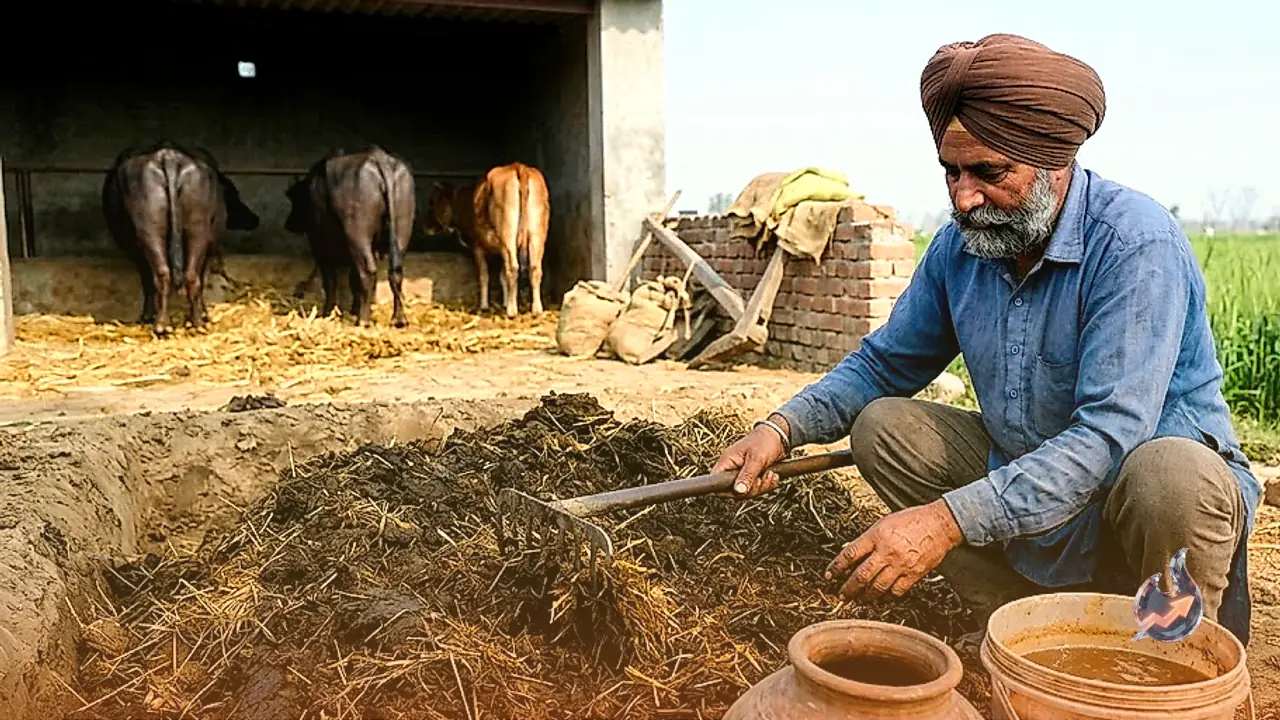
Smallholders with livestock can easily process cattle waste into well-conditioned organic manure. The primary requirement is choosing an area sheltered from direct sunlight so that vital nutrients do not dissipate. In this shady corner, pile up raw cow dung and thoroughly incorporate dry tree leaves, straw, and remnants gathered from harvested plots.
Sustaining moderate moisture is critical for the decomposition micro-organisms to do their work, requiring a gentle sprinkling of water whenever the mound appears dry. The pile should be turned over at regular intervals to maintain adequate airflow through the layers. Over time, the organic debris breaks down completely, transforming into a dark, crumbly material that can be safely dispersed across planting furrows.
Layering Kitchen and Farm Waste for Odor-Free Compost
Discarded greens and farm refuse can also be converted into nutrient-dense compost using simple drums or dedicated ground pits. This technique involves creating alternating layers of vegetable peels from kitchens, freshly cut lawn grass, withered foliage, and miscellaneous crop stubble inside the pit or container.
Between each layer of organic waste, scatter a thin dressing of regular field soil or mature compost, which introduces essential microbial colonies to accelerate degradation. Moisten the stack lightly with water and turn the mass occasionally. When the compost finishes curing, visible raw peels and whole leaves completely disintegrate, yielding a homogeneous, friable humus ready to enrich crop beds.
Preparing Traditional Jeevamrit with Dung, Urine, and Gram Flour
To stimulate beneficial underground microbial life and promote crop vigour, cultivators can concoct Jeevamrit through a time-tested indigenous recipe. The standard formulation requires combining approximately 10 kilograms of fresh cow dung with 5 to 10 liters of cow urine. To this base, add between 1 and 2 kilograms of jaggery along with roughly 1 to 2 kilograms of chickpea flour or any pulse flour.
These ingredients are mixed thoroughly with water inside a large barrel or tub placed under a shaded shelter. The mixture must be stirred clockwise with a clean wooden rod once or twice every day to facilitate aerobic fermentation. Within a few days of fermentation, the potent concentrate becomes ready for farm application after diluting it with water in the appropriate proportions. Farmers should verify the optimal dosage for their specific crops with a local agronomy advisor before full-scale application.
Recycling Harvest Byproducts Instead of Burning Stubble
Setting fire to dry crop remnants after harvest causes extensive environmental damage and destroys the fertile topsoil's native biome. A more productive approach is gathering discarded stalks, dry husk, wild weeds, and leaves into a collective pile. Combining these residues with animal manure and a small amount of farm soil initiates natural composting.
Keeping the mound damp through periodic watering and turning it over ensures uniform breakdown of tough fibrous material. Transforming field debris into organic manure enhances the soil's organic carbon content, improves moisture retention, and eliminates the hazards linked to open-air burning.
Key Quality and Application Precautions for Farmers
When preparing homemade fertilizers, careful attention must be paid to moisture regulation and the total maturation of the compost. Applying raw or half-rotted manure directly against root systems must be strictly avoided, as incomplete fermentation can attract soil-borne pests or cause fungal infections. Because nutritional requirements vary across soil types, plant varieties, and local weather conditions, consulting local agriculture department officials or extension workers ensures balanced application across commercial acreage.