




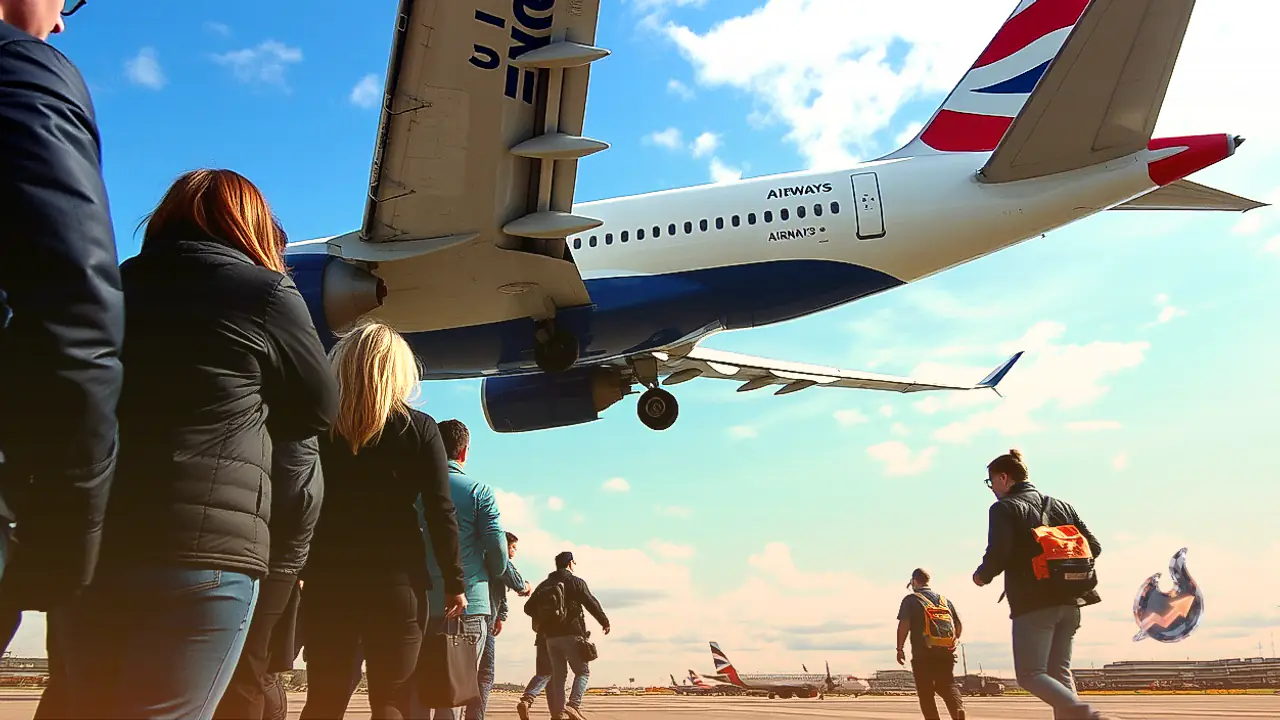
















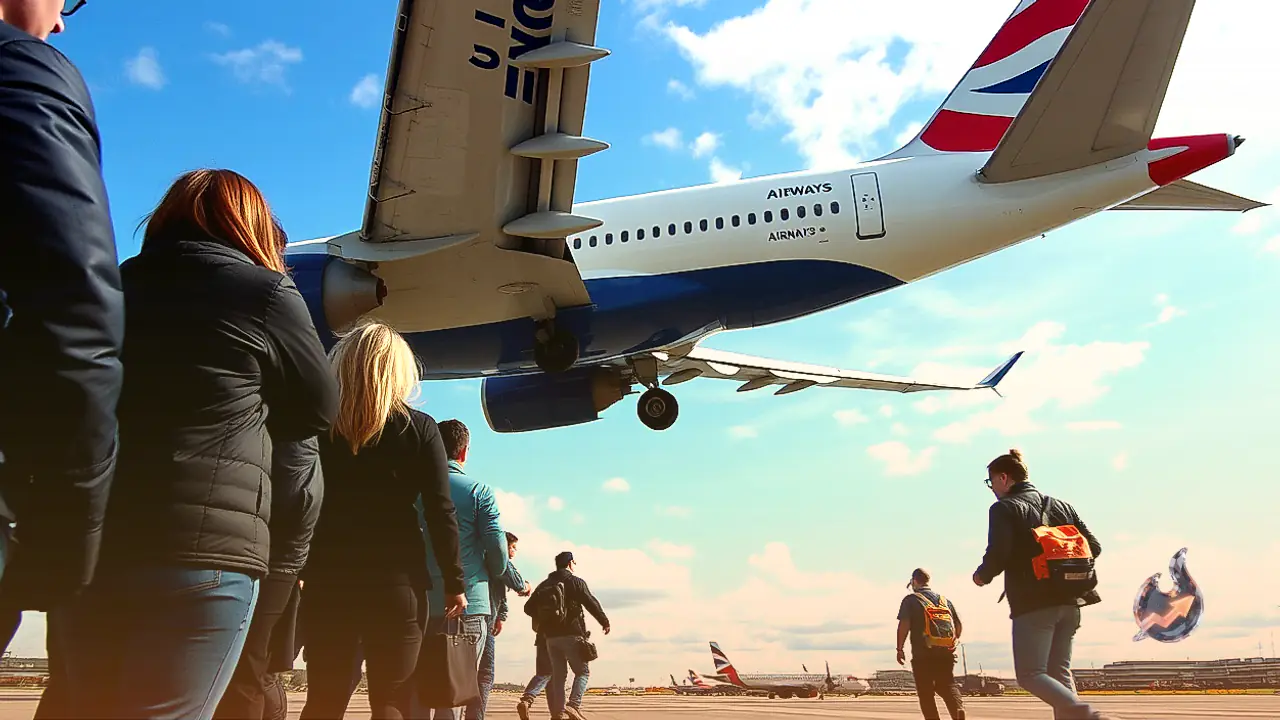

A Chicago-bound British Airways passenger jet suffered a severe mid-air scare on Monday, forcing pilots to initiate a rapid altitude drop of approximately 28,000 feet before executing an emergency return to London. The aircraft had been cruising smoothly at around 37,000 feet over Ireland when crew members were compelled to descend precipitously to roughly 9,000 feet within a very short span of time. Following the steep descent, the flight crew immediately altered course and steered the airliner back toward the British capital.
Mid-Air Descent on Chicago-Bound Flight BA295
The aircraft involved in the incident was operating British Airways flight BA295, departing from London Heathrow Airport with a scheduled destination of Chicago in the United States. Taking off at approximately 11:50 am local time, the journey was slated to take around 8 hours and 40 minutes across the transatlantic corridor. Roughly one hour into the flight, having successfully reached its cruising altitude of 37,000 feet, the aircraft encountered the sudden operational crisis that aborted the long-haul trip.
Flight-tracking data confirmed that the crew transmitted the standard emergency transponder code 7700. Rather than pressing forward across the ocean, the pilots prioritized passenger and airframe safety by reversing direction and heading straight back to London. Authorities and airline officials have not yet released full technical details identifying the exact mechanical failure or pressurization anomaly that triggered the dramatic drop in altitude.
The Role and Function of Squawk Code 7700
Commercial aircraft rely on an onboard transponder that continuously relays distinct four-digit identifier codes, known within aviation as squawk codes, directly to air traffic control radars. When pilots dial 7700 into their transponder panel, it serves as an immediate, universal alert signaling an onboard emergency requiring urgent assistance and priority routing from ground controllers. While squawk 7700 guarantees clearance and immediate support from ground radars, it does not communicate the specific underlying mechanical, cabin, or medical origin of the emergency. Aviation safety specialists await further statements from carrier officials to ascertain what caused this sudden altitude change.
Previous Flight Safety Scare on Flydubai
This mid-air emergency comes shortly after another dramatic incident sent shockwaves through international aviation aboard Flydubai flight FZ1073. That flight, which was en route from Dubai to Tel Aviv, had to make an unscheduled diversion to Tabuk in Saudi Arabia. During that flight, co-pilot Hamam Al-Hammami launched a physical attack with an axe against the pilot, Captain Smit Machchhar, in an attempt to seize control of the airliner in mid-flight.
Captain Smit Machchhar responded by opening the cockpit access door, allowing cabin occupants to intervene and help subdue the attacker. There were 174 people on board that flight, and the bravery and composure demonstrated by Captain Smit Machchhar earned widespread international recognition. The incident on British Airways flight BA295 once again underlines the demanding safety challenges that airline crews confront at cruising altitude.