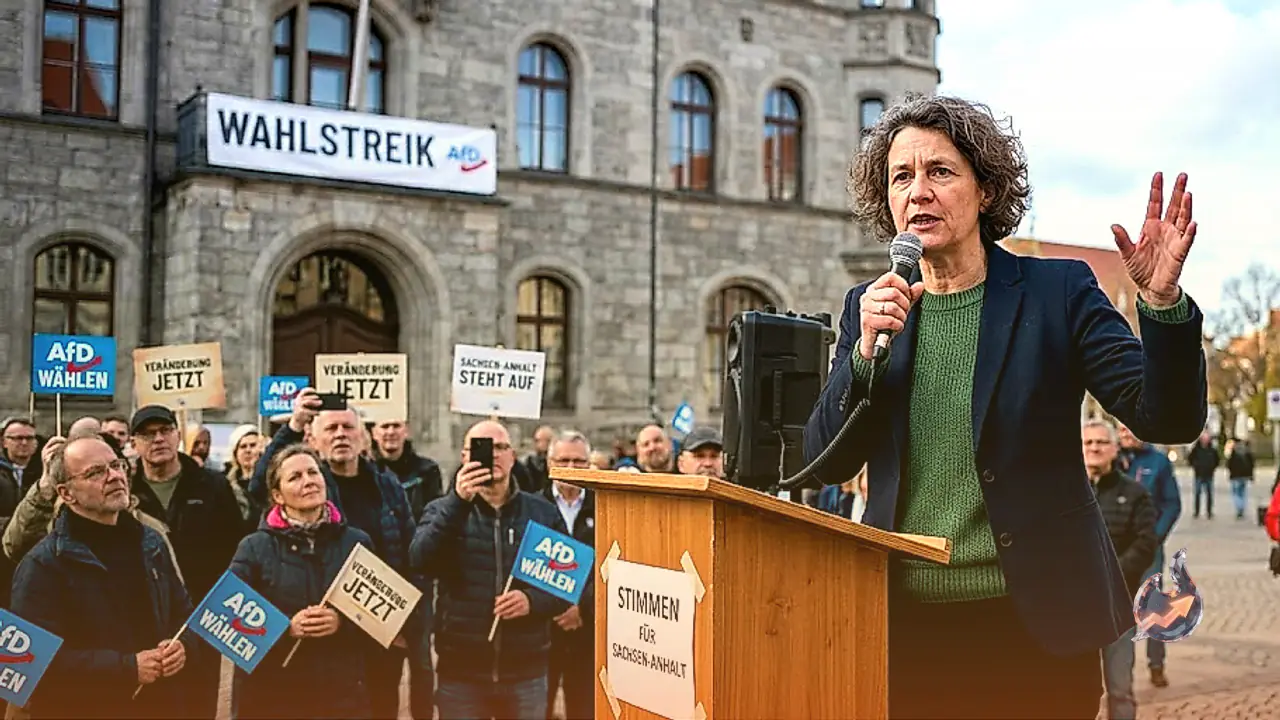

























The political landscape in Germany has experienced a profound shift as the far-right Alternative for Germany, commonly known as the AfD, achieved a historic electoral breakthrough in the eastern state of Saxony-Anhalt. Following the dramatic vote, party leadership announced that they are very close to securing power, backed by what they describe as a clear mandate to govern the region.
Election Results and Parliamentary Math
Preliminary results from Sunday indicate that the AfD captured 43.8% of the total vote share. Despite this massive surge of support, the party fell three seats short of an outright majority in the state legislature. The regional parliament consists of 83 seats, meaning 42 are required for a majority, and the AfD is currently projected to secure 39 seats once the final tallies are officially confirmed.
The Call for Talks and Democratic Mandate
Faced with the challenge of forming a government without an absolute majority, the party has initiated outreach efforts to secure backing from other political factions or independent lawmakers. Deputy parliamentary leader Beatrix von Storch urged rival parties to enter formal discussions, arguing that democratic principles dictate that opponents cannot simply ignore the voice of the electorate. She warned that refusing to engage with the AfD could plunge the region into severe chaos and potentially trigger fresh elections. Ulrich Siegmund, the party leader in Saxony-Anhalt, echoed these sentiments during a Monday press conference, reiterating that the election delivered an undeniable mandate to lead.
Political Fallout and Conservative Turmoil
While the broader German political establishment maintains a strict cordon sanitaire refusing cooperation with the far-right, the AfD has indicated it is speaking directly with individual members of the conservative CDU group. The CDU, which led the state's outgoing coalition and serves as a major partner in Germany's federal government, secured 17.2% of the vote in the region. Reports indicate that internal frustration within the CDU has created openings for dialogue. Additionally, speculation surrounds the left-wing populist BSW party, projected to win five seats, which could potentially offer tacit support for a minority government.
Controversial Policies and Regional Context
Saxony-Anhalt possesses a population of 2.1 million residents, and the regional branch of the AfD is classified by domestic intelligence as right-wing extremist, a label firmly rejected by the 35-year-old Siegmund. The party platform features highly contentious proposals, including segregating child refugees into dedicated classes and establishing specialized task forces to deport undocumented migrants. While the party insists its remigration strategy targets only criminals and individuals residing in the country unlawfully, critics view the platform with deep alarm.
International Reactions and Global Significance
The regional outcome has resonated far beyond Germany's borders, drawing praise and condemnation internationally. US President Donald Trump shared projected results on his platform, prompting praise from Russian presidential envoy Kirill Dmitriev regarding pragmatic political shifts. Conversely, Polish Prime Minister Donald Tusk issued a scathing rebuke of the outcome, emphasizing sharp divisions across Europe regarding the rise of nationalist movements.