






















Severe summer heat and an unprecedented lack of rainfall across Western Europe have forced agricultural authorities in France to grant temporary emergency waivers on the strict legal definitions that govern the production of some of the country's most celebrated heritage cheeses. After months of scorching temperatures dried up pasturelands and created an acute shortage of local grazing grass for dairy cattle, government decrees were officially published on Wednesday allowing mountain farmers to bend century-old feeding guidelines to keep their herds nourished.
Emergency Regulatory Relief for Mountain Cheesemakers
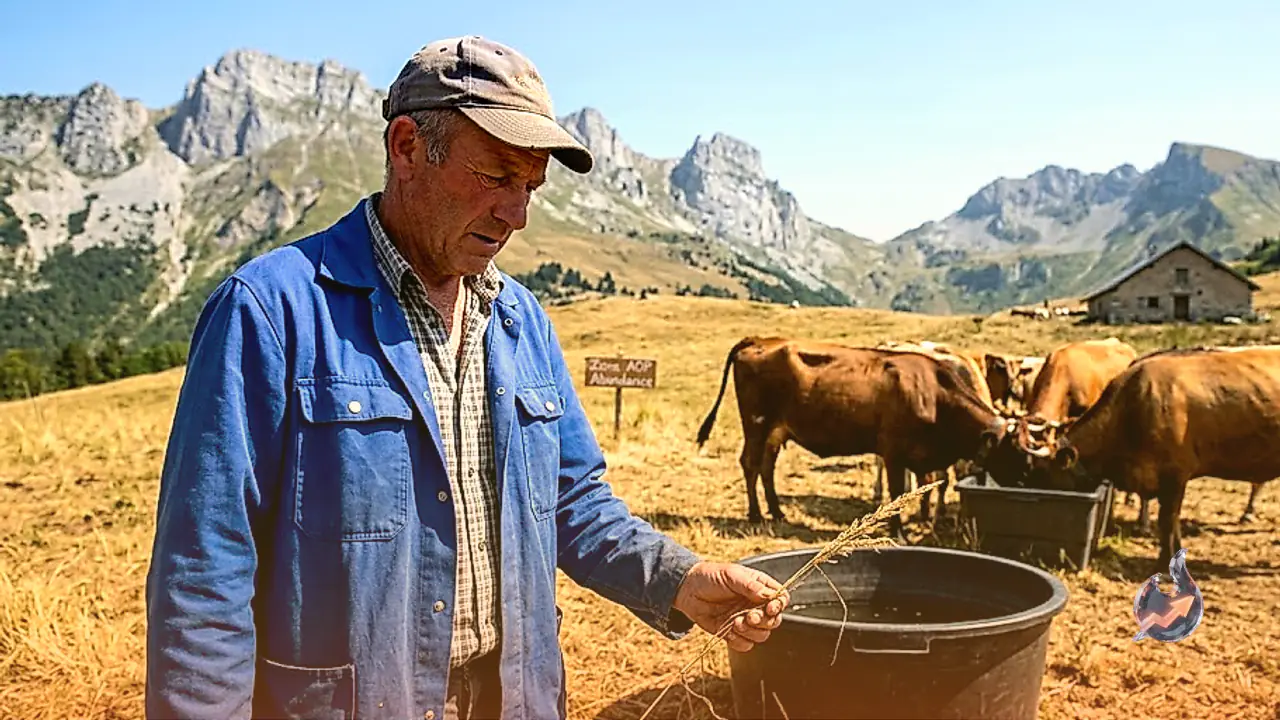
The government decrees published on Wednesday target several of France's premier mountain cheeses originating from the high-altitude pastures of eastern France. Primary among the beneficiaries are the producers of Abondance, Beaufort, and Comté. Under normal legal frameworks, these traditional cheeses carry strict protected origin protections that mandate exactly what herds can eat and where their feed must be harvested. However, the prolonged dry spell has left local grazing fields completely parched, making it impossible for dairy farmers to comply with standard pasturing quotas without jeopardizing the health of their livestock.
Agricultural officials confirmed that additional waivers are expected to be granted shortly to a wider circle of protected cheeses facing similar environmental hardships. The upcoming exemptions will cover several iconic varieties, including Cantal, Bleu d'Auvergne, Fourme d'Ambert, Bleu du Vercors-Sassenage, Reblochon, and the renowned goat cheese Rocamadour. Under the temporary dispensations, livestock owners in these designated regions will be authorized to feed their herds grass and hay brought in from suppliers located outside their strict, legally mandated geographical zones.
Specific Feeding Flexibilities for Abondance and Comté Herds
The regulatory changes were evaluated and authorized by the National Institute for Origin and Quality (INAO), the official state body that oversees and regulates France's protected labels of origin. Representatives from the INAO have officially designated the summer heatwave of 2026 as a historic drought, noting that the extreme climate conditions have disrupted normal agricultural cycles across the nation's key farming regions.
To cope with the severe fodder deficit, specific emergency protocols have been established for individual cheese varieties. In the French Alps, makers of Abondance cheese have been granted permission to drastically reduce the required proportion of fresh pastured grass in their dairy cows' daily feed from the standard minimum of 50 percent down to just 15 percent. Furthermore, Alpine farmers are now entitled to import forage from outside their official regional boundaries and utilize targeted dietary supplements to ensure proper cow nutrition during the shortage.
Similarly, dairy farmers in the Jura mountains who produce Comté cheese have received tailored exemptions. Traditional Comté rules require cattle to be fed locally grown green maize. However, because local maize crops have withered under the intense drought, farmers are now legally permitted to replace their local feed supplies with green maize sourced from external regions outside their immediate production area.
Waivers Extended Beyond Cheese to Wine, Spirits, and Produce
The regulatory flexibility introduced by the INAO is not confined solely to dairy operations. Recognizing the broad environmental impact of the 2026 drought across multiple agricultural sectors, the regulatory institute has approved temporary rule modifications for several other protected regional food and beverage items.
Producers benefiting from the temporary waivers include makers of traditional Calvados apple brandy and cider in Normandy, where apple orchards have suffered from water stress. In eastern France, winemakers producing Crémant d'Alsace sparkling wine have also been granted operational adjustments. Additionally, livestock farmers raising Poitou-Charentes lamb and fruit growers cultivating Reine-Claude plums have received regulatory accommodations to help safeguard their harvests and maintain production continuity despite the challenging climate.
Understanding Terroir and the Legal Framework for Climate Exemptions
In France, official certificates of origin provide essential economic protections for farmers, enabling them to sell their goods at premium prices in international and domestic markets. However, obtaining and maintaining these protected labels requires strict adherence to detailed regulations governing the geographical location of farms, livestock breeds, animal diets, and traditional handcrafting methods. The fundamental objective of these rules is to preserve the unique cultural identity and flavour profiles of food items, which are intimately connected to the concept of terroir.
Terroir is a foundational French culinary and agricultural philosophy that asserts a product's final character is inseparable from its precise geographic origin, soil composition, microclimate, and historical regional farming techniques. When weather extremes prevent farmers from feeding their animals local grass, the core principle of terroir is directly challenged.
Despite the strict nature of these laws, both French national law and European Union agricultural regulations contain provisions for legal derogations during periods of extraordinary climatic emergencies. Similar temporary derogations were previously enacted following the severe dry summer of 2022, demonstrating that regulatory bodies must periodically adapt to maintain the viability of traditional food sectors facing extreme weather events.
Taste Impact, Market Pricing, and the Future of Protected Food Labels
As farmers begin utilizing imported hay, external maize, and nutritional supplements, food experts and consumers will be closely monitoring whether these altered dietary regimens lead to any detectable changes in the aroma, texture, or flavour of the final cheeses. Industry analysts are also tracking whether the emergency measures will succeed in stabilizing production volumes or if supply shortages will trigger price increases for consumers in international markets.
Over the longer term, the recurring need for emergency waivers raises fundamental questions about the future viability of protected origin labels in France and across Europe. If ongoing climate change permanently alters local weather patterns and renders traditional farming methods impossible in their historic locations, the traditional concept of terroir will be tested to its absolute limits, forcing regulators and farmers to redefine the future of heritage food production.