























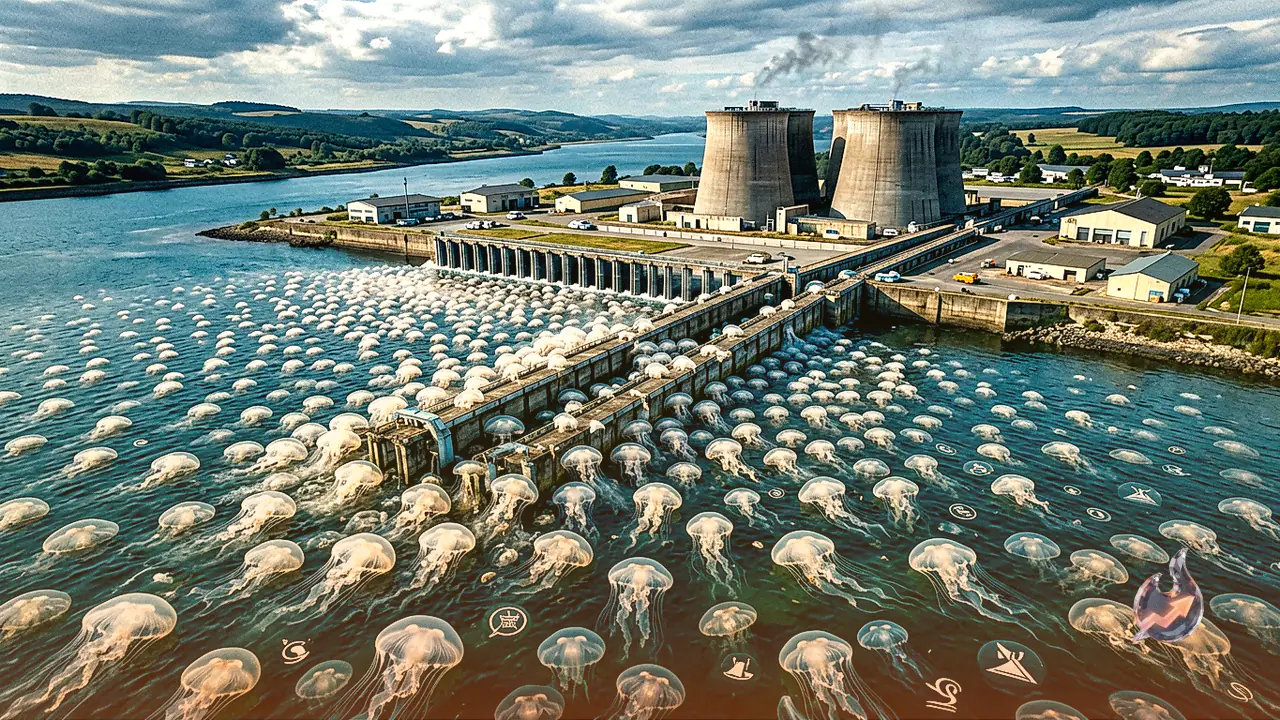

A massive influx of marine life has triggered a operational crisis at the Gravelines nuclear power plant in northern France, forcing operators to temporarily halt multiple reactor units. Millions of jellyfish entering the seawater intake network clogged the facility filtration equipment designed to keep reactors cool. Électricité de France (EDF) confirmed that the unexpected biological blockage in the cooling water intake canal forced technical teams to safely power down several generating units to clean the screens and protect critical machinery.
Cooling Network Interruption and Current Reactor Status
Located in the Hauts-de-France region between Dunkirk and Calais, Gravelines is one of France's largest atomic power stations. The complex comprises six identical reactor units, each possessing a rated generation capacity of 900 MW. The facility relies heavily on a specialized intake canal connected directly to the North Sea to draw millions of gallons of seawater needed to condense steam and cool plant systems. The sudden concentration of jellyfish trapped inside the screen house threatened to starve the primary cooling pumps of adequate water flow.
Plant operators reported that units three, four, and six are currently offline. Operations at two of the station units were suspended on Wednesday and Thursday after monitoring systems recorded heavy concentrations of jellyfish against the protective filtration screens. Unit three had previously been taken offline on 10 August due to a similar marine swarm before being reconnected to the national electricity grid on 18 August. However, renewed jellyfish presence necessitated a second shutdown. Meanwhile, unit four remains offline for a scheduled technical inspection. To prevent further intake stress, units one and two are operating under throttled power output levels as a proactive safety precaution.
Oceanographic Factors Behind Coastal Jellyfish Invasions
The influx of jellyfish into industrial cooling canals is directly linked to seasonal marine biology dynamics and ocean temperature fluctuations. Marine experts explain that jellyfish populations reach their peak activity during the warmer summer months. Rising sea surface temperatures stimulate massive blooms of plankton near the surface. Because plankton serves as the primary food source for native jellyfish species, these marine creatures migrate upward and toward coastal shallow waters in vast numbers.
When the high-volume seawater intake pumps at Gravelines draw water from the North Sea canal, thousands of jellyfish become suctioned against the fine mesh debris screens. As bodies accumulate, they form an impenetrable barrier that severely restricts fluid intake. Gravelines experienced an almost identical operational stoppage in August of the previous year, highlighting a recurring environmental trend linked to elevated summer sea temperatures in the region.
Preventative Countermeasures and Global Industry Precedents
To mitigate the impact of biological blockages, plant management has instituted specialized marine containment procedures. EDF established a direct partnership with local commercial fishermen who deploy specialized nets across the approach canal. Fishermen catch the dense swarms of jellyfish before they enter the narrow intake channels and transport them further offshore into deep ocean waters for release. This bio-management initiative aims to safeguard intake infrastructure while preventing harm to marine life.
While biological shutdowns remain relatively uncommon in the nuclear power sector, similar coastal events have been recorded internationally. In 2011, the Torness nuclear facility in Scotland was forced to shut down after jellyfish clogged its undersea intake pipes. A similar emergency occurred in 2013 at Sweden's Oskarshamn nuclear station, where massive jellyfish blooms blocked seawater intake filters. These recurring incidents underscore the ongoing vulnerability of ocean-cooled nuclear infrastructure to shifting marine ecosystems.