























A historic transition of power has taken place in the Kingdom of Norway following the passing of King Harald V. His 51-year-old son, Crown Prince Haakon, has formally succeeded to the throne, adopting the official royal title of King Haakon VIII. Immediately following the formal change of reign, the new monarch presided over an extraordinary cabinet meeting at the Royal Palace in Oslo, where he announced his royal designation and solemnly reaffirmed his commitment to the traditional royal motto, 'Everything for Norway'. This constitutional succession comes at a poignant moment for the nation, as the royal house balances solemn public mourning for a deeply beloved monarch with the urgent task of navigating complex personal, medical, and institutional challenges.
A Historic Transition of Power in Norway
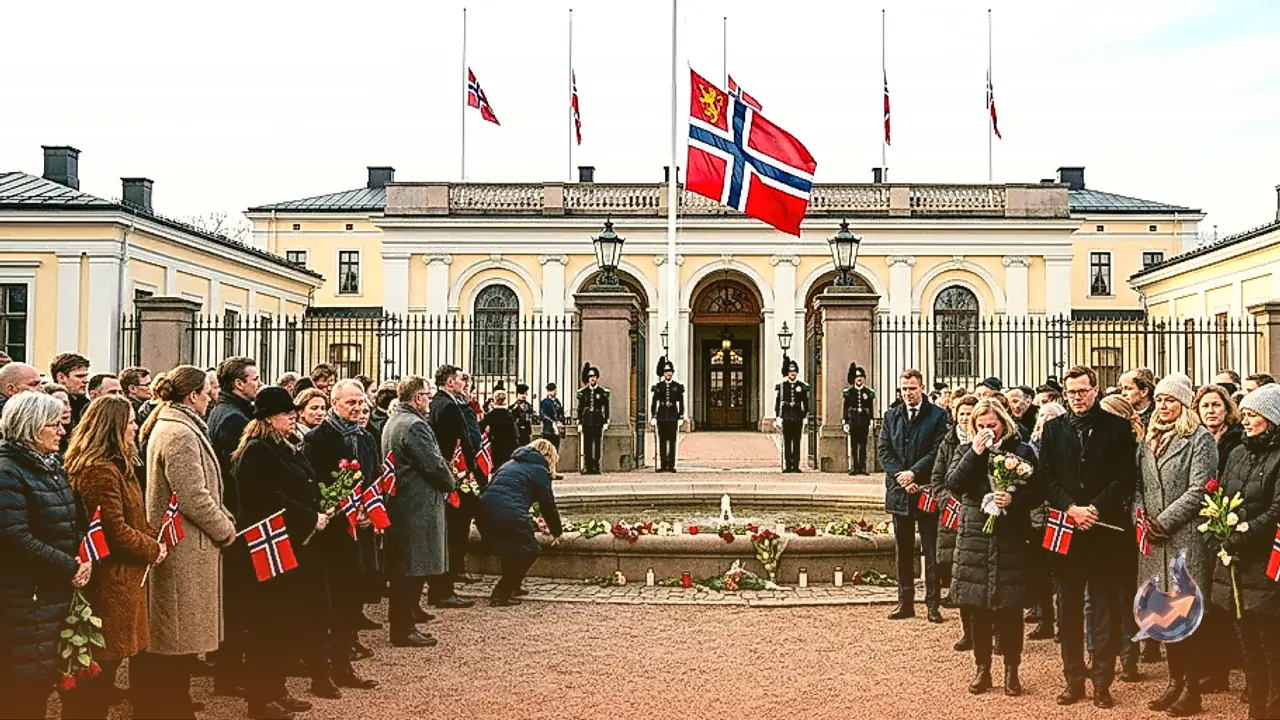
King Harald V enjoyed extraordinary popularity among ordinary Norwegian citizens throughout his thirty-five years on the throne. His warmth, approachable demeanor, quick wit, and deep connection with the public were reflected in consistently high approval ratings throughout his reign. The overwhelming wave of public emotion and national grief surrounding his final days underscored the profound respect he commanded across the country. Following the dissolution of the union with Sweden in 1905, Norway restored its modern independent monarchy. King Haakon VIII now stands as the fourth sovereign of this modern constitutional era, following in the footsteps of his great-grandfather King Haakon VII, his grandfather King Olav V, and his father King Harald V.
The royal motto 'Everything for Norway' ('Alt for Norge') carries deep historical significance for the nation. Originally chosen by King Haakon VII upon his election to the Norwegian throne in 1905, it was subsequently retained by King Olav V and King Harald V as a guiding principle of selfless service to the country. By adopting this exact motto during his first extraordinary cabinet council, King Haakon VIII underscored continuity and institutional stability. During the cabinet session held at the Royal Palace, the new king formally signed the constitutional declaration, pledging to uphold the constitution and serve the Norwegian people.
The transition to the throne finds King Haakon VIII exceptionally well-prepared for his royal duties. For many years, he worked closely alongside his father in managing state affairs and representing Norway internationally. As King Harald V faced advancing age, mobility issues, and recurring medical complications in recent years, Crown Prince Haakon stepped up to serve as regent on numerous occasions. In this capacity, he routinely carried out constitutional responsibilities, presided over state councils, received foreign dignitaries, and opened parliamentary sessions. King Harald V expressed complete confidence in his son's readiness, writing in his autobiography The King Tells that he felt fortunate that Crown Prince Haakon would be the one to carry the monarchy forward into the future.
Reflecting on the new monarch's leadership style, historian Trond Norén Isaksen noted that King Haakon VIII will bring a distinct personality to the throne while maintaining deep public respect. While King Harald V was widely celebrated for his disarming charisma and keen sense of humor, King Haakon VIII has historically exhibited a more reserved and analytical demeanor, similar to his mother Queen Sonja. However, in recent years, the new king has displayed a more relaxed and open public presence, sharing subtle humor while bearing immense personal and royal burdens amid his parents' aging and his wife's health struggles.
Constitutional Shift: Crown Princess Ingrid Alexandra as Next Heir
King Haakon VIII's royal lineage connects him directly to European historic dynasties, including his status as a great-great-great-grandson of Britain's Queen Victoria. With his ascension to the throne, his 22-year-old daughter, Princess Ingrid Alexandra, officially assumes the title of Crown Princess and becomes the immediate heir apparent to the Norwegian throne. Her elevation represents a historic milestone in the country's constitutional evolution.
Historically, Norway's succession rules favored male heirs regardless of birth order under male-preference primogeniture, which allowed Haakon to become crown prince ahead of his older sister, Princess Märtha Louise. However, in 1990, the Norwegian parliament enacted a landmark constitutional amendment adopting absolute primogeniture. This constitutional reform established equal succession rights regardless of gender for future generations. Consequently, Crown Princess Ingrid Alexandra is on track to become Norway's first female head of state since Queen Margrete I in the 15th century, aligning the royal institution with modern principles of gender equality across Nordic society.
Royal Family Amid Heightened Public and Personal Scandals
King Haakon VIII ascends the throne during a period of unprecedented public scrutiny and internal turbulence for the royal family. Although the monarchy as an institution retains solid overall support and has long been praised for its progressive, egalitarian outlook, a series of high-profile scandals in recent years has tested public trust and generated intense media debate across the nation.
Chief among these difficulties is the criminal conviction of Marius Borg Høiby, Crown Princess Mette-Marit's son from a relationship prior to her royal marriage. Following a widely publicized trial that captivated national headlines, Høiby was convicted of rape. The gravity of the case was compounded by revelations that one of the offenses took place at the royal estate in Skaugum, located outside Oslo. Although the Royal House has consistently clarified that Høiby holds no official royal title, public role, or state duties, he has lived as an integral member of the family household. Høiby is currently appealing the conviction.
Adding to the institutional pressure, official documents disclosed shortly before Høiby's trial revealed Crown Princess Mette-Marit's extensive past communications with convicted sex offender Jeffrey Epstein over a three-year period between 2011 and 2014. Following public disclosure, Mette-Marit issued a public apology to King Harald V and Queen Sonja, admitting to poor judgment. In a national television appearance, she expressed deep regret over her acquaintance with Epstein, stating she wished she had never met him. Recent public opinion polls indicated that nearly half of the Norwegian population questioned whether she should become queen, creating an uncomfortable atmosphere as the new reign begins.
Health Crisis: Crown Princess Mette-Marit's Medical Battle
Parallel to the legal and public relations challenges, the royal family is coping with significant health struggles. Just two days after the conclusion of her son's trial, Crown Princess Mette-Marit underwent a double lung transplant at Oslo University Hospital. This major medical procedure came eight years after her initial diagnosis in 2018 with chronic pulmonary fibrosis, a debilitating respiratory condition that had progressively restricted her official duties and public appearances.
Medical specialists have indicated that a full year of intensive post-transplant monitoring and immunosuppressive care will be necessary before her health can be declared completely stable. As a result, King Haakon VIII begins his reign burdened not only by heavy constitutional duties but also by the personal responsibility of supporting his wife through an arduous recovery process. Royal commentator Caroline Vagle emphasized that complete transparency regarding past controversies is essential for the royal family to dispel public speculation. She noted that the long-term standing of the monarchy will ultimately depend on how King Haakon VIII handles these ongoing crises and preserves the trust established by King Harald V over a lifetime. Similarly, royal analyst Tove Taalesen expressed confidence that despite the complex backdrop, King Haakon VIII is fully equipped for the task and will earn enduring affection and respect similar to his predecessors King Haakon VII, King Olav V, and King Harald V.
Early Life, Education, and Military Service of King Haakon VIII
Born in 1973, King Haakon VIII is the youngest child of King Harald V and Queen Sonja. As a youth, he struggled at times to adjust to his royal identity while attending a local state primary school in the 1980s. In his 2023 autobiography, he recalled feeling anxious at school about his royal status and preferring not to discuss it publicly. Following the death of his grandfather King Olav V in 1991, he became Crown Prince at the age of 17.
Breaking with traditional royal convention, Haakon completed his schooling in local public institutions before entering military service. He embarked on a four-year naval career, graduating from the Norwegian Naval Academy in Bergen in 1995. Rather than attending Oxford University like his father and grandfather, Haakon chose to study abroad in the United States, enrolling at the University of California, Berkeley, where he earned a bachelor's degree in political science in 1999.
A Modern Royal Romance and Changing Public Perceptions
Following his return from California, Haakon met Mette-Marit in 1999 at a music festival in her hometown of Kristiansand. Media outlets dubbed her the 'Cinderella of Kristiansand' due to her unpretentious, working-class background. Ahead of their wedding in August 2001, Haakon spoke candidly about their strong romantic bond, stating that what they found together was so strong he could not let it go.
However, their courtship initially ignited intense national controversy. Commentators questioned whether the union might jeopardize the future of the monarchy, drawing comparisons to King Edward VIII's 1936 abdication over his relationship with American divorcee Wallis Simpson. Although King Harald V had broken tradition decades earlier by marrying commoner Sonja, Mette-Marit's situation was unique: she was a single mother to a four-year-old son whose father had a criminal conviction for cocaine possession. Furthermore, their decision to live together in an Oslo apartment before marriage drew sharp disapproval from the conservative Lutheran Church of Norway, though contemporary polls showed most citizens were unbothered by cohabitation.
The turning point in public perception arrived three days prior to their wedding when Mette-Marit delivered an emotional televised interview. She publicly apologized for her past party lifestyle and strongly condemned illegal drug use following reports of drug use at 1990s parties in Oslo, though she did not specify personal drug consumption. Her frankness and humility won over the Norwegian public, transforming her into a symbol of a relatable, modernizing monarchy. Together, the couple has two children, Crown Princess Ingrid Alexandra and Prince Sverre Magnus. Over the years, Mette-Marit earned praise for her patronages, including campaigns supporting people living with HIV and initiatives promoting youth literacy. Haakon has described Mette-Marit as an essential emotional counterbalance to his analytical nature, noting that while he is socially reserved, she possesses a natural talent for connecting effortlessly with people.
Navigating Public Trust and Defining a Modern Monarchy
King Haakon VIII begins his reign at a pivotal moment requiring a delicate balance between tradition and modernization. The new monarch must steer the institution through turbulent waters, maintaining its constitutional role while preserving public confidence.
As King Haakon VIII leads Norway into a new era, the nation will watch closely how he addresses institutional challenges while maintaining the monarchy's enduring bond with the public. Through open communication, personal resilience, and unwavering dedication to his duties, the new monarch aims to reinforce the trust that has defined Norway's royal institution for over a century.