






















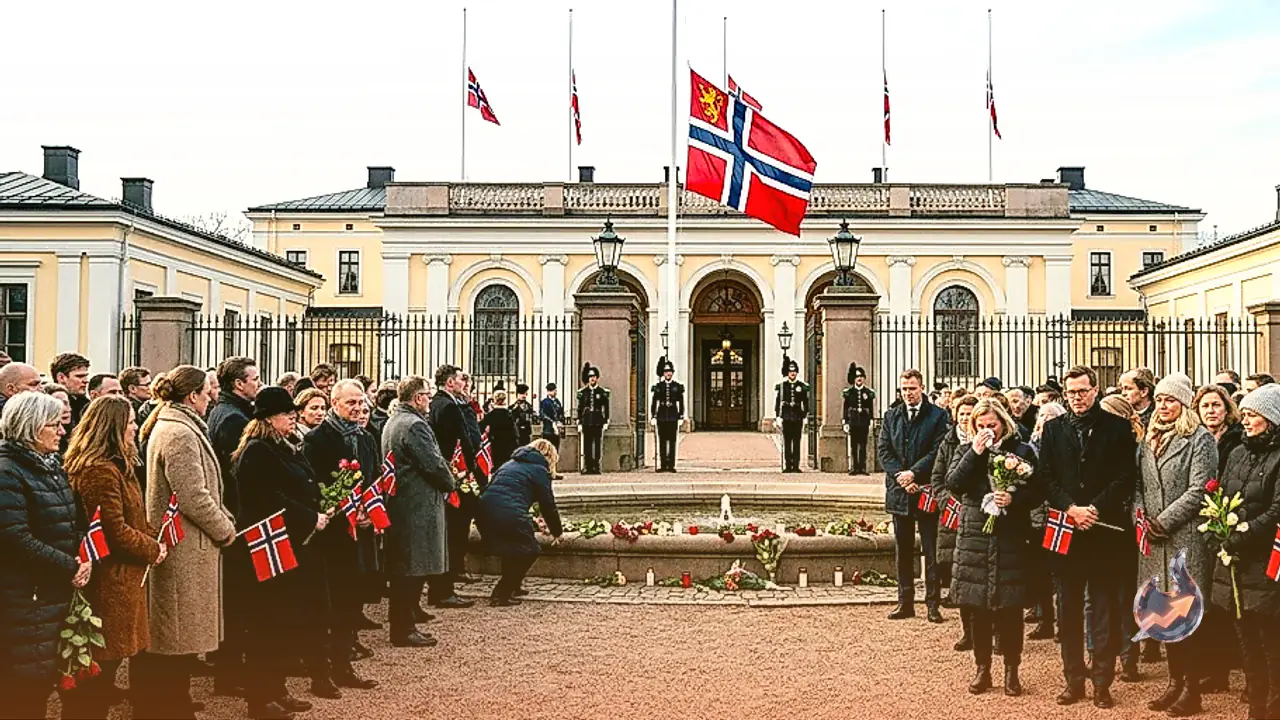

King Harald V of Norway, a deeply respected and unifying monarch who spent three and a half decades modernizing the Scandinavian nation's royal institution, has died at the age of 89. According to an official announcement issued by the Royal Palace in Oslo, the sovereign passed away peacefully at 06:35 local time (04:35 GMT) on Friday at the national hospital in Oslo. He had been admitted to the facility last week to undergo medical care for a rare blood condition. During his final 24 hours, members of the royal family remained at his bedside, while grieving citizens gathered outside the palace gates in the capital to lay floral tributes. As the first Norwegian monarch born on home soil since the 14th century, his passing marks the end of a historic era for the country, with his son Crown Prince Haakon immediately succeeding him to the throne.
Final Hours in Oslo and Official Constitutional Succession
The health of King Harald V had experienced severe strain prior to his hospitalization on 17 August, when he was admitted to Oslo's national hospital for specialized care. Medical officials had been treating the monarch for haemolytic anaemia, a rare haematological condition in which the immune system destroys red blood cells faster than the body can generate them. To manage the condition, he was prescribed targeted cortisone therapy. As his health declined, Crown Prince Haakon stepped in as official regent, taking over state duties and constitutional responsibilities on behalf of his father. Following the formal confirmation of his death, national flags across government buildings and public institutions in Oslo were lowered to half-mast. Known affectional across the country as the 'People's King', his death has prompted widespread national mourning.
WWII Exile in America and Higher Education at Oxford
Born on 21 February 1937 at the Skaugum estate near Oslo, Prince Harald's early childhood was thrust into geopolitical turmoil. When he was just three years old, dictator Adolf Hitler ordered the Nazi invasion of Norway at the onset of the Second World War. To escape the invading forces, his mother Crown Princess Märtha fled across the border with her children into neutral Sweden. Shortly thereafter, responding to a personal invitation from US President Franklin D Roosevelt, the family relocated to the United States, where young Harald spent his formative war years. Returning to Norway at the conclusion of hostilities, he completed his primary education and mandatory military service, becoming Crown Prince in 1957. He subsequently pursued higher studies in the United Kingdom, attending Balliol College at Oxford University from 1960 to 1962, where he read social science, history, and economics.
A Nine-Year Battle for Love and Breaking Royal Tradition
King Harald V played a pivotal role in democratizing the royal house by defying archaic marital protocols. In his youth, he met Sonja Haraldsen, the daughter of a prominent clothing merchant, at a social gathering. The couple fell in love, but under existing royal conventions, the heir to the throne was expected to marry a princess from a European royal house. His father, King Olav V, resisted the union for nearly a decade in hopes of preserving traditional royal lineage. Demonstrating firm resolve, Prince Harald informed his father that he would remain unmarried for life unless permitted to marry Sonja, a decision that would have triggered a constitutional succession crisis. After nine years of patience, King Olav V granted his official consent. The couple married at Oslo Cathedral on 29 August 1968, establishing a historic precedent that enabled future generations of Norwegian royals to marry commoners.
Modernizing the Throne and Leading a Nation Through the 2011 Terror Attacks
Harald ascended to the throne on 17 January 1991 following the death of King Olav V, having previously served as regent during his father's final illness in 1990. Throughout his 35-year reign, he transformed the monarchy into an egalitarian, financially transparent, and approachable institution. Historians note that around the turn of the millennium, King Harald evolved from a naturally reserved and shy individual into a deeply empathetic and open national figurehead. His greatest test as sovereign arrived in July 2011, when neo-Nazi terrorist Anders Breivik detonated a car bomb in central Oslo killing eight people, before launching a mass shooting at a youth camp on the island of Utøya that claimed 69 lives, mostly teenagers. In a televised address and subsequent memorial speech, the king spoke with visible emotion, his voice quivering as he expressed deep personal sorrow alongside his grieving people. He urged Norwegians not to let fear dismantle their open society, delivering a famous speech celebrating national diversity across faith, background, and identity that defined modern Norwegian values.
Olympic Athletic Career, Football Support, and Environmental Stewardship
Beyond his monarchical responsibilities, King Harald V was an accomplished international athlete and dedicated environmental conservationist. An expert helmsman, he represented Norway in competitive sailing at three separate Olympic Games in 1964, 1968, and 1972, only formally retiring from competitive sailing in 2022 at the age of 85. Alongside Queen Sonja, he was a frequent attendee at both Summer and Winter Olympic Games to support Norwegian athletes. When the Norwegian national football team reached the quarter-finals of the World Cup in the United States, the king personally welcomed the squad to the Royal Palace in Oslo. Furthermore, he was instrumental in establishing the Norwegian branch of the World Wide Fund for Nature (WWF), serving as the organization's national president for 20 years.
Royal Scandals, Public Scrutiny, and Health Crises
The closing years of King Harald V's reign were marked by personal health struggles and heightened public controversy surrounding members of the extended royal household. When Crown Prince Haakon married Mette-Marit in 2001, her four-year-old son Marius Borg Høiby was integrated into family life, though the royal house clarified he held no royal title. Høiby was convicted in June by an Oslo court on multiple criminal charges including rape, receiving a four-year sentence which he has appealed; he visited the king's bedside shortly before his passing. Unsealed legal files prior to the trial revealed extensive past contact between Crown Princess Mette-Marit and late sex offender Jeffrey Epstein, leading her to issue a public apology for her poor judgment. Additionally, Princess Märtha Louise stepped back from official royal duties following her 2024 marriage to an American self-styled shaman due to commercial conflicts. Despite national surveys indicating a decline in overall monarchy approval from 72% in 2024 to 54%, public affection for King Harald himself remained steadfastly high.
The Road Ahead Under King Haakon's Reign
King Harald V is survived by Queen Sonja, his wife of nearly 58 years, their daughter Princess Märtha Louise, their son King Haakon, and six grandchildren. The newly proclaimed King Haakon, aged 51, assumes the throne tasked with navigating the royal house through a delicate period of transition and restoring public confidence. His wife, Crown Princess Mette-Marit, continues her recovery following a lung transplant performed for rare pulmonary fibrosis. As Norway prepares for a formal state funeral, citizens across the nation remember King Harald V as a dedicated public servant who guided his country into the modern era with humility, warmth, and resilience.