



















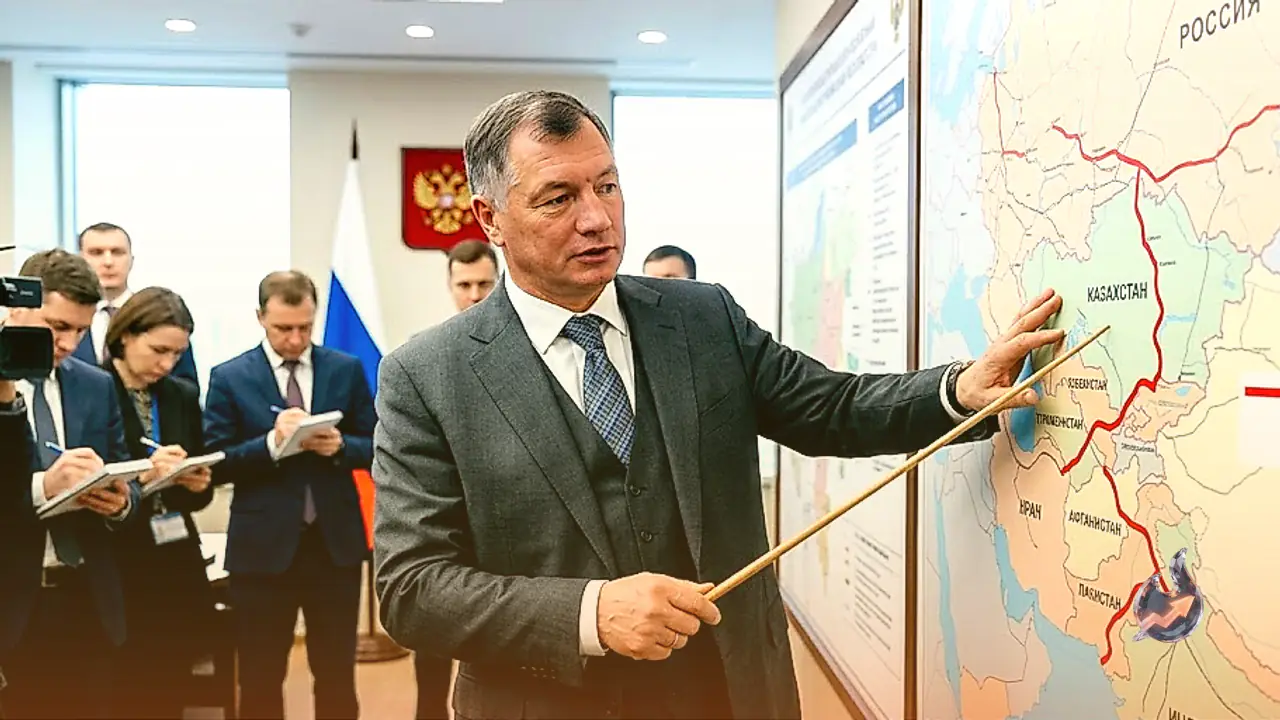

A grand infrastructural concept has emerged from Moscow as Russian Deputy Prime Minister Marat Khusnullin floated the idea of establishing a direct rail connection all the way from Russia to India. Speaking during an interview, Khusnullin outlined a vision to link the Eurasian nation directly to the Indian Ocean via land routes, creating an overland freight corridor between the two economic partners.
The Proposed Transit Route Through Central Asia and South Asia
Elaborating on the potential geography of this transport corridor, the Russian official explained that the alternative routes could traverse through Turkmenistan, Iran, Afghanistan, and Pakistan. He emphasized that any viable pathway capable of establishing reliable connectivity straight to India would be considered practical. If successfully materialized, this network would forge a direct terrestrial freight transport link between Russia and South Asia.
Motivations Behind Seeking Alternative Overland Corridors
The discussion around establishing alternative trade arteries stems from growing logistical vulnerabilities in traditional maritime shipping lanes. Khusnullin noted that exploring the feasibility of a rail line heading down to the Indian Ocean is vital to mitigate transport hazards associated with major chokepoints like the Bosporus and the Strait of Hormuz, making any route that successfully reaches Indian markets an acceptable and necessary endeavor.
The push for alternative trade routes arrives directly in the wake of escalating maritime disruptions across the Strait of Hormuz, triggered by the ongoing military conflict involving the United States, Israel, and Iran. Following joint military strikes launched on February 28 against key urban centers including Tehran, the Islamic Revolutionary Guard Corps (IRGC) executed retaliatory missile and drone operations targeting Israeli positions and American military installations across Bahrain, Jordan, Iraq, Qatar, Kuwait, the UAE, and Saudi Arabia.
The Critical Impact of the Strait of Hormuz Blockade
In direct response to the hostilities, Tehran announced a strict maritime blockade of the Strait of Hormuz, barring vessels linked to the US, Israel, and allied nations involved in operations against Iran. This critical chokepoint handles roughly 25 percent of the global oil trade and approximately 20 percent of worldwide liquefied natural gas shipments, rendering its restriction a massive catalyst for international supply chain re-evaluations.
Domestic Construction Sector and Long-Term Investments
Alongside international logistics networks, Khusnullin also addressed domestic economic infrastructure needs, highlighting that Russia's construction sector requires sustained, long-term financial backing. He pointed out that the domestic construction industry already possesses the capacity to absorb an additional one trillion rubles annually. However, he noted that securing this level of funding consistently over the next five years would enable a substantial expansion of overall industrial capacity and infrastructural development.