




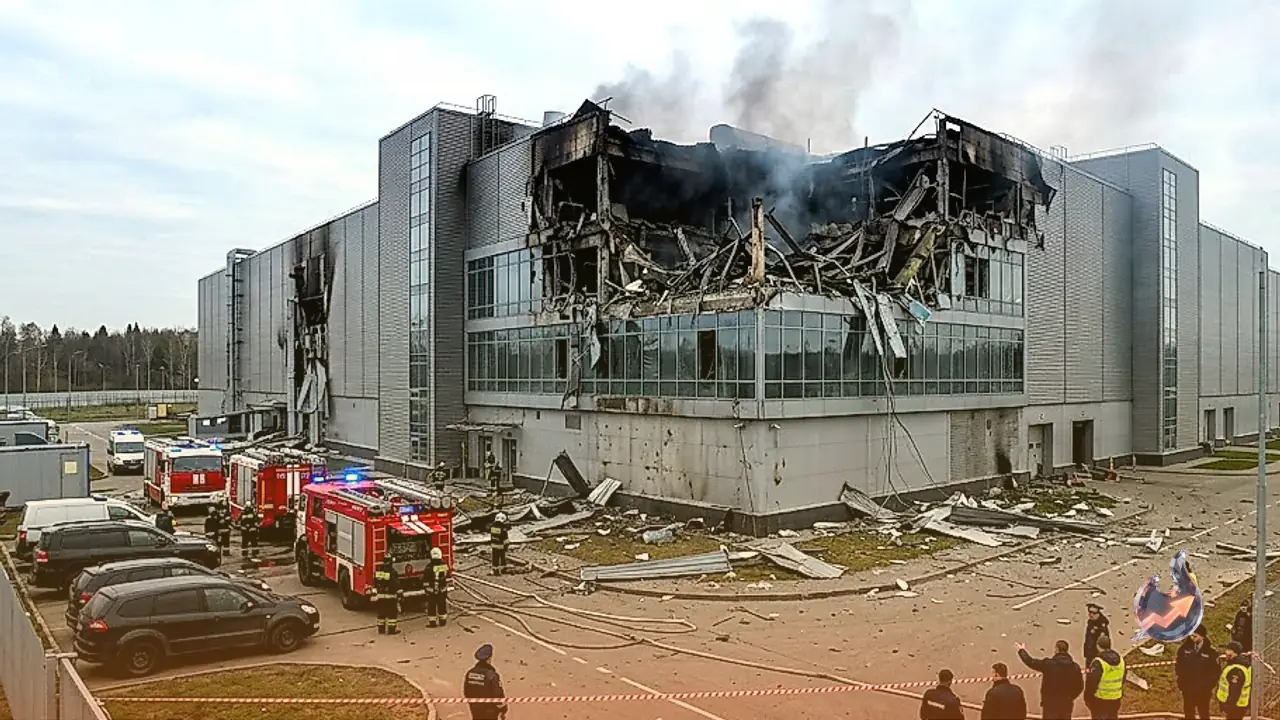


















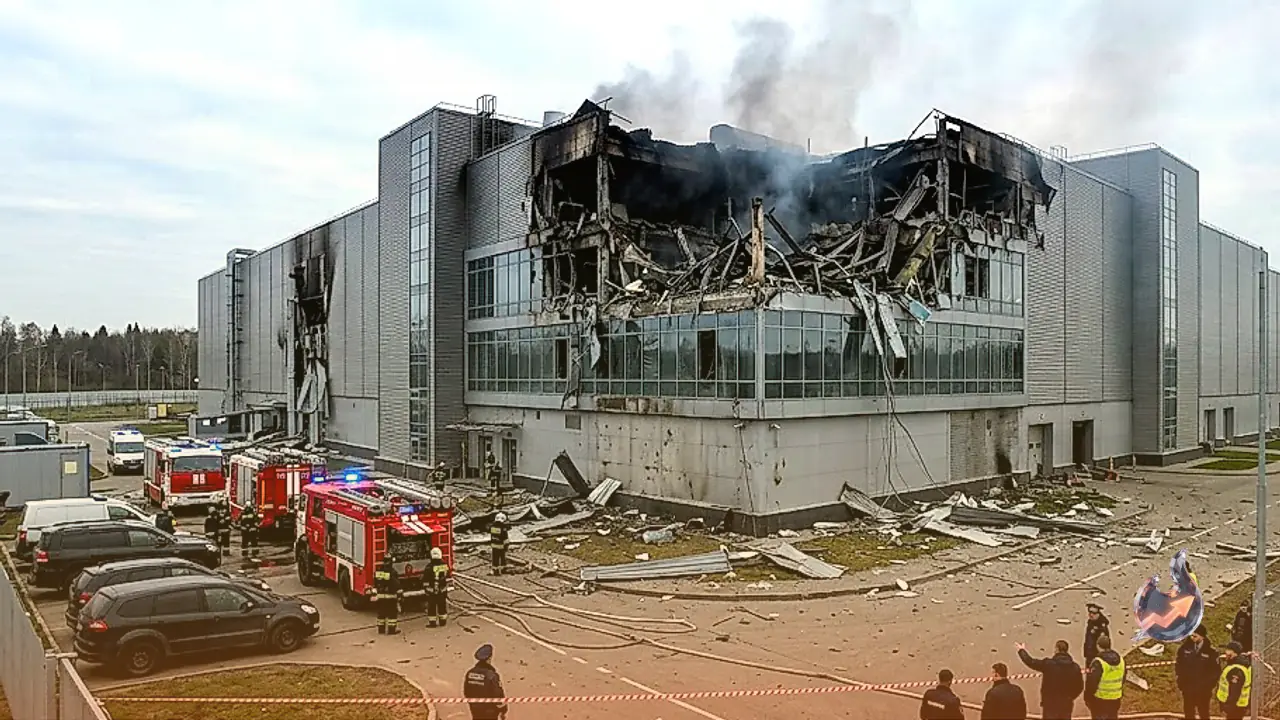

Russia's dominant internet enterprise Yandex is facing severe operational hurdles following consecutive Ukrainian drone incursions that compromised two of its five central data facilities over the past forty-eight hours. Widely recognized as Russia's homegrown equivalent to Google, the technology firm powers the nation's leading online search engine while also operating essential food delivery and ride-hailing networks relied upon by tens of millions of everyday citizens.
Severe Destruction at Sasovo and Kaluga Hubs
According to statements issued by the technology group, the initial blow occurred overnight into Thursday when an aerial drone strike struck its facility located in Sasovo, within the Ryazan administrative territory. The assault inflicted serious physical damage on the installation, forcing administrators to completely suspend operations across the entire compound. Before restoration work could make meaningful headway, a second drone incursion struck on Friday morning against another major installation in Kaluga, a territory positioned southwest of Moscow, rendering a significant segment of that site's infrastructure entirely out of service.
Company representatives stated on Friday that these specialized facilities remain critical for maintaining ordinary digital operations across its software ecosystem. Management emphasized that estimating an exact timeline for when systems will return to full capacity is very difficult. Specialized technical teams are reportedly labouring day and night in an effort to keep core digital services active, though leadership conceded that stabilizing the disrupted network under current conditions is not a simple task.
Supercomputing Infrastructure and AI Capabilities Hit
While the overall magnitude of the digital outage across broader consumer services remains undetermined, the enterprise informed the state news agency Tass that specific AI chatbot capabilities had been rendered temporarily offline. In addition, consumers attempting to manage connected smart home devices were warned that hardware and network operations might experience noticeable technical glitches.
The physical fallout at the Sasovo hub poses particularly deep questions regarding the firm's forward-looking computational ambitions. That facility housed two of the three specialized supercomputers dedicated to engineering and refining the firm's proprietary AI framework. Current assessments have not confirmed whether those advanced computing clusters survived the impact. Meanwhile, the damaged installation in Kaluga stands among the largest technology installations in the entire country, spanning 130,000 square metres (1,399,000 square feet). Demonstrating its enormous capacity, the hub demands an annual volume of electric power on par with the combined consumption of 220,000 UK households.
Tit-for-Tat Escalation Against Server Infrastructure
Ukrainian President Volodymyr Zelensky characterized the offensive as an intentional, mirror-like response to persistent Russian aerial assaults aimed at Ukrainian server facilities throughout recent weeks. Confirming the operations against the technology complexes, the Ukrainian defence ministry explained that damaging such facilities is engineered to force Russia to divert resources toward rebuilding crippled technical capacity. Kyiv maintains that striking these commercial pillars undermines corporate revenue streams that directly or indirectly feed Moscow's wartime operations.
Regarding casualties, the enterprise confirmed that no members of its corporate workforce suffered physical injuries during the strikes on the installations. However, civilian authorities in Kaluga reported that nine individuals were injured when drones hit municipal infrastructure within the city. On the other side of the border, ongoing bombardment of domestic servers has already prompted multiple Ukrainian commercial entities to relocate sensitive data stores from battered domestic servers to secure installations located abroad.
Winter Approaching Amid Widening Infrastructure War
The strikes mark an expanding chapter in the protracted conflict that began with the full-scale invasion in 2022, as both belligerents intensify their operational focus against vital non-military backbones. Moscow has defended its own actions against computing targets by asserting that Ukrainian military intelligence agencies routinely employ those facilities for frontline operations. Conversely, Ukrainian authorities reject those justifications, arguing that Russian forces systematically focus bombardment on civilian networks.
With harsh winter weather rapidly approaching, Russian forces have escalated strikes targeting national electrical grids, repeating tactics observed in preceding years of the conflict. In retaliation, Kyiv's targeted counterstrikes against centralized digital infrastructure like Yandex indicate that commercial server architecture has now become an active battleground in the wider logistical confrontation.