






















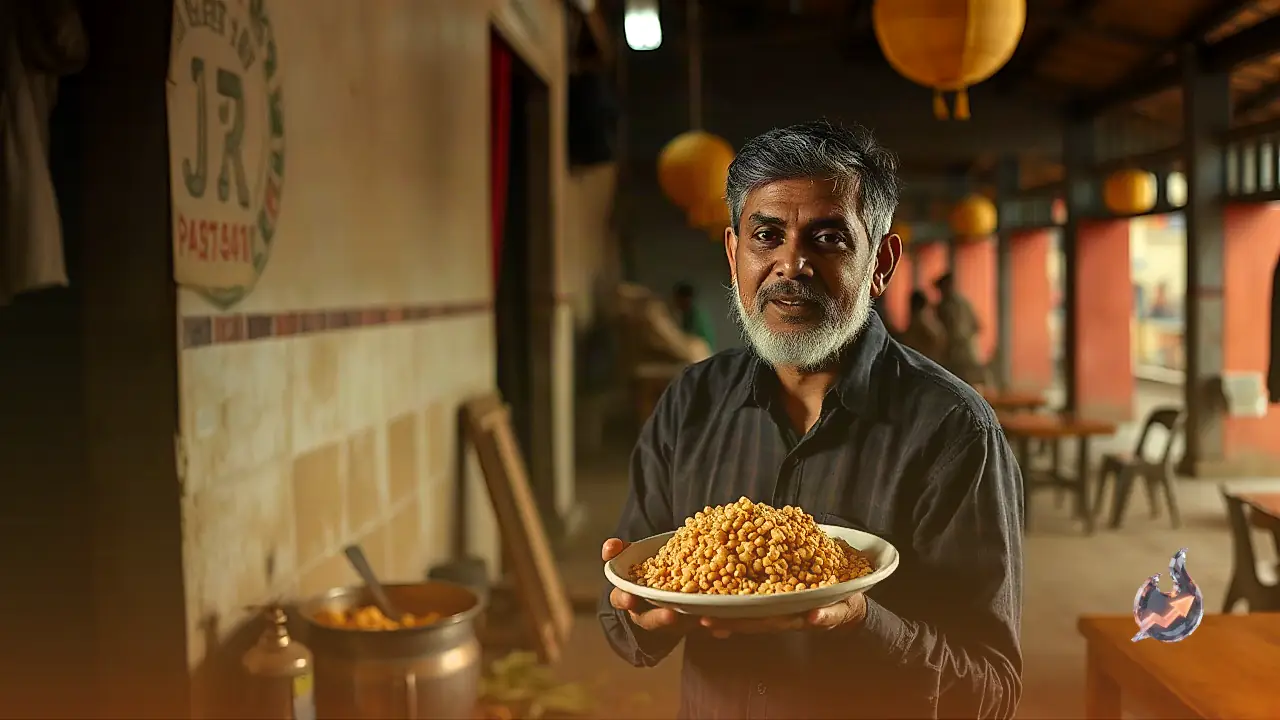

At the bustling Mahua Bagh Chauraha in Ghazipur, every morning around 9 AM is marked by a rich aroma of pure ghee and oil wafting through the air. As the large wok heats up, thin streams of ground urad dal batter are deftly swirled into hot fat to form intricate golden rings. This small traditional shop, run by Sunny Pal, represents far more than a commercial enterprise. Spanning three generations, it has grown into a cherished culinary institution where many locals begin their day with an authentic taste of sweet heritage that has remained unchanged despite modern fast-food trends.
A Three-Generation Legacy of Flavor in Ghazipur
In an era dominated by automated production and rapid dining formats, Sunny Pal's roadside establishment stands out for its firm commitment to hand-crafted quality. The journey originally began with Sunny's grandfather, passed down through the family, and is currently maintained with identical dedication by his grandson. For the people of Ghazipur, this eatery is not merely a place to buy sweets, but a sweet nostalgic marker of the town's living history. The skewers displaying finished sweets demonstrate that this craft is a disciplined art refined over decades. With 150 to 200 pieces sold effortlessly every single day, the steady demand highlights its enduring reputation among food enthusiasts.
Wrist Precision and the Step-by-Step Crafting Process
Achieving the signature shape and structural integrity of an Imarti requires remarkable wrist control, a skill that demands years of rigorous daily practice. As the smooth paste of soaked urad dal is pressed through a piping bag into the simmering mix of ghee and oil, it instantly forms a delicate, flower-shaped lattice ring. Upon being lifted onto a draining sieve, the hot pastry forms a delightfully crispy outer shell within seconds. It is then submerged into lukewarm sugar syrup, allowing the sweet liquid to seep deeply into every internal fiber. This precise sequence is what endows Sunny Pal's creation with its distinct dual texture, crunchy on the outside while remaining meltingly juicy within.
Distinguishing Between Imarti and Jalebi
While casual consumers frequently mistake Imarti for Jalebi, the two iconic Indian confections differ fundamentally in ingredients, fermentation, and design. Jalebi relies on a fermented batter made from refined wheat flour (maida), piped into plain circular spiral loops. Conversely, Imarti is constructed entirely from a rich, unfermented urad dal paste, characterized by a complex, mesh-like central floral pattern. Available at ₹25 per piece, this traditional sweet outshines standard alternatives through its dense texture and rich flavor profile.
Strict Freshness Routine and Operating Hours
To guarantee optimal taste, the shop adheres strictly to a fixed daily routine. Operating continuously from 9 AM to 7 PM, the kitchen prepares fresh batches of batter twice daily. This ensures that no customer receives stale or leftover items, serving only piping-hot confections straight from the stove. Decades have passed and surrounding lifestyle habits have evolved, yet the core commitment to honest preparation remains uncompromised. As the syrup-dripping golden rings are arranged in woven baskets, patrons from every corner of Ghazipur gather to experience this classic delicacy.