





















Pickles hold a prestigious spot on the traditional Indian dining platter. Most households naturally gravitate toward mango, lemon, or green chili pickles, often believing that these conventional options offer the absolute best taste. However, badhal is a seasonal fruit that completely challenges this common perception. Also known as the monkey jackfruit, badhal is a unique fruit whose primary season runs from June to August, though it can still be found in some local markets through September and October.
What is Badhal and Why is it Beneficial?
Visually, badhal closely resembles a miniature jackfruit, but it is characterized by a soft, velvety outer skin. While it is classified as a fruit, its raw version is extensively used in culinary preparations, especially for making tangy chutneys and rich pickles. This fruit is highly nutritious, packed with essential vitamins like Vitamin A and Vitamin C, along with vital minerals such as iron and several powerful antioxidants. Additionally, badhal contains a significant amount of dietary fiber, which is known to aid digestion and support gut health. Preparing this pickle at home allows you to enjoy a distinct flavor profile while reaping these health benefits.
Ingredients Required for the Perfect Badhal Pickle
To prepare this flavorful pickle at home, you will need a set of simple, aromatic ingredients. The primary ingredient is fresh, raw badhal. Along with the chopped fruit, you will need turmeric powder, salt, two tablespoons of dry mango powder (amchur) or vinegar, fennel seeds, fenugreek seeds, mustard oil, asafoetida, nigella seeds, mustard powder, and red chili powder. The addition of vinegar or amchur powder is crucial as it imparts a balanced sourness and acts as a natural preservative to extend the shelf life of the pickle.
Step-by-Step Preparation Method
To begin the preparation, thoroughly wash and peel the raw badhal, then slice it into small, uniform pieces. Next, bring a pot of water to a boil, adding a pinch of salt and a spoonful of turmeric. Submerge the chopped badhal pieces into this boiling water and let them cook for just three to four minutes until they soften slightly. Drain the water completely and spread the blanched pieces on a clean cotton cloth. Allow them to dry in the sun or under a fan for two to three hours to eliminate all surface moisture. Ensuring the pieces are completely dry is a vital step in preventing mold and ensuring the pickle lasts long.
In the next step, lightly dry-roast the fennel seeds and fenugreek seeds in a pan until they release their aroma, then grind them into a coarse powder. Meanwhile, heat a generous amount of mustard oil in a pan until it reaches its smoking point, then turn off the heat and let it cool down to a lukewarm temperature. In this warm oil, add the asafoetida, nigella seeds, the roasted coarse spice powder, mustard powder, turmeric, red chili powder, dry mango powder, and salt. Mix the spices thoroughly into the oil.
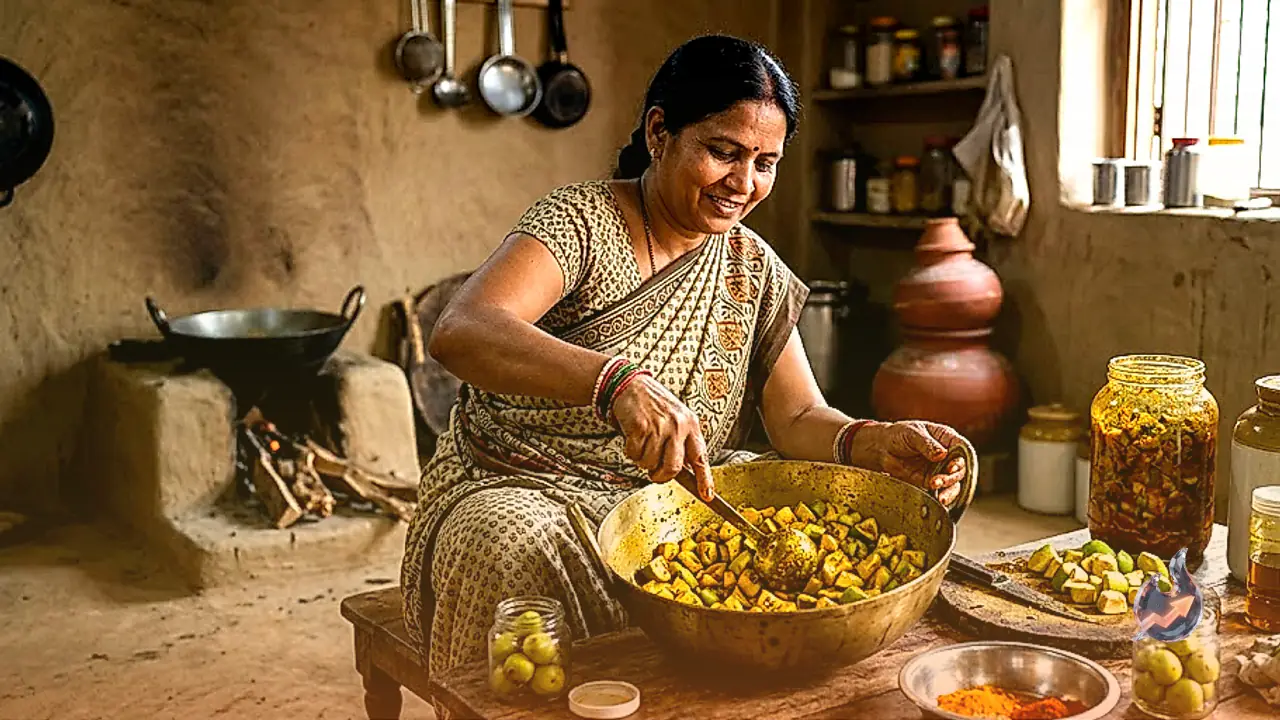
Now, add the dried badhal pieces into this warm spice-infused oil. Stir the mixture gently but thoroughly to ensure every single piece is well coated with the spice blend. Once the mixture has cooled down completely, transfer it into a clean, sterilized, and bone-dry glass jar. Place the sealed jar in direct sunlight for three to four days. Within a few days, the pieces will absorb the rich flavors of the spices, and your spicy, tangy badhal pickle will be ready to serve.