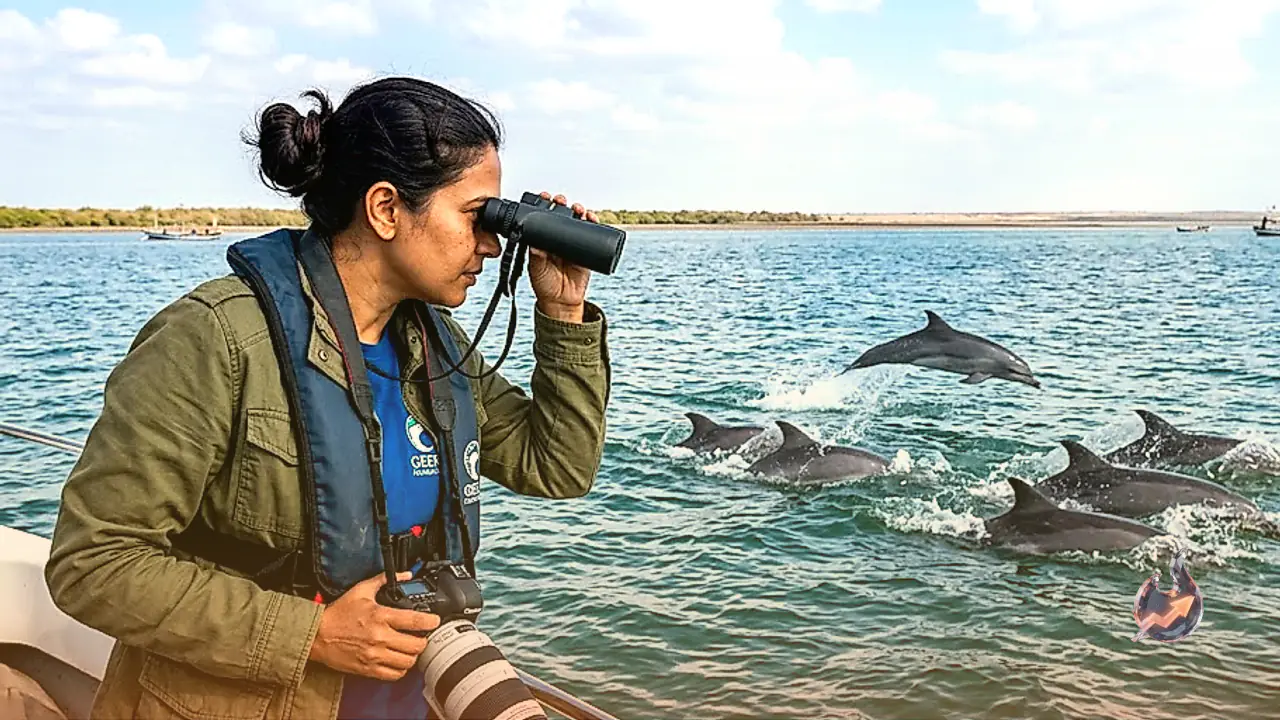
























A vibrant marine ecosystem is rapidly taking shape in the Gulf of South Kutch, where a rising dolphin population has captured the attention of wildlife experts and marine biologists. A comprehensive environmental study conducted by the GEER Foundation between October 2023 and February 2025 covered the waters surrounding the Marine National Park and Sanctuary. The long-term survey revealed that dolphins have now become the most frequently observed marine species across this coastal zone. A total of 193 dolphins were recorded during the monitoring period, signaling a robust and healthy marine environment. Expressing satisfaction over these findings, Gujarat Forest and Environment Minister Arjun Modhwadia affirmed that the state government remains fully vigilant and committed to safeguarding marine biodiversity and protecting coastal habitats.
Survey Statistics and Prominent Coastal Hotspots
To accurately measure the diversity of marine life along Gujarat's coastline, research teams from the GEER Foundation deployed boat surveys to inspect shallow coastal regions and the outer margins of coral reefs. Across 177 distinct group sightings, the teams logged detailed records for 342 individual marine creatures. Data analysis showed that dolphins accounted for an impressive 36.2% of all recorded marine wildlife. Geographically, Narara reef emerged as the primary hub of dolphin activity, recording the highest single location count of 39 dolphins. In addition, significant pods were regularly sighted in the coastal waters near Pirotan Island and Sikka. Explaining the factors driving this concentration, Vinod Rao, Principal Secretary of the Forest Department, noted that strong ocean currents in the Gulf of Kutch transport massive volumes of nutrients and fish schools, making it remarkably easy for dolphins to hunt and feed.
Year-Round Habitat and the Strategic Dedka-Mundeka Island Corridor
The research findings offer compelling insights into the movement patterns and residency of the dolphin population. GEER Foundation Director B.P. Pati highlighted that sightings occurred consistently across all seasons rather than being confined to specific months of the year. This steady presence confirms that a substantial population has adopted the region as a permanent or semi-permanent home. Geographically, Dedka-Mundeka Island was identified as a vital navigation corridor for dolphins, who continuously move through the area following large shoals of fish. During the fieldwork, researchers captured several unique behavioral traits on camera. High-resolution footage showed dolphins swimming in synchronized pods, adjusting their movements to changing wave patterns, and executing coordinated group hunting strategies.
Ecological Significance and Future Conservation Roadmap
The Gulf of Kutch represents a highly dynamic ecosystem characterized by expansive seagrass beds and intricate marine channels. Emphasizing the ecological requirements of the species, Jaipal Singh, Chief Conservator of Wildlife, pointed out that unobstructed open coastal waters are essential for supporting dolphin movement and ensuring an abundant food supply. Adding to this perspective, Amitkumar Nayak, Deputy Director of the GEER Foundation, emphasized that the multi-season presence of dolphins serves as an encouraging indicator for ecosystem health. The empirical dataset established by this study will serve as a foundational baseline for formulating future conservation strategies, helping policymakers ensure the permanent preservation of the delicate marine biodiversity in the Gulf of Kutch.