





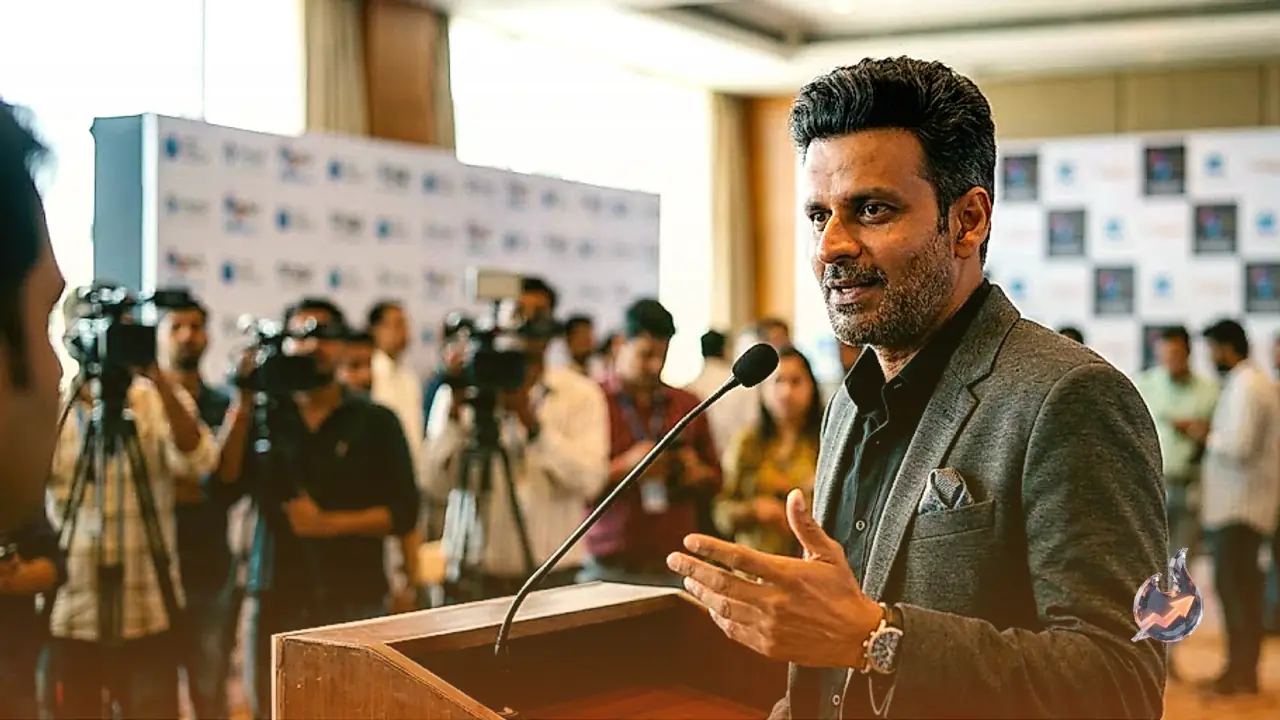














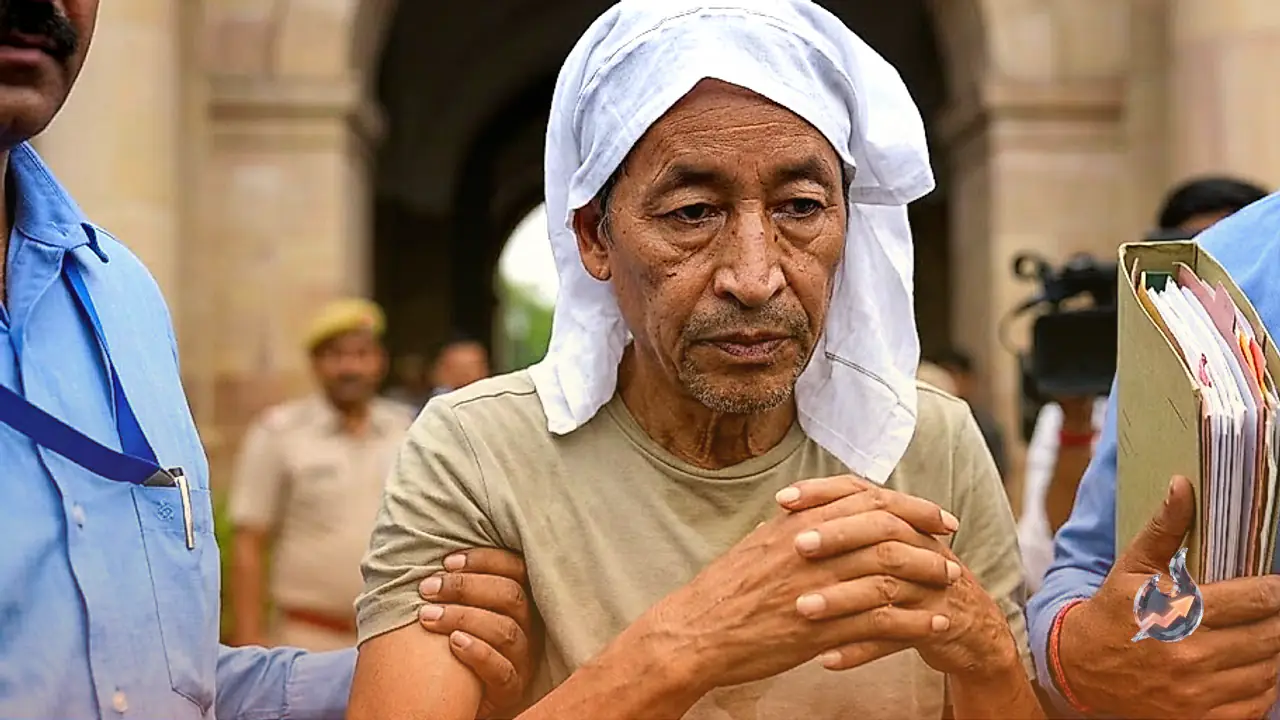

Activist Sonam Wangchuk's hunger strike has now stretched into its 19th day, and a fresh petition in the Delhi High Court has turned his worsening health into a legal question with implications far beyond his own case: can a person who has chosen to stop eating be fed against his will once doctors and courts decide his life is genuinely at risk.
How the matter reached the courts
On 15 July, as the 59-year-old Wangchuk entered the 18th day of his fast, a public interest litigation landed before the Delhi High Court and set off a debate that goes well beyond politics. The plea was filed by advocate and activist Rakesh Kumar Saini, who has asked the court to have Wangchuk shifted to a hospital and given medical treatment, including force-feeding if it becomes necessary. The petition states that Wangchuk has lost around 8.5 kg since he began his fast, that his health is worsening by the day, and that his life could be at risk if the strike continues. It also describes him as having started losing muscle mass and being in immense pain. Saini's central argument is that the government cannot afford to sit back as a silent spectator while a citizen's life hangs in the balance.
What force-feeding actually means, and whether it is even legal
Force-feeding, in medical terms, is the practice of giving food or nutrients to someone who either refuses to eat or is no longer able to eat on their own. It is typically carried out through a tube passed through the nose into the stomach, with the sole purpose of preventing starvation and keeping the person alive. Whether the state actually has the power to do this to a hunger striker, however, is far from settled. Indian courts have historically had to weigh two competing rights against each other: an individual's right to make decisions about their own body, and the state's duty to protect human life. There is no blanket law that automatically permits force-feeding a hunger striker. Courts instead tend to examine each case on its own facts, looking closely at the person's medical condition and how serious the danger to their life has actually become.
Why Wangchuk is fasting in the first place
Wangchuk joined a protest at Delhi's Jantar Mantar that is demanding the resignation of Union Education Minister Dharmendra Pradhan over alleged irregularities in examinations, including NEET. The protest itself began earlier in June, and Wangchuk began his own indefinite hunger strike on 28 June, continuing it without a break since then. His supporters say the fast is meant to draw national attention to the examination irregularities and to push for accountability from those in charge.
Could the body survive without both food and water
Not for very long, according to medical experts. A person can typically survive for several weeks, and in some cases even a few months, without food, provided water is still available. The moment both food and water are withheld together, however, survival time collapses sharply. Most people cannot last much beyond roughly a week without water at all, though the exact number shifts depending on the person's age, underlying health and the surrounding environment, such as heat or humidity.
How long the body can keep going on water alone
The body does not simply shut down the moment food intake stops. For the first day or two, it draws on glucose and stored glycogen for energy. Once those reserves run out, it switches to burning stored fat instead. Neurologist Dr Sudhir Kumar explains that after roughly three days of fasting, the brain begins running on ketones produced from that fat, a shift that helps the body spare its muscle and keep functioning for longer. For close to two weeks, stored fat continues to serve as the body's main fuel source. It is only after the two-week mark that the body starts breaking down muscle tissue itself for energy, at which point overall energy reserves fall sharply and the risk of damage to organs such as the heart, kidneys and liver climbs. Recorded cases show some hunger strikers surviving anywhere from 28 to 40 days, while during the 1981 Northern Ireland hunger strike, the men who died did so only after 46 to 73 days without food. Broadly, with adequate water intake, a person can survive somewhere between roughly 45 and 70 days without food, the exact figure depending on their health, body weight and hydration levels. Take away the water as well, and that window shrinks drastically to just 3 to 7 days.
Why water matters even more than food
Food supplies the body with energy, but it is water that keeps its essential systems running at all. Water regulates body temperature, carries nutrients around the body, sustains blood circulation and flushes out waste. When someone stops eating, the body can adapt by drawing on stored fat and, eventually, muscle for fuel. But when water is also withheld, dehydration sets in fast: blood volume drops, organs start receiving less oxygen and fewer nutrients, kidney function declines, and the odds of organ failure rise sharply. That gap explains why a person can hold out far longer without food than they ever could without water.
Why hunger itself fades during a long fast
A common assumption is that hunger keeps intensifying the longer a strike goes on, but doctors say the opposite tends to happen: it usually fades after the first few days. Dr Sudhir Kumar notes that hunger is typically at its strongest during the first one or two days of a fast. As the body adjusts to starvation, hormone levels shift and appetite gradually drops off. Once a person gets past the initial phase, the body adapts. Because of hormonal changes, appetite decreases, he says. A person may not feel very hungry, but they are likely to feel increasingly weak. Activities such as walking, climbing stairs or any physical exertion become more difficult, he adds. According to Dr Kumar, the brain keeps functioning throughout because it switches over to using ketones as an alternative fuel source, so a person can generally remain conscious and continue making decisions normally, even though concentration, attention span and reaction time tend to decline gradually as the fast wears on.
The scene at the protest site
At one point during his fast, with 17 days already behind him, Wangchuk was surviving on nothing but salt water and had already lost 8.5 kg. Behind him at the protest site hung a banner of the Cockroach Janata Party, demanding Education Minister Dharmendra Pradhan's resignation. Abhijit Dipke, the founder of the Cockroach Janata Party, said, the government is not even willing to talk. They have left him to die.