























Rapid convergence between artificial intelligence algorithms and advanced neuroscience is eroding the ultimate sanctuary of human privacy: the inner workings of the mind. Laboratory breakthroughs demonstrate that complex thought patterns, linguistic structures, and emotional states can be decoded directly from brain activity. More alarmingly, researchers have proven that false sensory perceptions can be artificially implanted into the brain, effectively controlling physical behavior. As these technologies transition from academic research into corporate surveillance tools, workplace monitoring devices, and consumer electronics, experts are warning of unprecedented risks to personal identity and mental autonomy.
Visual Cortex Manipulation and the Mouse Model
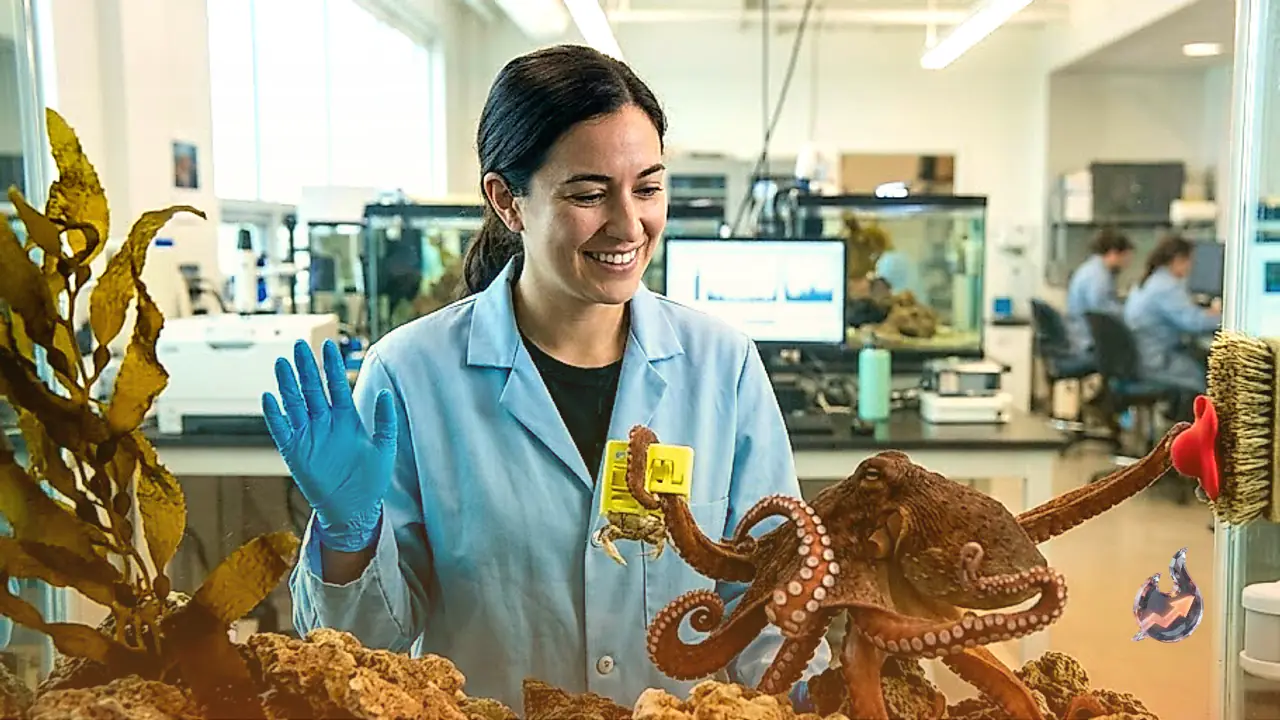
In a foundational series of experiments, neuroscientist Rafael Yuste and his research team investigated how visual information is encoded within the mammalian visual cortex. Using high-contrast patterns of alternating dark and light bars projected onto a screen, the researchers trained mice to respond to specific directional movements. When the bars moved vertically, the mice were conditioned to drink water from a tube; when the bars moved horizontally, they were trained to cease drinking. Throughout this training, advanced laser systems monitored neuronal firing patterns through the skull, successfully isolating the exact neural ensembles responsible for processing each visual cue.
Upon deciphering this neuronal code, the team deployed a secondary holographic laser system to target and excite those precise neuronal populations directly inside the cortex. As neuroscientist Rafael Yuste noted regarding the mouse trial, "The killer experiment was to turn off the screen." With the physical display powered down, the laser system projected artificial patterns of light directly into the visual cortex. The mice responded to these synthetic neural inputs with behavioral patterns identical to real visual stimuli. Their licking frequency, duration, and response delays matched natural perception entirely, proving the animals could not distinguish implanted memories from reality. Yuste emphasized the broader implications, stating, "And what we can do in a mouse today we can do in a human tomorrow."
fMRI Mapping and Algorithmic Thought Decoding
Over the past two decades, functional magnetic resonance imaging (fMRI) has transformed neuroscientific mapping by tracking oxygenated blood flow and hemoglobin iron levels across the cerebral cortex. When combined with sophisticated machine-learning algorithms capable of sifting through massive datasets, fMRI scans can classify complex cognitive and emotional states. Current analytical models can reliably identify indicators of depressive thoughts as well as nuanced interpersonal emotions like envy and schadenfreude.
Furthermore, computational models have demonstrated the ability to reconstruct video clips viewed by research subjects solely by analyzing their corresponding neural scans. In political psychology studies, non-invasive brain imaging of swing voters responding to imagery of presidential candidates successfully identified neural markers of anxiety, disgust, positive engagement, and empathy, offering a direct view into subconscious political sentiment.
Restoring Speech via Neural Interfaces
Neuroscience has advanced beyond decoding static images and basic emotions into the realm of real-time language reconstruction. In 2023, a study led by neurosurgeon Edward Chang at the University of California demonstrated a major milestone in brain-computer interfaces (BCIs). Ann Johnson, a patient who had experienced severe paralysis for 18 years following a brain-stem stroke, received a surgically implanted grid containing 253 electrodes placed on the surface of her cerebral cortex.
This interface decoded her neural signals into written sentences in real time at a rate of 78 words per minute, roughly half the speed of natural speech. The system was linked to a digital avatar programmed with a synthetic voice constructed from a 15-minute recording of Johnson's wedding toast. The avatar's facial movements mirrored her intended expressions, converting neural activity into smiles, pursed lips, and frowns. Following the successful speech reconstruction, neurosurgeon Edward Chang told Yuste, "I cannot sleep." While fewer than 100 individuals globally currently possess implanted BCIs, the rapid trajectory of non-invasive technology suggests widespread exposure is approaching.
Non-Invasive Language Reconstruction and Podcast Studies
Surgical intervention is no longer a prerequisite for extracting verbal thought. In mid-2023, computational neuroscientists at the University of Texas demonstrated that non-invasive fMRI scans could translate brain activity into continuous text. Researchers trained an AI model by having participants listen to 16 hours of narrative podcasts, including "The Moth Radio Hour" and "Modern Love."
When participants subsequently listened to previously unheard stories, the trained model decoded their fMRI brain scans to generate phrases and sentences capturing the essence of the audio stream. Reflecting on non-invasive language decoding, computational neuroscientist Alexander Huth remarked, "Oh my God, this is kind of terrifying." The study demonstrated that semantic thought content could be decoded without surgical implants or explicit verbal output.
Workplace Surveillance and the Neural Data Marketplace
Non-invasive wearable brain scanners are migrating rapidly from university laboratories into commercial enterprises and home environments. Economists anticipate scenarios where gig-economy workers could monetize their cognitive activity, potentially earning up to $30,000 annually by surrendering continuous neural data streams. This emerging trade risks reducing mental privacy to a negotiable commodity, exchanging neural telemetry for financial compensation or platform access.
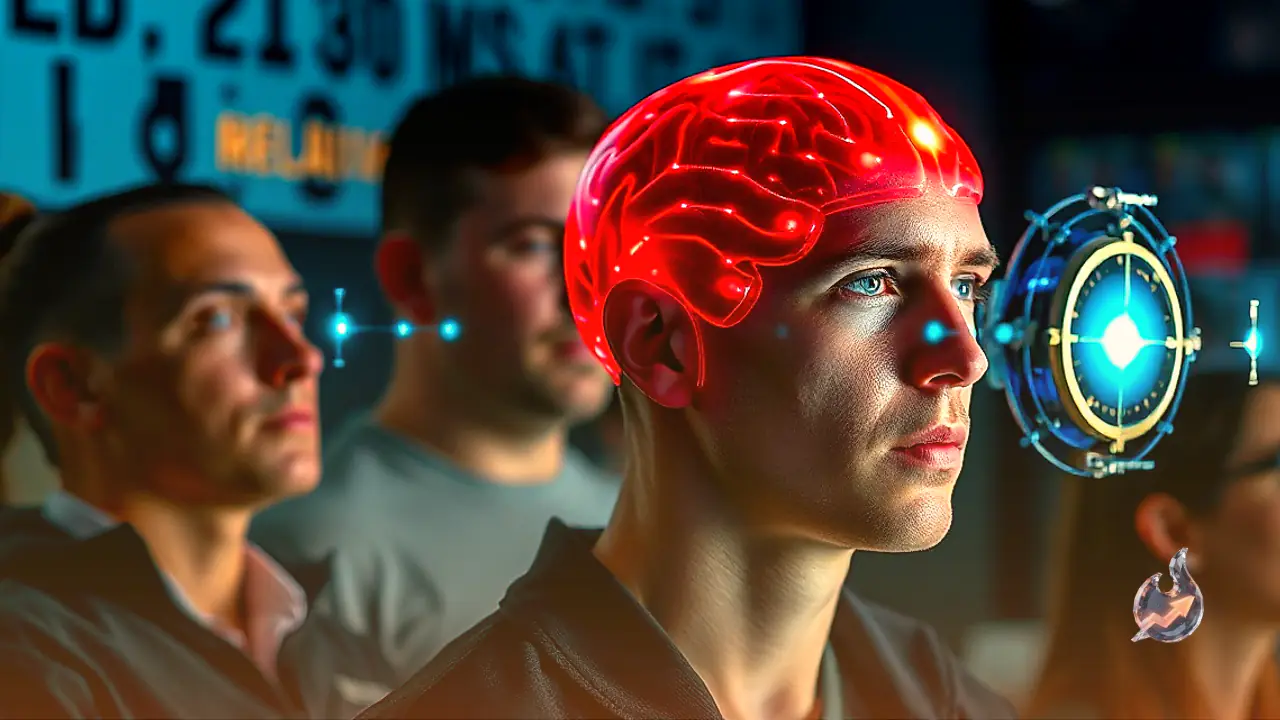
Commercial devices rely primarily on scalp-based electroencephalography (EEG), which measures micro-electrical signals produced by cortical neurons. Neurotechnology firm Emotiv has conducted trials involving office workers wearing integrated EEG headsets and earbuds. The system tracks continuous attention spans, distraction frequencies, and cognitive stress levels, recommending mandatory breaks when focus declines. Although initial programs claim data is anonymized, corporate adoption threatens to turn neural monitoring into a standard productivity metric. Emotiv chief executive Tan Le predicted that workplace brain tracking "will be quite ubiquitous" within five years.
Industrial Safety, School Monitoring, and Law Enforcement
Industrial applications of EEG headbands are already operational, with mining companies and freight operators using neural telemetry to detect driver fatigue and prevent industrial accidents. However, institutional applications have also raised significant ethical alarms. In China, primary schools tested EEG headbands designed by American firm BrainCo to measure student concentration levels. The resulting focus metrics were uploaded to central servers accessible to teachers but hidden from students and parents. The project was suspended following public outcry over a video report documenting the system.
In law enforcement, police forces in Dubai have deployed an EEG-based system called "iCognative" during criminal interrogations. The technology scans a suspect's brain for involuntary electrical spikes that occur when recognizing specific details or physical evidence related to a crime scene. In one murder investigation, a suspect exhibited an immediate neural spike when presented with an image of the murder weapon, leading to a prompt confession after being confronted with the brain wave telemetry.
Consumer Wellness Devices and Corporate Tech Initiatives
The consumer market features numerous EEG devices marketed under wellness and self-improvement branding. Devices such as the iBand claim to induce lucid dreaming, while the Flow headset delivers electrical stimulation to treat depression and anxiety. Another consumer headband, BrainBit, markets applications ranging from meditation tracking and educational attention scoring to online dating matching based on instinctive brain reactions. Commercial applications also extend to neuromarketing, where companies analyze subconscious neural responses to optimize advertising campaigns. In 2022, Emotiv partnered with cosmetics manufacturer L'Oreal to deploy in-store EEG systems that select personalized fragrances based on emotional neural responses.
Major technology corporations are investing heavily in proprietary neural hardware. Meta and Snap are developing neural interfaces that allow users to interact with digital environments and trigger virtual actions by concentrating on specific targets. Apple has secured patents to integrate EEG sensors directly into future iterations of its AirPods line. Meanwhile, neurotech company Kernel developed the "Flow" headset, which combines EEG sensors with infrared optical light to achieve fMRI-quality neural measurements within a wearable helmet structure, with consumer commercialization targeted within the decade.
The Neurorights Framework and International Protections
The realization that neural manipulation can alter perception led scientists to recognize broader societal risks. While cortical reprogramming offers potential therapeutic pathways for severe psychiatric conditions like schizophrenia, the same technology could be deployed maliciously to alter healthy cognitive function. In 2017, Rafael Yuste convened a three-day summit at Columbia University bringing together 25 experts across neuroscience, bioethics, law, and artificial intelligence to address the societal implications of neurotechnology.
The assembly established the concept of "Neurorights," proposing five foundational legal protections designed to safeguard human consciousness
- Mental Privacy: Neural data cannot be decoded, stored, shared, or sold without explicit, informed consent.
- Personal Identity: Strict boundaries preventing external technologies from altering an individual's sense of self or consciousness.
- Free Will and Agency: Preservation of autonomous decision-making free from covert neural manipulation.
- Fair Access to Augmentation: Equitable access to cognitive enhancement technologies to prevent socio-economic stratification.
- Protection from Algorithmic Bias: Safeguards ensuring machine-learning models do not perpetuate structural biases present in training data.
Legislative Milestones and Commercial Data Audits
To advance these protections, Yuste established the Neurorights Foundation, an advocacy organization collaborating with international bodies and sovereign governments. In 2021, Chile became the first nation to enact a constitutional amendment explicitly protecting human brain data and neural activity. Similar legislative evaluations are underway in Brazil, Uruguay, Mexico, Argentina, Spain, and the United States. In April 2024, Colorado enacted the world's first comprehensive neurodata protection law by expanding its consumer privacy act to cover neural data generated by non-medical devices. California enacted similar statutory protections shortly thereafter, while UNESCO's International Bioethics Committee recommended updating global human rights frameworks.
Legal expert Jared Genser stressed the urgency of neurodata protection, stating, "The need to protect neural data is not a tomorrow problem, it is a today problem." A comprehensive audit conducted by the Neurorights Foundation analyzing 30 leading consumer neurotechnology companies underscored the regulatory void. The study revealed that 29 of the 30 companies maintained unrestricted access to consumer neural data, 20 reserved the right to share brain data with third parties, and 2 explicitly indicated data sales to external entities. Without binding regulatory frameworks, commercial entities continue to claim unrestricted ownership over human neural telemetry.