






















Parallel to high-level diplomatic engagements between American and Chinese leadership, underlying military tensions between the two superpowers are surfacing once again. Washington has raised uncomfortable questions regarding whether Beijing is carrying out clandestine low-yield nuclear detonations inside subterranean salt caverns. Officials from both nations have held three confidential meetings over recent weeks to address these accusations, an issue that looms over upcoming diplomatic exchanges.
US Accusations and the Suspicious 2020 Seismic Event
The origins of these intelligence claims trace back seven years. In 2019, the US State Department published an assessment stating that China and Russia were engaged in low-yield nuclear testing. The report highlighted that Beijing had initiated major excavation work in 2018 at the Lop Nur site in Xinjiang province, interpreted by analysts as groundwork for covert testing operations.
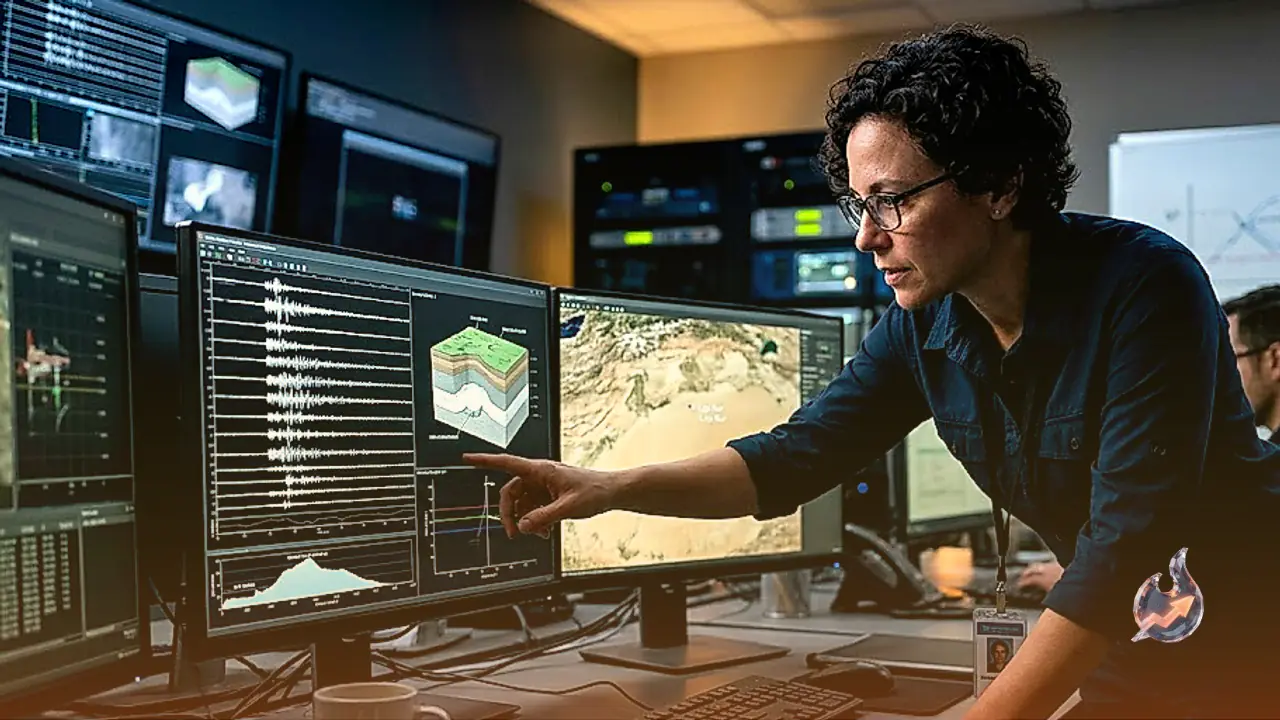
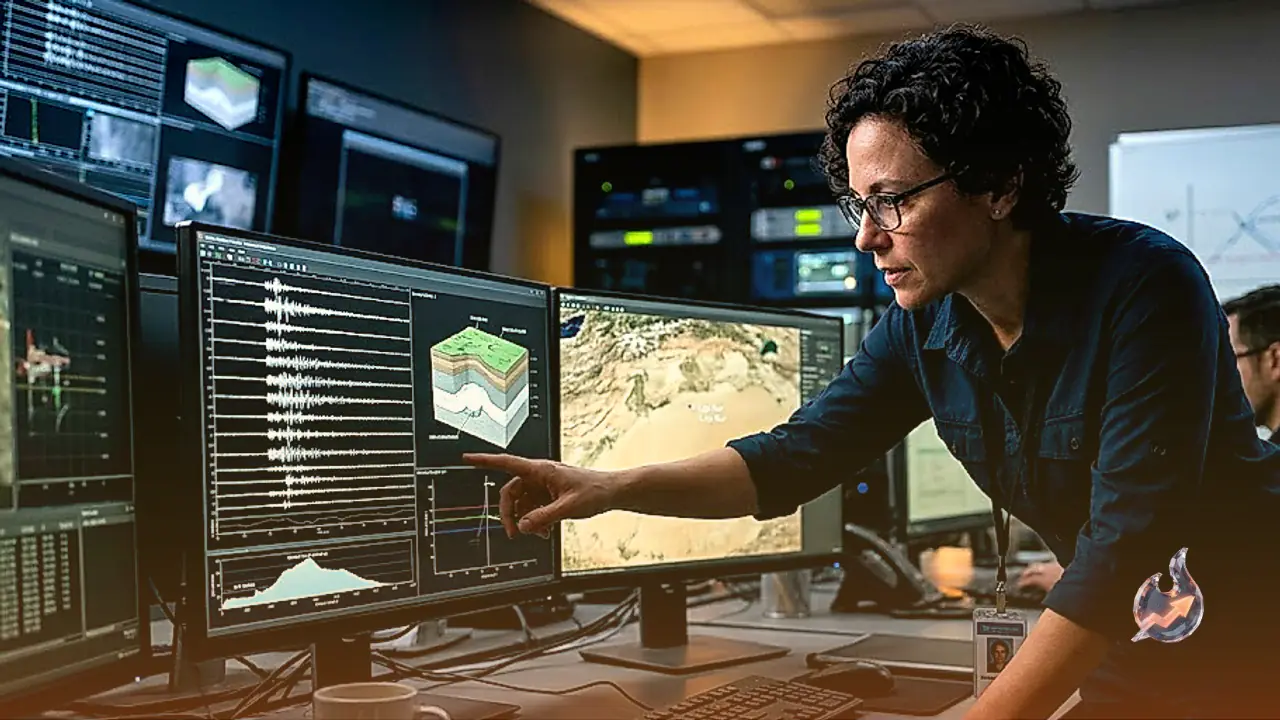
Events took a critical turn on 22 June 2020, when a monitoring station located in Kazakhstan registered two distinct seismic tremors measuring 2.75 magnitude within a span of just 12 seconds. The station operates under the Comprehensive Nuclear-Test-Ban Treaty Organization (CTBTO), which monitors global seismic activity for nuclear explosions. Washington asserted that these signals originated from low-yield nuclear tests conducted at Lop Nur.
Escalating the rhetoric ahead of bilateral talks, Donald Trump posted on Truth Social on 29 October 2025, stating that due to testing programs by other nations, he had instructed the Department of War to immediately prepare for resuming US nuclear weapons tests. Trump emphasized that with Russia and China actively testing, the US would not remain the sole non-testing power. Subsequently, in February 2026, Thomas DiNanno, secretary of the US Arms Control Department, stated in Geneva that the US government possessed clear information regarding China's nuclear explosion on 22 June 2020, adding that Beijing was preparing for tests involving hundreds of tonnes of explosives using advanced decoupling methods.
The Physics of Cavern Decoupling Technology
Traditional underground nuclear tests performed in solid rock or straightforward tunnels generate massive, sharp seismic waves that are easily detected by global sensors. Decoupling, however, is a sophisticated engineering technique designed to muffle shockwaves and conceal the actual explosive yield.
Instead of detonating a warhead in direct contact with tunnel walls, the device is suspended inside a massive hollow subterranean cavern. When such caverns are excavated out of salt rock formations, the surrounding material absorbs a substantial portion of the kinetic energy and blast wave. The physics is akin to dropping a heavy weight onto a soft mattress rather than a concrete floor, drastically reducing the acoustic and physical shock transmitted outward.
A blast that would normally register a strong seismic signal in a standard shaft yields a signature up to 10 times weaker when muffled inside a salt cavern. To outside monitoring stations, the resulting wave closely mimics a minor natural earthquake or a routine commercial mining blast. Lop Nur is situated atop a dried salt lake bed, providing ideal geological conditions for salt dome decoupling.
Decoupling is not entirely unprecedented. Prior to 1996, both the US and the Soviet Union experimented with the method. On 3 December 1966, the US executed a test code-named Sterling at the Tatum Salt Dome in Mississippi to evaluate shockwave dampening in salt structures.
Satellite Evidence and Official Responses
US allegations rely heavily on signal analyses from the 22 June 2020 event. Speaking at a Hudson Institute event on 17 February, US Assistant Secretary of State Christopher noted that supplementary data pointed toward a single controlled blast rather than a earthquake or mining explosion. However, the CTBTO has maintained that the seismic data alone does not conclusively prove a nuclear detonation occurred.
Independent satellite analysis offers further context. Jeffrey Lewis, a nuclear strategy expert at the Foreign Policy Research Institute, reviewed five years of satellite imagery covering the mountain ranges surrounding Lop Nur. Comparative images between 2022 and 2023 reveal expanding spoil piles near tunnel entrances alongside new roads, support infrastructure, and storage facilities, proving ongoing underground excavation.
China continues to firmly deny the allegations. Chinese Foreign Ministry spokesperson Lin Jian dismissed the US claims as baseless fabrications designed to create a pretext for Washington to abandon its own testing moratorium.
The Threat of Low-Yield Tactical Nuclear Weapons
Nuclear arsenals are generally categorized based on their intended strategic role
- Strategic Nuclear Weapons: High-yield weapons designed for long-range delivery against major population centers, command hubs, or strategic military assets to maintain deterrence. The weapons dropped on Hiroshima and Nagasaki fell into this category.
- Tactical Nuclear Weapons: Lower-yield weapons engineered for localized battlefield applications against troop concentrations, fortified bunkers, ships, or missile installations, minimizing collateral devastation across broader regions. Tactical nuclear devices have never been used in combat.
US officials suspect China is accelerating the development of tactical nuclear warheads. Yielding significantly less explosive power than the 15,000-tonne TNT equivalent bomb dropped on Hiroshima, smaller warheads allow multiple re-entry vehicles (MIRVs) to be mounted on a single ballistic missile, complicating missile defense interception.
Global Nuclear Stockpiles and Risk to the NPT
Data from the Stockholm International Peace Research Institute (SIPRI) highlights a concerning trajectory. Decades of arms control progress are stalling as major powers expand and modernize their arsenals amid heightened global friction.
Of the approximately 12,187 nuclear warheads existing globally, Russia and the United States control roughly 83 percent. SIPRI records year-on-year expansion across several states
- Russia: Increased from 4,309 to 4,400 warheads.
- China: Increased from 600 to 620 warheads.
- India: Increased from 180 to 190 warheads.
- North Korea: Increased from 50 to 60 warheads.
Daryl Kimball, executive director of the Arms Control Association, warned that if the US resumes testing in response, it could trigger a domino effect among nuclear-armed states. Such a breakdown would risk destroying the Non-Proliferation Treaty (NPT) framework that has restrained global nuclear proliferation for half a century.