





















A weak monsoon season and erratic moisture distribution across key agricultural belts have triggered the sharpest drop in India's rice production in 17 years, with total output estimated to contract by 1 crore tonnes compared to last year. The last time the country experienced a sharper downturn was in 2009, when a 10.1% fall in output caused market rates to jump by as much as 20%. While state-owned warehouses currently hold nearly six times the minimum required grain reserves, the domestic open market is already witnessing notable price spikes across kitchen staples and premium grain varieties.
First Output Drop in a Decade
Estimates for the year 2026 place aggregate rice output at 14.4 crore tonnes, representing a 6.5% decline from the 15.4 crore tonnes harvested in 2025. This downturn marks the first year-on-year contraction in Indian rice cultivation in ten years. Because farm-level harvesting activities are still actively underway across different agricultural zones, current projections remain provisional assessments of the season's overall shortfall.
Four Key Pressures Behind the Shrinking Crop
Agronomists and trade bodies attribute the sharp drop in production to a sequence of climatic and hydrological hurdles across the crop cycle
1. Severe rainfall deficits across primary growing belts: Paddy is an exceptionally water-intensive crop. By July, an El Niño weather pattern took hold across the central Pacific Ocean, disrupting the four-month south-west monsoon that commenced on 1 June. Official data from the Meteorological Department reveals that nationwide rainfall between June and September trailed normal benchmarks by 12%. However, the deficit surged to as much as 40% in key paddy-producing states, including Punjab, Bihar, Andhra Pradesh, Haryana, Karnataka, Kerala, and Telangana. Together, these seven states account for 45% of national rice production.
2. A 3.6% reduction in cultivated acreage: Kharif crops make up approximately 80% of India's annual farm output. Figures compiled by the Union Agriculture Ministry show that kharif paddy coverage stood at 4.31 crore hectares as of 25 September, reflecting a 3.6% drop compared to the 4.47 crore hectares sown during the preceding season.
3. Terminal dry spells and yield degradation: Rainfall ran below normal precisely when standing crops reached the critical grain-filling and ripening stage. B.V. Krishna Rao, president of the Rice Export Association, pointed out that prolonged dry weather during recent weeks severely undermined yield prospects across eastern and southern states. Consequently, the shortfall stems not merely from smaller planted acreage, but also from diminished yield per hectare.
4. Depleted water reservoirs threaten winter sowing: Nitin Gupta, deputy country head of agricultural trading firm Olam Agri India, noted that winter-sown rabi paddy acreage and yield are also poised for a decline due to below-normal reservoir storage. According to the Central Water Commission, water levels across the nation's 178 monitored reservoirs stood at 70.8% of capacity on 24 September, compared with 89.7% recorded during the corresponding period last year.
Domestic Market Movements and Global Ripples
While physical grain supplies in local markets remain broadly sufficient for day-to-day retail demand, prices have steadily climbed as traders factor in tighter harvest volumes. Department of Consumer Affairs tracking shows that average domestic rice prices have moved up by as much as 7% over the past year, averaging ₹45.77 per kg as of 27 September.
Non-basmati premium grades are seeing even sharper upward revisions. In southern states, consumer staple Sona Masuri has jumped 25% to reach ₹58 per kg, while Swarn rice, widely preferred across eastern India, has climbed 10% to ₹35 per kg. At the same time, freshly harvested basmati paddy has begun arriving at wholesale mandis at rates around ₹4,000 per quintal, roughly 30% higher than last year's opening levels.
Because India supplies 28% of global rice production and accounts for 45% of total international exports, domestic supply shifts exert substantial pressure on international markets. Export prices have already moved higher in secondary exporting hubs such as Thailand and Vietnam. With maritime supply networks already strained by the conflict involving Iran, reduced Indian output could push global food prices higher. Furthermore, B.V. Krishna Rao noted that as farmers fetch remunerative returns in open mandis for superior grades, state procurement volumes may dwindle, moderating public stock accretion.
Massive Buffer Stocks vs Real Usability
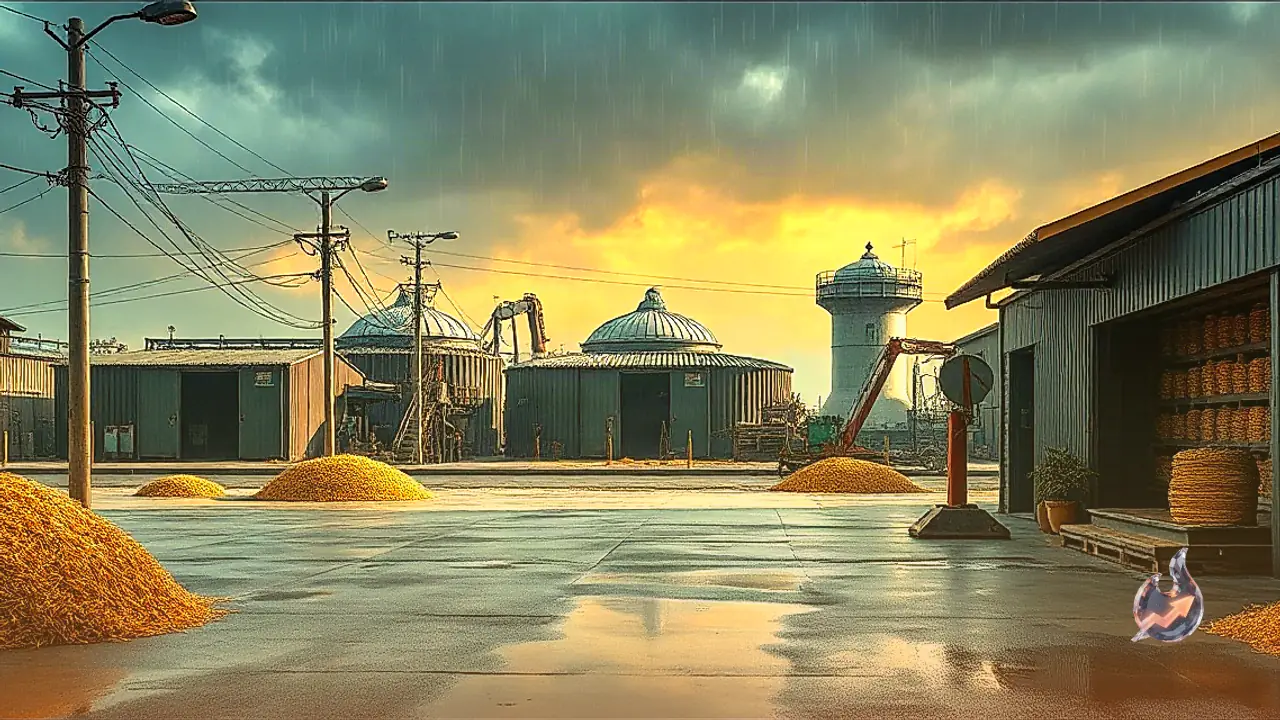
A production drop does not automatically point to an outright grain deficit within the country, primarily because state silos hold roughly 6 crore tonnes of grain. Each year, the central government procures paddy directly from farmers under the minimum support price framework, with the MSP for 2026-27 fixed at ₹2,441 per quintal. Procured stocks are deposited in Food Corporation of India (FCI) facilities to support domestic subsidized distribution, biofuel feedstock programs, and export channels.
The statutory buffer norm required holding 1.03 crore tonnes as of 1 October 2026. In comparison, actual paddy reserves on 1 September 2026 stood at 5.96 crore tonnes, nearly six times the mandatory requirement. This substantial reserve accumulated largely because the government enforced a comprehensive ban on non-basmati exports between July 2023 and October 2024 to curb domestic inflation, which had run near 11% in prior periods.
Despite this massive headline inventory, grain analysts highlight three structural constraints that limit how much of this reserve can quickly cool open-market inflation
1. Large paddy share requiring milling: A substantial portion of the 6 crore tonnes inventory consists of unhusked paddy rather than ready-to-cook grain. A report on India by the United States Department of Agriculture estimated that around 3.5 crore tonnes of the state stockpile was un-milled paddy as of August 2026. Processing this volume through rice mills requires considerable lead time. Moreover, government warehouses stock a mix of coarse, broken, basmati, and regular white varieties, whereas retail consumer demand heavily concentrates on specific eating grades.
2. Substantial allocations for ethanol blending: A sizable quantity of grain is diverted toward domestic biofuel manufacturing. Ministry of Petroleum records indicate that grain released from FCI warehouses accounts for 24.64% of total ethanol production. FCI allocated approximately 50 lakh tonnes of rice toward biofuel conversion during 2024-25, and designated 72 lakh tonnes for 2025-26. Between June 2025 and June 2026 alone, state agencies delivered 63.5 lakh tonnes of grain to commercial distilleries.
3. Statutory welfare reservations: Central grain reserves cannot be arbitrarily liquidated onto commercial wholesale exchanges. A major portion remains ring-fenced for the Public Distribution System (PDS) and statutory food security entitlements. Under existing operational guidelines, private traders can purchase only what remains after accounting for welfare allocations and emergency buffer thresholds.
Downstream Pressures on Animal Feed and Trade
The lingering moisture deficit poses ongoing risks beyond the kharif harvest, potentially constraining rabi acreage and trimming carry-over stocks into 2027. Ancillary sectors such as animal feed manufacturing are also feeling the squeeze. In commercial poultry farming, feed accounts for nearly 70% of total operational costs, with broken rice serving as a primary carbohydrate base. Commenting on the trade trajectory, Ranjit Singh Jasson, CMD of major Punjab-based exporter Jasson Grains, observed that mandi arrivals across Uttar Pradesh, Punjab, and Haryana are slated to climb through the first week of October, which could ease basmati quotes once supply volumes peak.