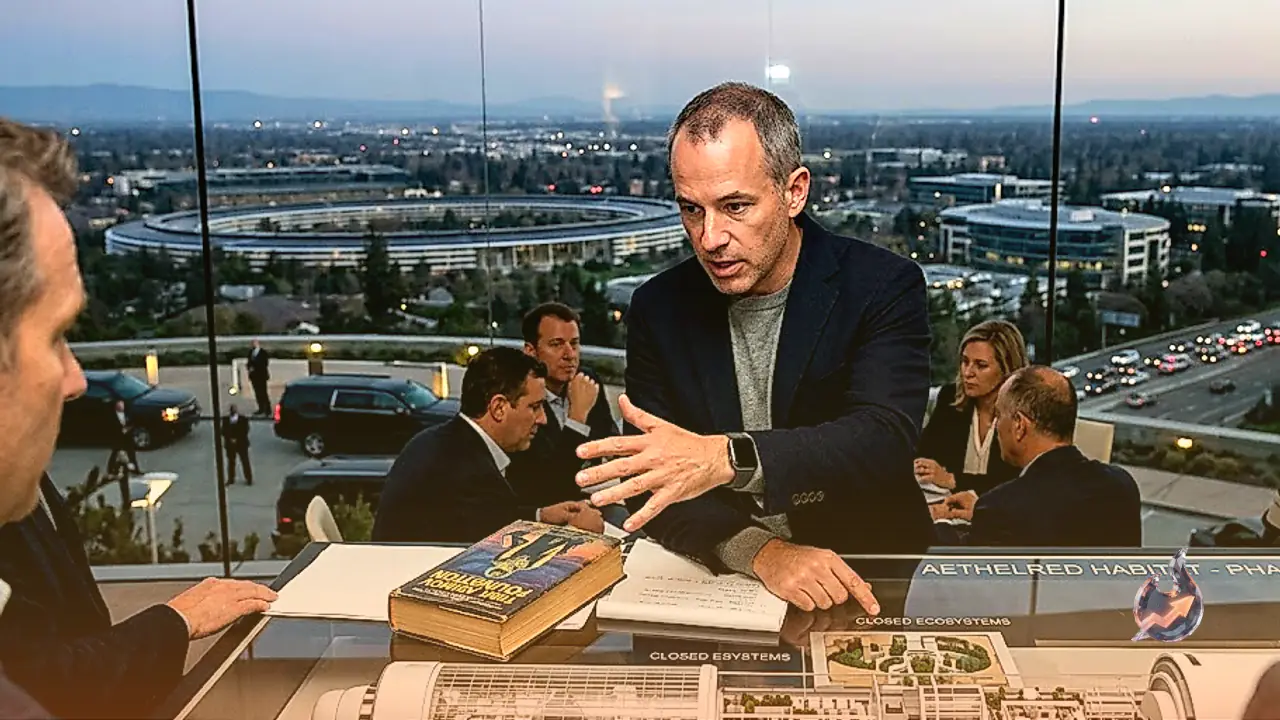


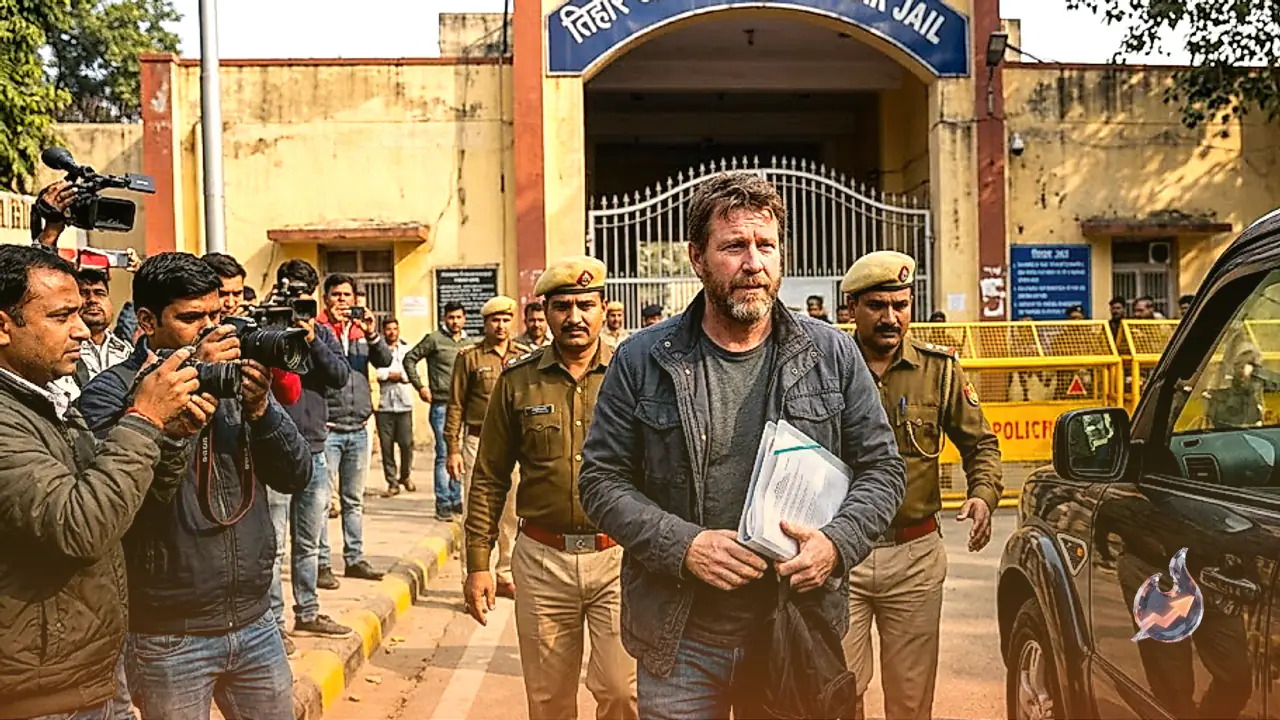

















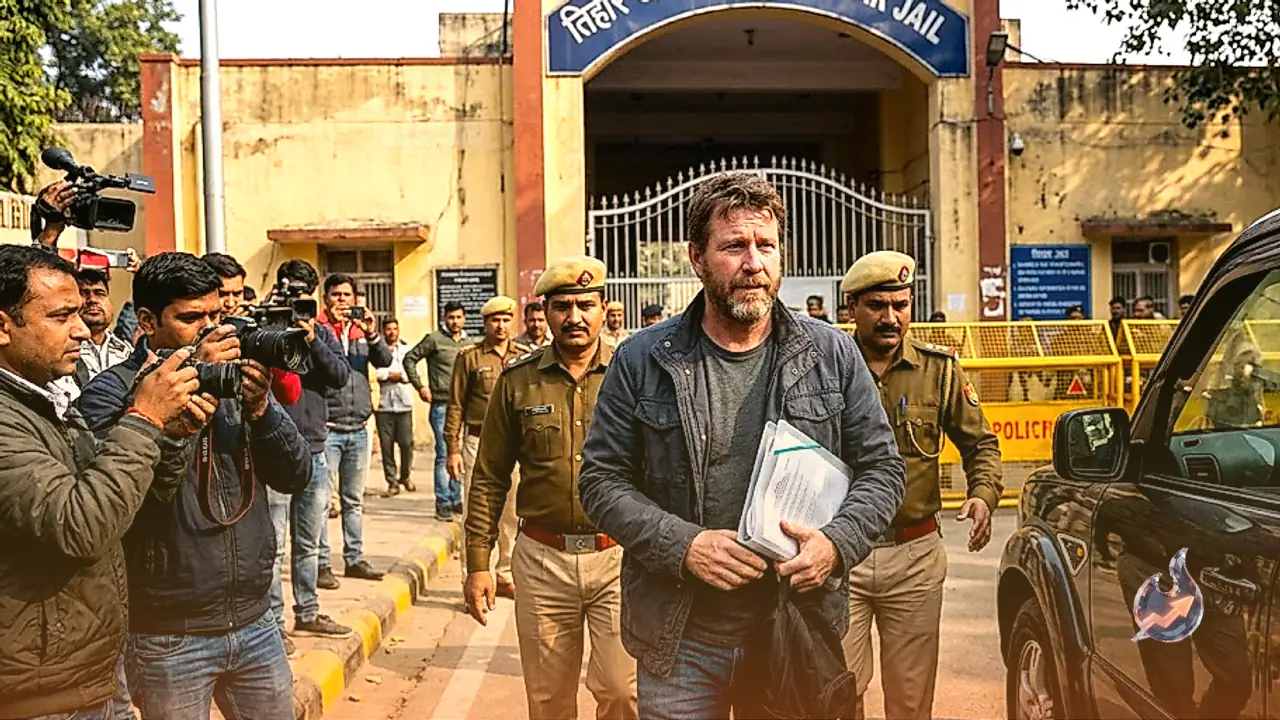

American citizen Matthew VanDyke, who was arrested six months ago by India's National Investigation Agency (NIA) in a major counter-terror operation, departed for the United States shortly after his release from Tihar Jail on the night of 24 September. Accused of participating in a terror conspiracy, supplying weapons to insurgent groups, and imparting drone warfare training along the Indo-Myanmar border, his exit under stringent Unlawful Activities (Prevention) Act (UAPA) proceedings has sparked widespread legal and political debate across the country.
Who Is Matthew VanDyke? A Profile of the Self-Described Soldier for Hire
Born in Baltimore, USA, in 1981, Matthew VanDyke identifies himself as a mercenary, a soldier for hire who offers combat services to various nations and organizations for financial compensation. According to his official credentials, VanDyke is the founder of a private military company named 'Sons of Liberty International' (SOLI), a war correspondent, and a documentary filmmaker. Over the years, he has also spent time as a prisoner of war in conflict zones including Syria and Iraq.
His career in conflict zones spans over two decades. Between 2007 and 2010, VanDyke undertook solo motorcycle journeys across North Africa and the Middle East, reporting as a journalist. During this period, he was detained multiple times in Iraq but managed to escape on each occasion.
In 2011, amid the civil war in Libya between the National Transitional Council (NTC) and dictator Muammar al-Gaddafi, VanDyke entered the country and joined an anti-Gaddafi rebel militia. Captured by Gaddafi's government forces, he spent nearly five months in solitary confinement before staging a prison break with fellow inmates on 24 August 2011.
Following his time in Libya, VanDyke traveled to Syria, where he produced two documentary films: 'Not Anymore: A Story of Revolution', focusing on Syrian rebels fighting President Bashar al-Assad, and 'Point and Shoot', detailing his personal experiences. In 2014, after the Islamic State (ISIS) kidnapped and publicly beheaded his journalist friends James Foley and Steven Sotloff, VanDyke established SOLI.
SOLI claims to offer free military training and tactical assistance to vulnerable populations in high-risk zones globally. Through this organization, VanDyke trained Assyrian Christian militias in Iraq to fight ISIS forces. Following the outbreak of the Russia-Ukraine war in 2022, he traveled to Ukraine to train the Territorial Defence Forces, a civilian reserve component of the Ukrainian military.
The NIA Arrest in India and Counter-Terrorism Allegations
The NIA apprehended VanDyke at Kolkata airport on 13 March as part of a coordinated anti-terror sweep. Simultaneously, six Ukrainian nationals were taken into custody at Delhi and Lucknow airports.
Investigation records indicate that all seven foreign nationals entered India on valid tourist visas. Subsequently, they traveled from Guwahati toward Mizoram without securing the necessary Protected Area Permits required for foreign nationals entering designated border zones in the state.
Crossing the international border from Mizoram into Myanmar, the group reached Camp Victoria, a primary military stronghold of the Chin National Army (CNA). The CNA is an armed insurgent organization actively resisting Myanmar's military junta along the India-Myanmar border region.
Initial claims by the NIA alleged that VanDyke and his Ukrainian associates procured and supplied weaponry to insurgent factions operating in North-East India. Furthermore, they were accused of conducting specialized training for Myanmar rebel groups in drone operations, assembly, field deployment, and anti-drone jamming techniques. The agency also alleged that the group illegally transported a substantial consignment of military-grade drones from Europe into Myanmar using Indian transit routes. In court proceedings on 16 March, the NIA stated that the accused had confessed to aiding insurgent networks in the region.
The Legal Turning Point: How UAPA Default Bail Was Granted
At the time of their arrest, the NIA invoked Section 18 of the UAPA against all seven individuals, a provision dealing with terrorism conspiracy, incitement, and facilitation. Under statutory UAPA mandates, investigating agencies are required to conclude investigations and submit a formal charge sheet within 180 days. For VanDyke, this 180-day window expired on 8 September.
On 8 September, the NIA filed its charge sheet before the court. However, instead of invoking UAPA terror charges, the charge sheet cited Sections 21 and 23 of the Immigration and Foreigners Act, 2025. Section 21 pertains to entry without valid travel documents, while Section 23 addresses overstaying or violating visa conditions. The agency informed the court that its broader investigation under UAPA remained active and required additional time to assemble conclusive evidence.
This procedural distinction opened the pathway for mandatory default bail. While Section 43(D)(5) of the UAPA sets an exceptionally high bar for regular bail, the failure to present a full substantive charge sheet under UAPA within the mandatory 180-day period entitles an accused to default bail under Indian criminal procedure.
Special NIA Judge Prashant Sharma at Delhi's Rouse Avenue Court observed that because the UAPA investigation remained pending and the filed charge sheet was incomplete regarding terror offences, the accused could not be denied statutory default bail. On 18 September, the court granted bail to VanDyke on personal and surety bonds of ₹1 lakh each, while initially instructing him not to leave Delhi.
Concurrently, the Foreigners Regional Registration Office (FRRO) compounded the immigration violations after levying a fine of ₹5.5 lakh on each accused. On 23 September, the court granted default bail to the six Ukrainian co-accused on cash bonds of ₹1 lakh each. The court also modified VanDyke's bail terms, allowing him to furnish a cash bond alone instead of a local surety, recognizing that as a foreign national he lacked local sureties in India.
On 24 September, the court permitted all seven accused to travel to their home countries, emphasizing that the right to travel abroad is recognized as an integral component of personal liberty under Article 21 of the Indian Constitution. The NIA also stated before the court that the immediate physical presence of the accused was not required at that specific stage of the ongoing probe.
Conditions Imposed for Foreign Travel
While granting permission to depart the country, the court instituted specific mandatory conditions
- The accused were required to provide their detailed residential addresses, contact numbers, and email details abroad to the NIA within 24 hours prior to departure.
- All accused individuals must return to India upon the completion of one month.
- They must formally notify the court within 72 hours of their return to Indian jurisdiction.
- They are required to cooperate fully with the NIA's ongoing investigation and appear whenever summoned, either in person or via video conferencing.
Following the fulfillment of these procedural formalities, VanDyke and the six Ukrainian nationals were released from Tihar Jail on the night of 24 September and subsequently boarded flights out of India.
Political Fallout and Diplomatic Questions
The departure of foreign nationals facing terror-related investigations has provoked strong reactions from political figures and strategic analysts in India.
Congress leader Jairam Ramesh publicly questioned the development, stating that during US Secretary of State Marco Rubio's visit to India between 23 and 26 May, US Ambassador Sergio Gor raised VanDyke's detention directly with Indian Foreign Secretary Vikram Misri. Ramesh alleged that diplomatic pressure influenced the legal outcome and questioned how the foreign nationals originally secured Indian visas and traversed sensitive border corridors into Myanmar.
AIMIM chief Asaduddin Owaisi criticized the process, asserting that foreign intervention appeared to dictate UAPA prosecution standards, contrasting the quick release of foreign nationals with the prolonged detentions faced by Indian citizens under the same statute.
Strategic analyst Dr. Brahma Chellaney noted that India has historically seen high-profile legal proceedings against foreign entities or nationals diluted or altered under diplomatic or strategic considerations.
Will Matthew VanDyke Return to Face Trial?
The judicial order explicitly mandates that VanDyke and his co-accused return to India after one month and report to the court within 72 hours of arrival. The NIA's investigation under the UAPA remains active, and if investigators collect adequate evidence, the agency retains the statutory right to file a supplementary charge sheet, which could reactivate full prosecution under anti-terror provisions.
However, legal observers point to historical precedents where foreign nationals released on bail or permitted to travel abroad did not return to stand trial in India
- Warren Anderson: Following the December 1984 Bhopal gas tragedy, Union Carbide chief Warren Anderson was arrested in India but subsequently granted bail and allowed to leave the country. He never returned to face judicial proceedings.
- Ottavio Quattrocchi: In the 1986 Bofors case, Italian businessman Ottavio Quattrocchi was named as an accused by the CBI. He departed India in 1993 and avoided subsequent extradition efforts.
- Italian Marines Case: In February 2012, two Italian marines aboard the oil tanker Enrica Lexie shot and killed two Indian fishermen off the coast of Kerala. After being arrested in India, they were permitted to travel to Italy during court proceedings and did not return under original trial terms.
While these historical cases do not dictate VanDyke's specific choices, legal remedies remain available should he fail to return within the designated timeframe. The trial court could revoke his bail bond and issue non-bailable warrants. Additionally, Indian authorities could initiate formal extradition proceedings with the United States under the existing India-US Extradition Treaty framework, subject to applicable international legal parameters.