


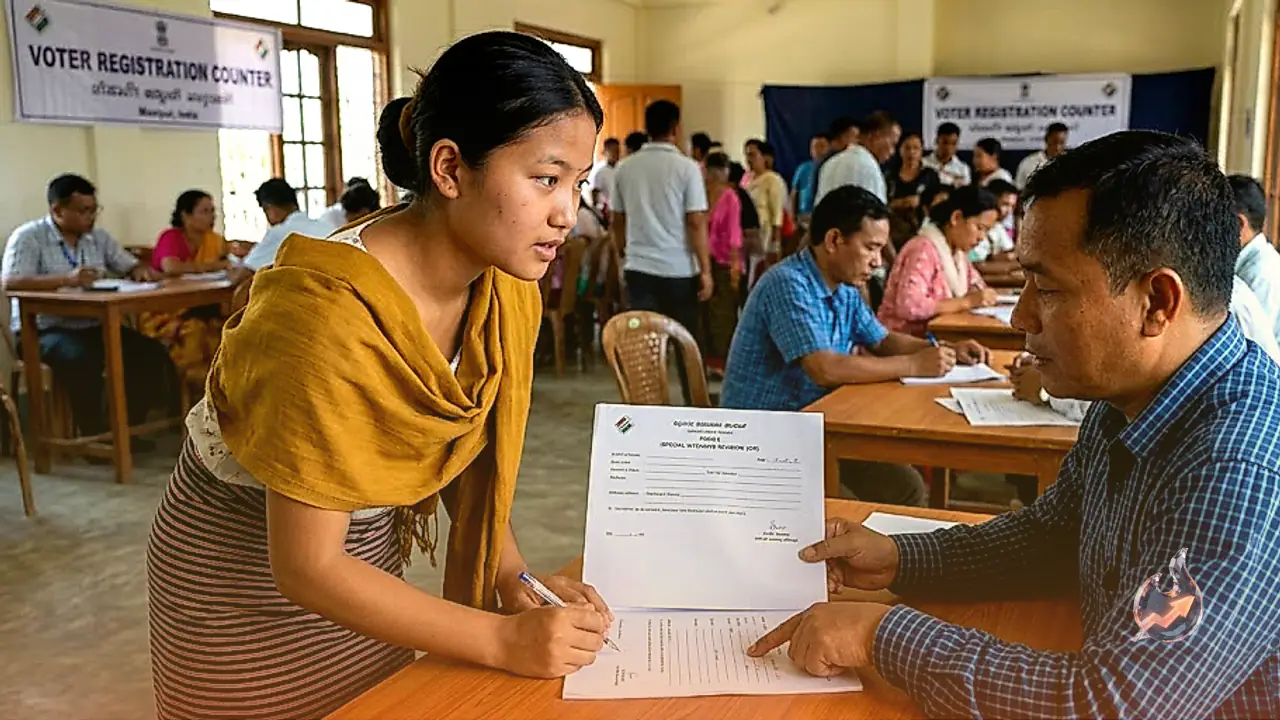
















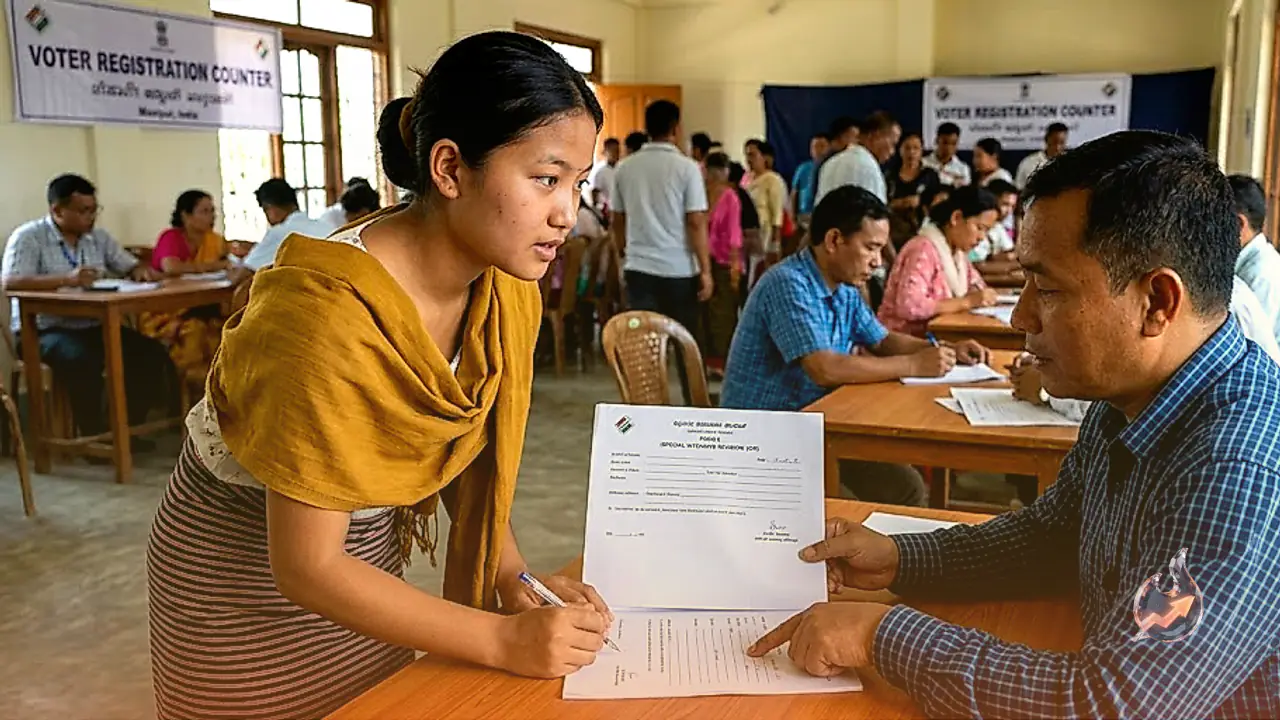

In an important procedural recalibration for electoral roll enrolment, the Election Commission has removed the supplementary Special Intensive Revision (SIR) declaration attached to Form 6 in states and union territories where the intensive exercise has been completed. By Wednesday night, the systemic modification reflected on the official ECINet portal as well as on the individual web portals of respective Chief Electoral Officers. As a consequence, aspiring voters in these specified territories are now required to submit solely the standard Form 6 as prescribed under the Registration of Electors Rules, 1960.
However, this procedural relaxation has not been rolled out nationwide. In regions where the Special Intensive Revision remains actively under way, the additional declaration form continues to be an obligatory part of the online application pipeline. The selective rollback has brought renewed focus on the internal deliberations within the poll authority, especially regarding the operational necessity of attaching extra declarations to statutory forms and how this latest step connects to the full commission meeting convened on September 26.
Origin of the Online SIR Declaration Mechanism
The controversy surrounding the voter enrolment documentation began when an auxiliary section dedicated to the SIR was directly embedded into the online version of Form 6. Through this digital addition, fresh applicants were required to specify whether their own names, or those of their parents or grandparents, appeared in the previous electoral rolls compiled during earlier SIR drives. If a family registration history existed, applicants were further mandated to furnish specific historical record markers, including booth allocations and serial numbers.
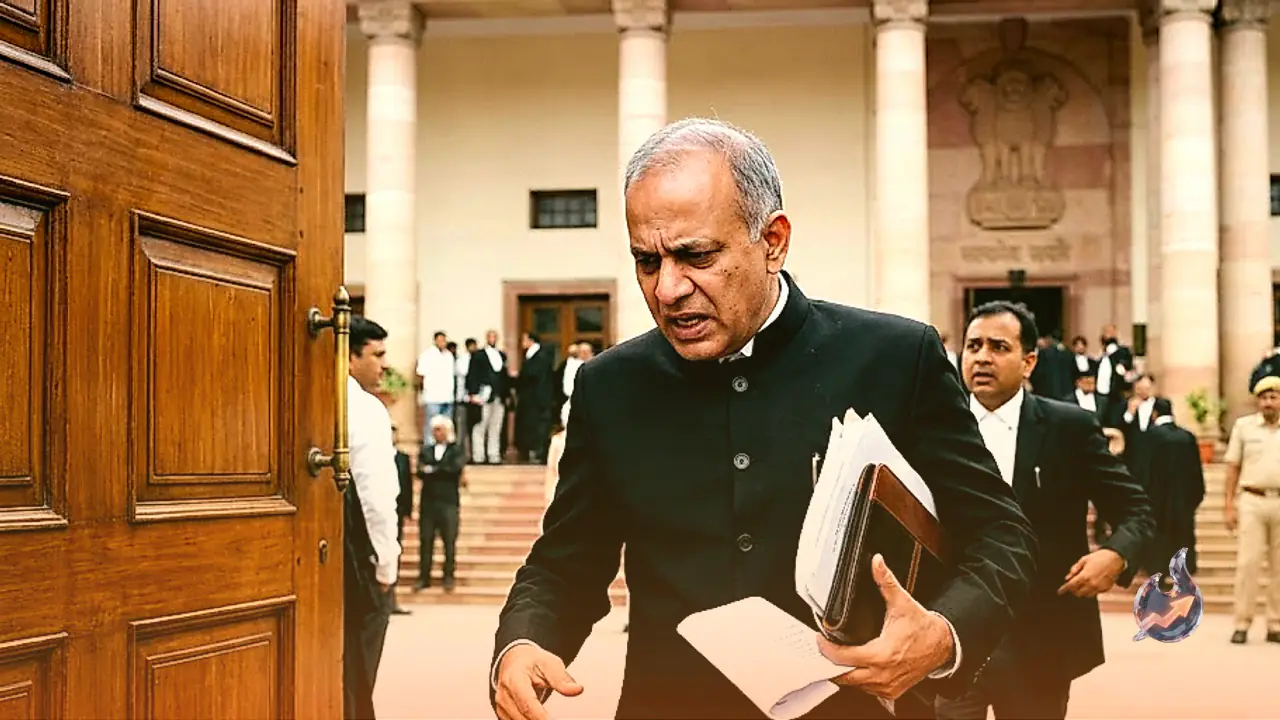
This extra demand for historical data provoked strong procedural reservations at the helm of the commission. Election Commissioners Sukhbir Singh Sandhu and Vivek Joshi formally flagged the inclusion of the module. They questioned how a statutory application template framed under the Registration of Electors Rules, 1960 could be modified or augmented without going through formal rule amendment processes. Sandhu later characterized the newly appended online declaration as unauthorized and illegal, calling for its immediate removal from the enrolment interface.
Poll Body Defense and Judicial Backing
In response to procedural objections, the Election Commission maintained an official stance clarifying that the core structure of Form 6 itself had never been altered or amended. The commission explained that the supplementary declaration was solely an operational necessity designed for regions undergoing the Special Intensive Revision drive, which led to its temporary integration into the online application workflow.
The authority also cited judicial precedence to substantiate its procedural approach. It emphasized that a ruling by the High Court regarding the SIR implementation in Bihar had upheld the validity and use of the supplementary declaration format. Based on this perspective, the commission reiterated that the additional requirement was not a permanent revision to general voter registration protocols, but merely a temporary administrative tool linked strictly to the duration of the intensive revision drive.
The September 26 Full Commission Meeting
The updated digital rollout follows closely on the heels of a full commission meeting held on September 26, attended by Chief Election Commissioner Gyanesh Kumar alongside Election Commissioners Sukhbir Singh Sandhu and Vivek Joshi. Following that session, the commission had affirmed that the supplementary declaration tied to Form 6 was strictly meant for the operational lifecycle of the SIR. The body resolved that in non-SIR phases, registration would rely entirely on the standard forms authorized under the Registration of Electors Rules, 1960.
Just four days after that formal resolution, the additional questionnaire was withdrawn from the ECINet portal and state election websites for areas that had wrapped up the revision process. The shift arrived against the backdrop of earlier reports indicating that Sandhu and Joshi had expressed reservations multiple times over decisions and orders issued regarding the SIR over the preceding 10 months. Nevertheless, the commission declared in its September 26 public release that all formal orders concerning the SIR had carried the unanimous consensus of all three election commissioners.
Current Status for New Enrolments
Under the prevailing setup, voter enrolment procedures now follow two divergent tracks depending on regional progress. In jurisdictions where the Special Intensive Revision has officially drawn to a close, new voters can access the standard, unencumbered Form 6. These citizens are no longer compelled to search for ancestral electoral records, historical booth assignments, or past roll serial figures to validate their residency and identity credentials.
Conversely, in regions where the SIR remains ongoing, the auxiliary declaration remains an active requirement. Prospective voters in those locations must continue to detail their ancestral linkages to earlier revision records. The targeted removal of the document in completed zones is widely seen as the step-by-step implementation of the compromise established during the September 26 meeting, indicating that other jurisdictions will likely revert to the standalone standard form once their local revision drives conclude.