





















Agricultural activity in Jharkhand's Palamu district is witnessing a seasonal shift as farmers begin preparations for commercial strawberry cultivation. The month of October marks the ideal planting window for this high-value horticultural crop, offering growers a rapid return on investment compared to conventional grain farming. With precise management of plant varieties, bed spacing, mulching, balanced nutrition, and irrigation, growers can harvest consistent yields across an active five-month commercial cycle.
Plant Spacing Dynamics and Acreage Capacity
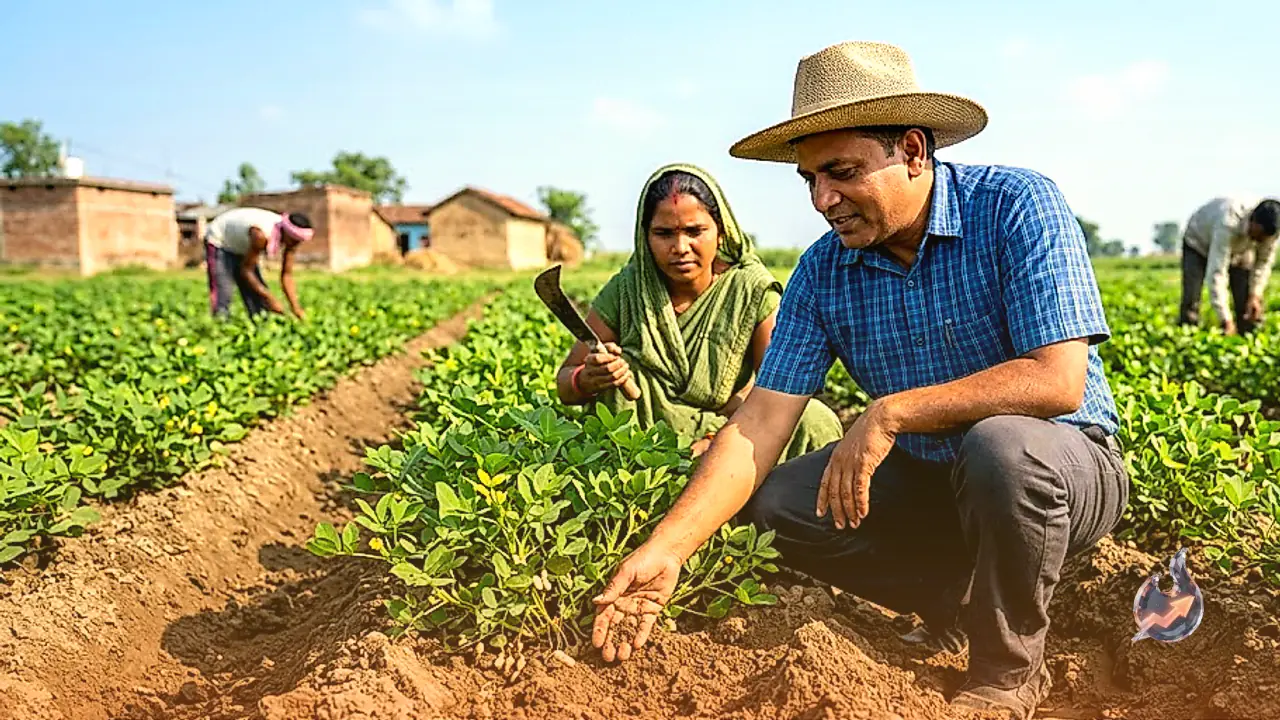
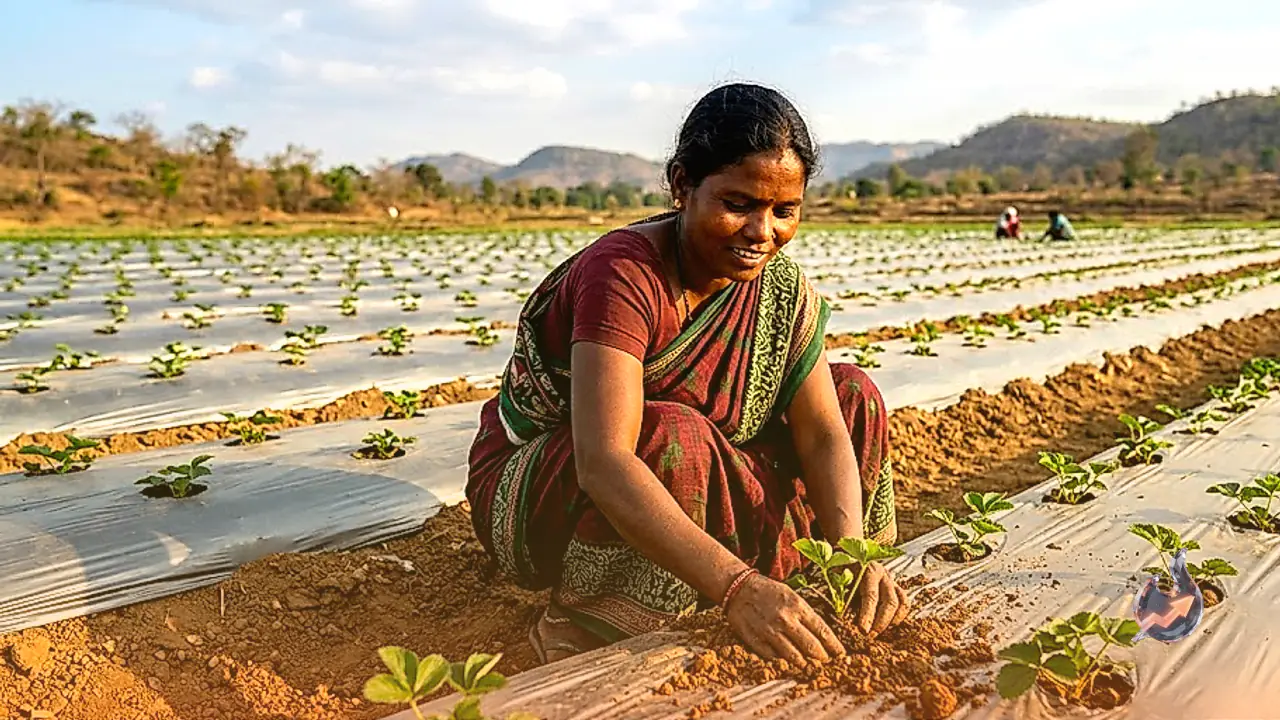
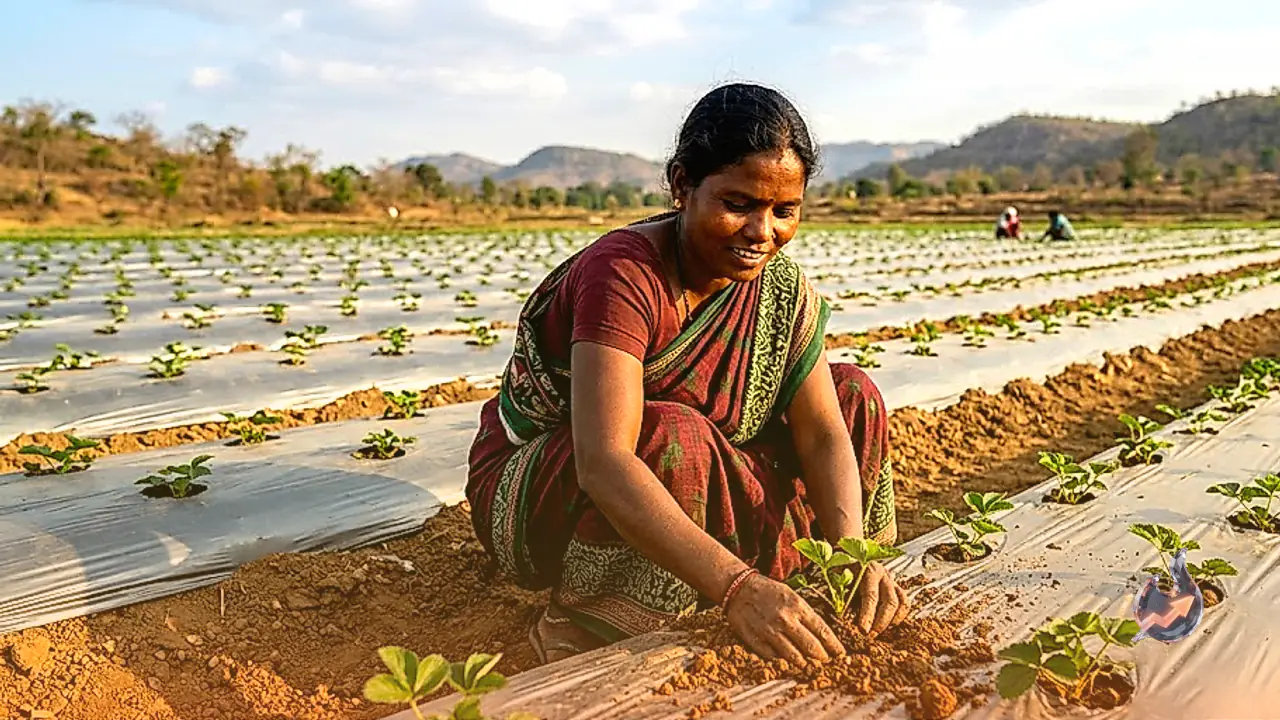
Establishing the correct planting geometry serves as the cornerstone for robust strawberry vine development. Agricultural scientist Dr. Pramod Kumar advises creating raised earthen beds rather than planting on flat soil. A spacing of roughly 25 centimeters must be maintained between individual saplings, while adjacent rows should be separated by a distance of approximately 40 centimeters. Following this layout, a single acre can accommodate anywhere between 12,000 and 20,000 saplings, allowing farmers to adjust total plant density in accordance with bed dimensions and field contours.
Fruiting Timeline and Extended Harvesting Window
Once planted in October, the crop generally commences its fruiting phase within 50 to 60 days under standard field conditions. If favorable temperatures persist alongside diligent crop management, harvesting can continue uninterrupted through mid-March. This extended harvest allows growers to pluck ripe produce systematically to match prevailing market demand, ensuring a steady stream of revenue throughout the five-month agricultural cycle.
Optimal Harvesting Stage: The 75 Percent Color Rule
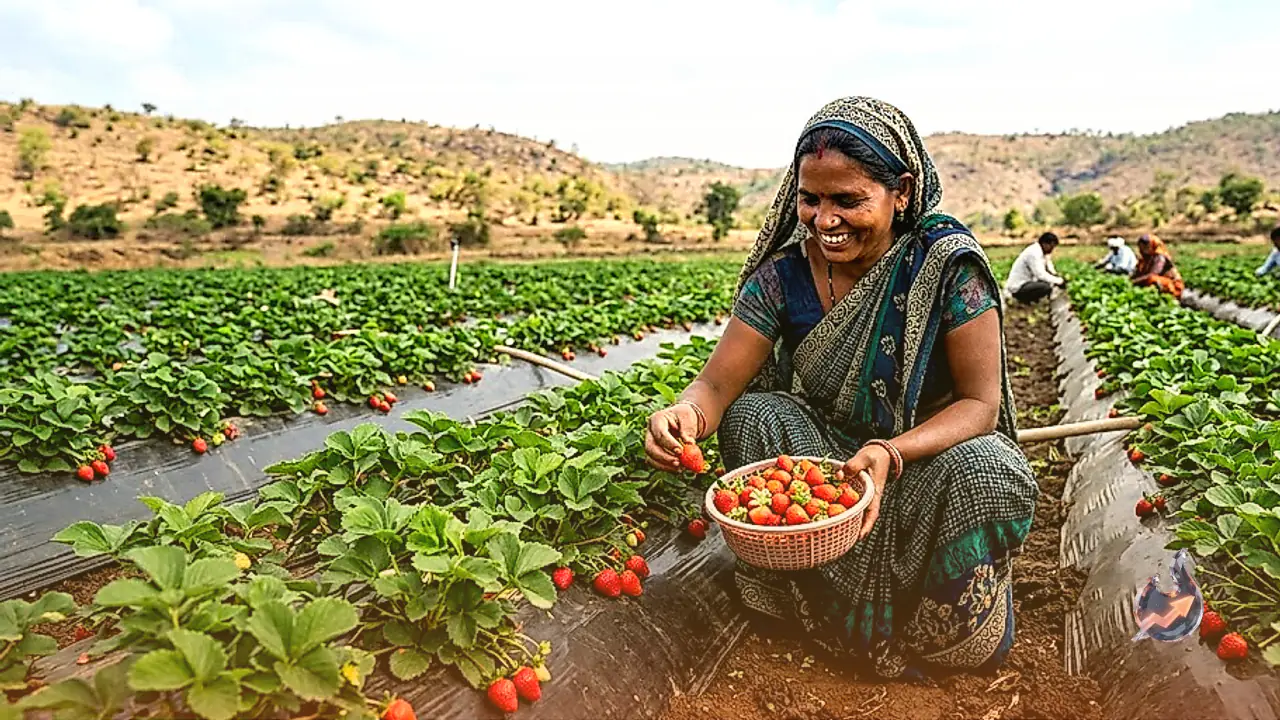
Because strawberries possess delicate skin and soft flesh, timing the harvest correctly is essential to minimize post-harvest damage. Agronomists recommend harvesting when roughly 75 percent of the berry's surface has turned red, leaving approximately 25 percent still showing a greenish hue. Fruits gathered at this maturity stage retain firm texture during handling and transportation, reaching retail markets in prime physical condition. Waiting until the berries turn entirely red elevates the risk of transit rot, bruising, and spoilage inside transport crates.
Weed Control and Moisture Retention via Mulching
Plastic mulching remains an indispensable cultural practice in strawberry husbandry. Laying mulch film over the raised beds substantially curbs weed germination, lowering manual weeding expenses. Furthermore, mulching conserves subsoil moisture by reducing evaporation and shields the pendulous fruits from coming into direct contact with wet earth. This barrier prevents soil-borne fungal rotting while cultivating a stable microclimate around the root zone for optimal nutrient absorption.
Cultivar Selection and Income Projections
Among available varieties, the Winter Dawn cultivar stands out as the preferred choice for regional conditions due to its high yield potential and market appeal. By adhering to scientific cultivation protocols, farmers can aim for a gross income ranging between 5 and 6 lakh rupees per acre. However, actual net profitability remains contingent upon total harvest volume, prevailing wholesale and retail market rates, total planting density, and operational input costs.