























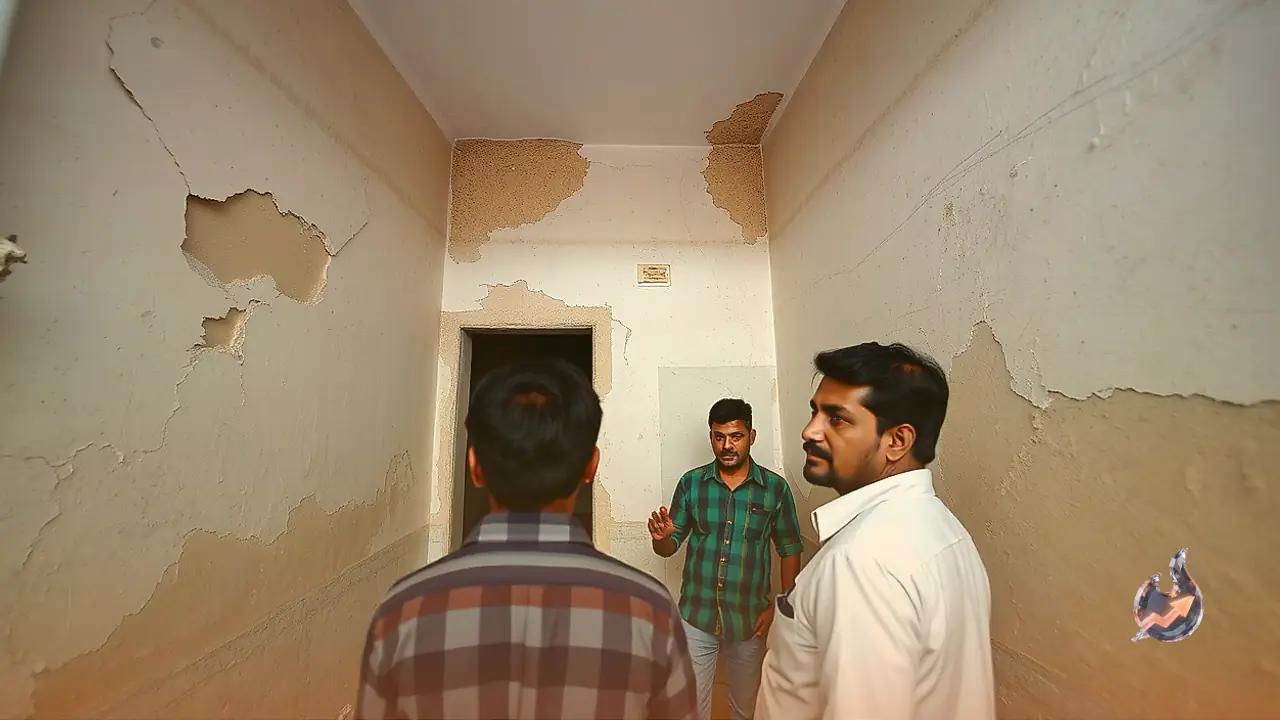

When ceiling and wall plaster begins peeling away in flakes shortly after construction, it ruins interior aesthetics while raising serious safety concerns for homeowners. Many treat this recurring problem as minor wear and tear, yet it almost always points to foundational mistakes made while laying the mortar. Shivprakash, an experienced mason from Yadav village in Bahraich district, explains that plaster can remain solidly anchored for years if homeowners enforce strict basic construction standards on site.
Proper Curing of Bricks Remains Essential
The primary reason plaster loses its grip and disintegrates into hollow flakes is inadequate water curing of the underlying wall. Dry bricks naturally suck moisture out of wet mortar before the cement can properly hydrate and cure, leaving the bond brittle and chalky. According to Shivprakash, walls or ceilings must be soaked thoroughly with water for at least two full days prior to applying plaster. This allows the brickwork to absorb enough moisture so that the masonry surface is fully prepped to bond firmly with fresh mortar.
Scrubbing Brickwork with Wire Brushes
Rushing to plaster directly over masonry without clearing surface debris is another common mistake that ruins longevity. Accumulated dust, mud, or old clinging residue creates a separating barrier between the brick and the new cement layer. Shivprakash stresses that workers must scrub the surface thoroughly using a stiff wire brush. The scraping should continue until the clean red face of the bricks is clearly visible, ensuring that the mortar adheres directly to the porous masonry rather than loose dirt.
Accurate Mixing Ratios for Cement and Maurang
The ultimate endurance of any plastered surface rests upon the precise balance of its mortar ingredients. Shivprakash specifies a 4:1 proportion for standard plaster work, meaning four pans of coarse sand or maurang to one pan of cement. Every batch must be measured carefully rather than mixed by guesswork. If workers turn careless and leave patches containing excessive maurang, those sand heavy pockets will inevitably turn powdery and peel off. He also noted that combining maurang with cement yields far greater resilience than ordinary fine sand.
Maintaining Layer Thickness for Long Term Durability
Thickness during application serves as the final barrier against weather and mechanical stress. The mason advises keeping the plaster layer at least half an inch thick across the entire surface. Layers applied thinner than half an inch struggle to withstand climatic fluctuations and crack prematurely. Combining two full days of pre-curing, thorough wire brush cleaning, a strict 4:1 maurang to cement mix, and a minimum half inch depth guarantees lasting stability, whether raising a new building or renovating an older structure.