



















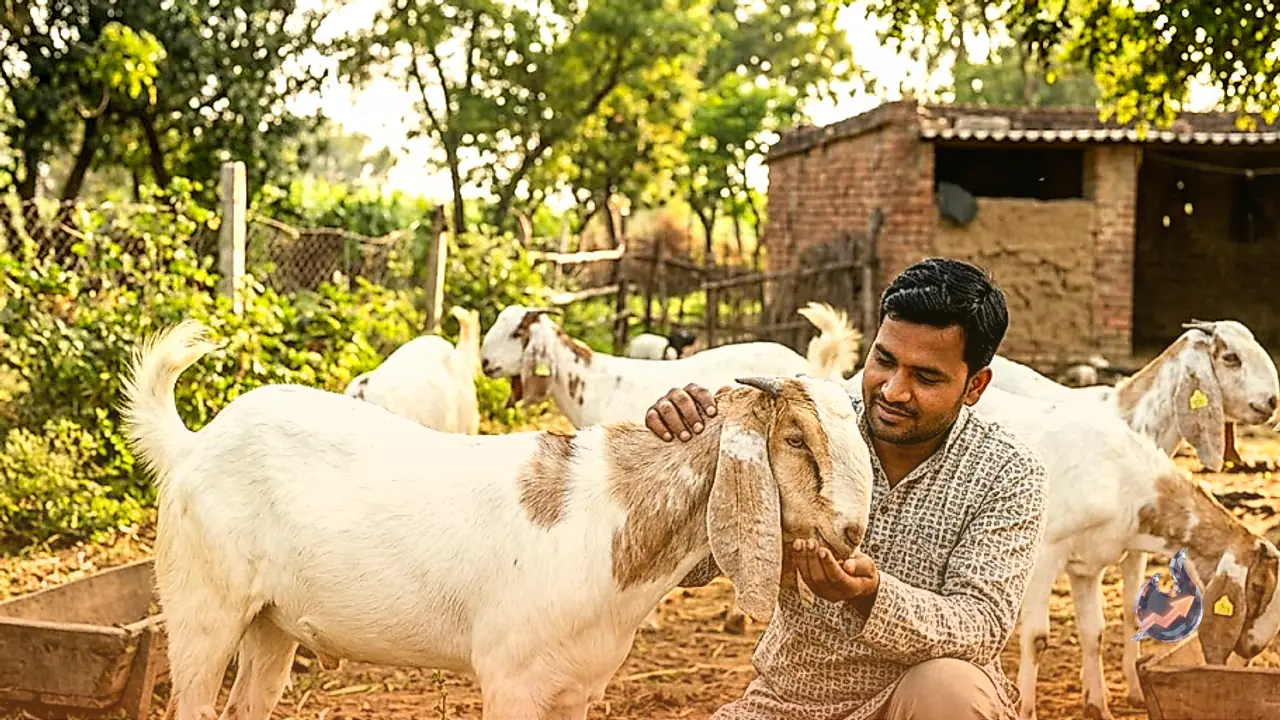

Expanding the sheer number of animals is rarely enough to build a lucrative livestock venture, as the choice of animal breed directly governs overall earnings. Selecting the right breed ensures faster physical growth, robust reproductive efficiency, and strong demand across trading hubs, all of which translate into higher market prices. In the Rampur district, a resident of Khod village named Sonu Pal has mastered this reality through five years of hands-on experience. Having raised multiple breeds to understand their behavioral patterns and commercial viability, he now carefully structures his flock to maximize livestock quality and income.
Why the Totapari Breed Stands Out for Herd Growth
Sonu Pal manages a diverse flock consisting of Totapari, Alwar, and indigenous local breeds. Among these varieties, Totapari remains his clear favorite due to its reproductive cycles and strong market valuation. According to his direct field experience, Totapari goats reproduce roughly every six months. In several instances, a single female delivers up to three kids in one kidding cycle. This rapid reproductive turnaround allows the farmer to expand the herd size quickly, ensuring a steady supply of mature animals ready for commercial sale throughout the year.
Pricing Dynamics Governed by Weight and Breed Quality
The selling price of each goat depends heavily on its specific breed purity, body weight, age, and general health condition. Sonu Pal notes that healthy goats from his shed regularly fetch 8 thousand rupees, 10 thousand rupees, 12 thousand rupees, and 15 thousand rupees. For superior specimens exhibiting prime physical characteristics and breed purity, prices can climb up to 20 thousand rupees per head. When market demand peaks, livestock keepers possessing well-maintained animals are able to command even higher valuations from buyers.
Balancing Indigenous Breeds with Low Cost Grazing Strategies
Rather than depending entirely on a single breed, Sonu maintains a healthy mix of indigenous and Alwar goats alongside his Totapari stock. Local indigenous varieties adapt effortlessly to regional weather conditions and demonstrate natural hardiness, while other breeds attract buyers through superior body frame, rapid weight gain, and prolific breeding. As herd sizes expand, feed expenses typically become the single largest operating cost. To manage this expenditure effectively, Sonu takes his goats out for grazing twice a day, in the morning and evening. Grazing allows the flock to feed on locally available green vegetation, significantly cutting down the expenses that would otherwise arise from purchasing commercial feed in bulk.
Local Tuesday Market in Khod Village Provides Direct Sales
Selling his livestock does not require travelling to distant commercial livestock yards. In Sonu Pal's own village of Khod, a traditional weekly animal market convenes every Tuesday. This regular market serves as a direct commercial hub for local farmers to meet prospective buyers without middlemen. Sonu brings his mature goats to this Tuesday market, selling approximately 100 to 150 goats annually. Over his five years in the business, he has shown that combining high-yield breeds, smart pasture management, and reliable local market access turns goat farming into a highly sustainable economic enterprise.