






















Transforming leftover milk cream into fragrant desi ghee remains a cherished kitchen tradition across many Indian households. Amid persistent concerns over commercial adulteration, numerous consumers prefer homemade alternatives that guarantee purity and authentic aroma. If fresh milk is consumed daily, the cream that gathers on top can be steadily collected and transformed into rich ghee without relying on costly appliances or industrial equipment.
Proper Collection and Storage of Milk Cream
Savita Srivastava explains that the process begins by boiling the daily milk thoroughly and allowing it to cool down completely. Once chilled, a distinct, thick layer of cream forms on the surface. This layer should be skimmed off carefully using a thoroughly clean and dry spoon.
Collected cream must always be placed inside an airtight container and kept refrigerated to avoid spoilage. Maintaining a low temperature prevents the cream from turning rancid or sour over several days. Once a substantial quantity has accumulated, the preparation can begin. Cleanliness remains critical, as any moisture or dirt inside the storage jar can quickly degrade the fat content.
Extracting Fresh Butter from Cream
Transfer the gathered cream into a large mixing bowl and add a small quantity of cold water. Begin churning the mixture steadily using a traditional hand blender or an electric mixer. Within a short period, rich butter separates from the liquid, floating to the surface while a thin buttermilk remains at the base.
Gather the floating butter lumps with clean hands or a slotted spoon and transfer them to another dish. Rinsing the extracted butter once or twice in cold, fresh water is essential. This quick wash rinses away any lingering residue of buttermilk, ensuring the finished ghee stays fresh and does not spoil easily during storage.
Simmering and Safe Storage Guidelines
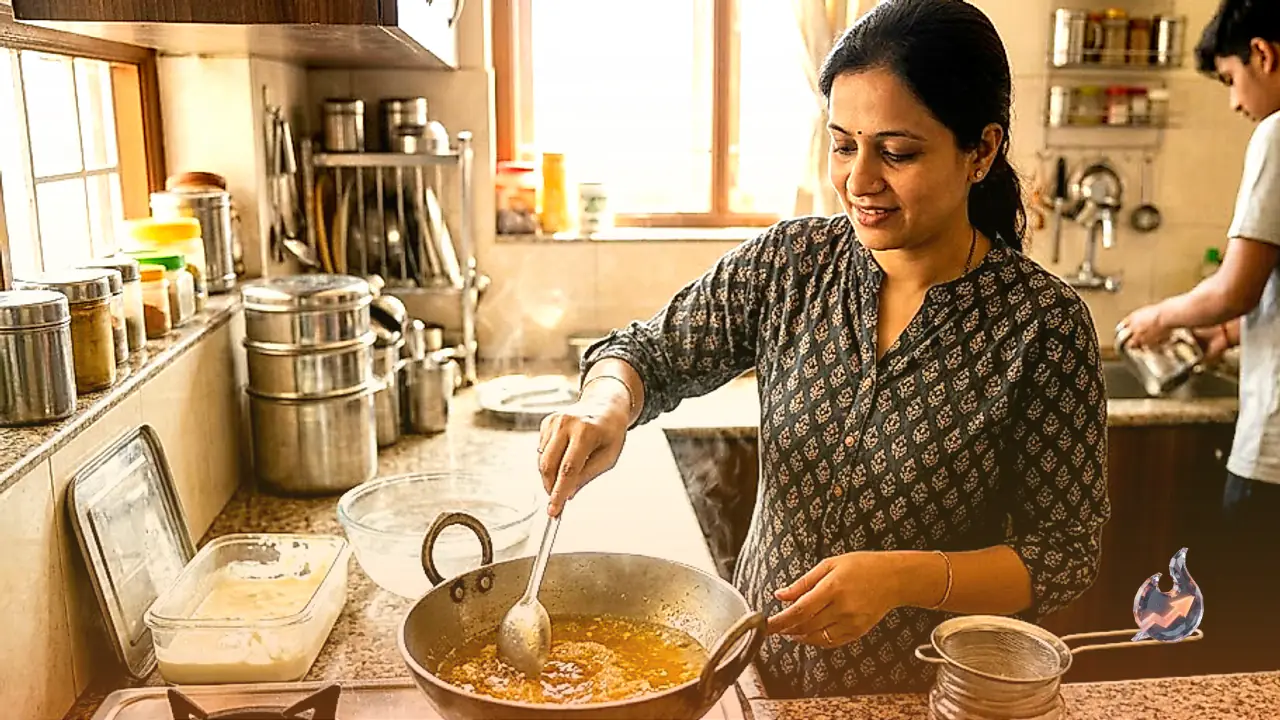
Place the cleaned butter into a heavy-bottomed pan and heat it over a low flame. Maintaining minimal heat is crucial to prevent burning the delicate milk solids. The butter will melt gradually, releasing bubbles as moisture begins to evaporate.
Stir the contents periodically to ensure even heat distribution. As the water evaporates entirely, golden, clear ghee rises to the top. Turn off the heat once the residual milk solids settle at the bottom as light brown sediment and a distinct aroma fills the kitchen. Allow the ghee to cool slightly, strain it through a fine sieve or clean muslin cloth, and pour the liquid gold into a clean glass container for everyday cooking.