
Thick frost accumulation inside a refrigerator freezer is one of the most common maintenance challenges households encounter. Over time, heavy ice sheets coat the interior walls, drastically shrinking available storage capacity and disrupting optimal airflow. Beyond reducing space, severe frost forces the cooling mechanism to run harder to maintain freezing temperatures. This added strain on the compressor can degrade overall cooling efficiency and noticeably increase monthly electricity bills. Routine and proper defrosting is therefore necessary to keep the appliance in prime operating condition.
The Hazards of Sharp Utensils and Boiling Water
When dealing with stubborn ice, people frequently resort to aggressive shortcuts that end up causing catastrophic damage to the appliance. Using kitchen knives, screwdrivers, spoons, or metal scrapers to chip away frozen walls is exceptionally risky. The interior walls of a freezer conceal delicate coolant coils and refrigeration lines just beneath the plastic surface. A single slip or puncture from a metal tip can rupture these gas lines, leading to rapid refrigerant leaks that disable cooling entirely and require expensive professional repairs.
Pouring boiling water directly over frozen sections is another common mistake that should be avoided. The extreme temperature variance creates severe thermal shock for the interior plastic linings, insulation, and shelving components. Such sudden temperature shifts can warp plastic structural elements, cause permanent cracks, or weaken internal seals. Safe ice removal demands a measured, gentle approach rather than extreme heat or force.
Understanding Why Excessive Ice Forms in Freezers
The fundamental driver behind freezer frost is ambient moisture. Whenever warmer, moisture-laden air from the surrounding room enters the freezer compartment, it instantly condenses upon contact with sub-zero surfaces and freezes into ice crystals. Repeating this cycle gradually builds up dense frost formations across the interior walls.
- Frequent Door Openings: Opening the freezer repeatedly or leaving it ajar allows large volumes of humid room air to rush inside.
- Worn or Damaged Door Seals: A loose, cracked, or dirty rubber gasket fails to create an airtight seal, permitting a constant trickle of moisture to enter the chamber even when shut.
- Storing Warm Food Directly: Placing steaming dishes or warm containers directly into the compartment releases moisture that condenses and freezes against the nearest cold surface.
- Uncovered Liquid and Food Items: Keeping open, unsealed containers inside allows natural food moisture to evaporate and coat internal walls as frost.
A Step-by-Step Guide to Safe and Easy Defrosting
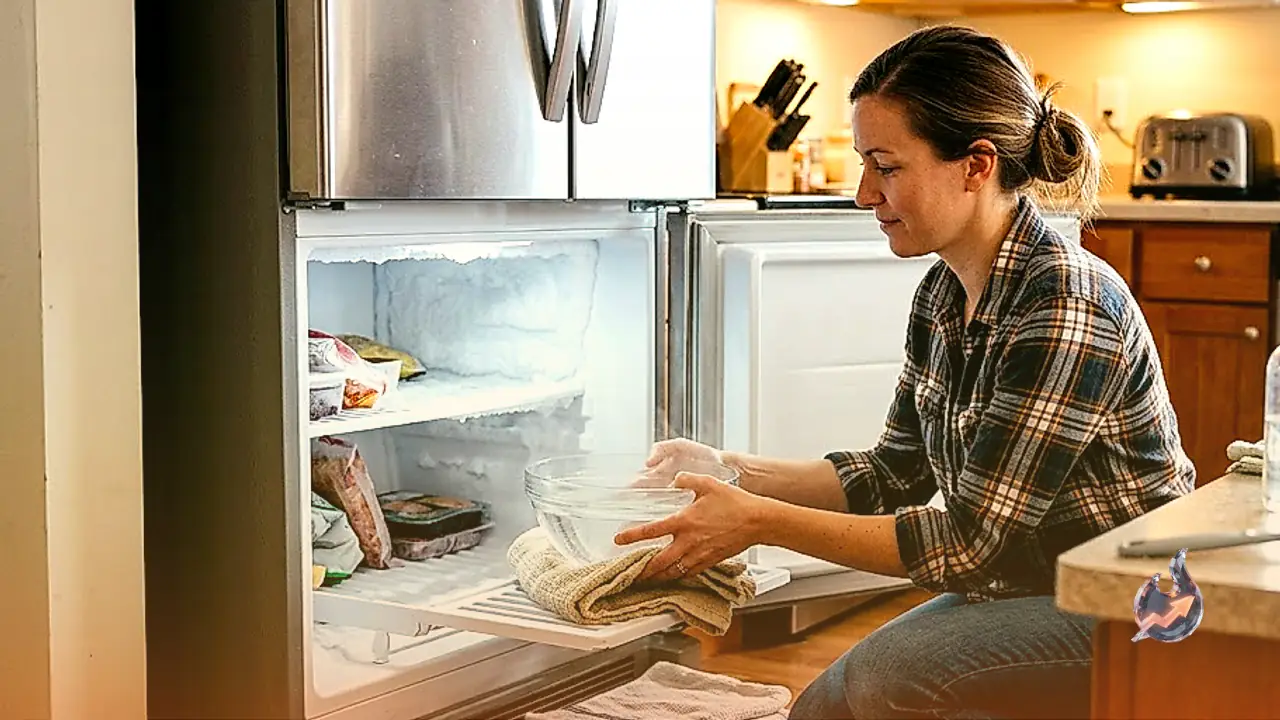
To safely defrost the appliance without risking mechanical failure or electric shocks, begin by unplugging the unit entirely from the electrical wall outlet. Empty the freezer completely, transferring all frozen groceries into an insulated cooler packed with ice packs so food items remain cold and do not spoil while the appliance is off.
To accelerate melting naturally without exposing the appliance to destructive heat, fill one or two heat-resistant bowls with lukewarm water. Place them neatly inside the empty compartment, shut the door, and let the trapped steam work for about 10 to 15 minutes. The rising warmth evenly permeates the compartment, softening the ice and loosening its grip from the walls. Once the ice begins to yield, gently pry it free using a blunt plastic scraper or a kitchen spatula, steering entirely clear of metal utensils.
After dislodging the softened frost, use a clean, absorbent towel or microfiber cloth to soak up all pooling water and moisture. Wipe down every corner and interior shelf until the entire compartment is completely dry. Leaving residual water inside will only cause fresh ice sheets to freeze immediately once restarted. Plug the refrigerator back in, allow the chamber to cool to the correct temperature, and return your stored groceries neatly inside.