
























Following the Bank of Thailand's unanimous decision on August 26 to keep its benchmark interest rate unchanged, DBS Group Research analyst Chua Han Teng expects the central bank to maintain the policy rate at 1.00% through the end of 2026. This projection stems from a period of sluggish and uneven economic expansion, sluggish private consumption growth, and well-behaved inflation trends. Consequently, short-term Thai government bond yields are anticipated to remain anchored, providing stability despite foreign exchange fluctuations and lingering supply-side price pressures.
Inflation Dynamics and Macroeconomic Pressures in Thailand
According to economic analysis by Chua Han Teng, Thailand's headline inflation has eased significantly from the upper limit of the central bank's 1-3% target band. This decline has muted the urgency for any monetary tightening while keeping medium-term inflation expectations securely anchored. Nevertheless, monetary authorities remain attentive to external and environmental risks that could reignite price pressures.
Key risks highlighted in the report include ongoing geopolitical friction in the Middle East, the gradual transmission of energy price changes, and upside risks to agricultural prices driven by El Nino weather disruptions. These elements will require persistent vigilance from policymakers, even as projections indicate that supply-side price shocks should abate following the first quarter of 2027. Furthermore, the central bank acknowledged that the volatility of the Thai baht against the US dollar largely reflects broader external developments.
Foreign Exchange Trends Across Major Currencies
In global foreign exchange trading on Thursday, major currency pairs displayed resilient consolidation. After slipping to a fresh six-day trough, GBP/USD managed to recover momentum, trading just below the key 1.3600 threshold. Market participants maintained a guarded stance ahead of crucial economic reports and central bank communications, providing underlying support to the US Dollar.
Similarly, EUR/USD rebounded from earlier weakness to trade back around the mid-1.1600s level. Despite minor gains in the US Dollar index, the currency pair stabilized as investors turned their attention toward upcoming revisions to non-farm payrolls data and official commentary scheduled for Friday's Jackson Hole Symposium.
Commodities Breakdown: Gold Drops while Diesel Spreads Hit Records
Precious metals faced continued downward pressure, with gold prices extending Wednesday's pullback to mark new weekly lows near $4,570 per troy ounce on Thursday. The metal struggled to find upward momentum despite widespread risk aversion and limited direction in the broader dollar index.
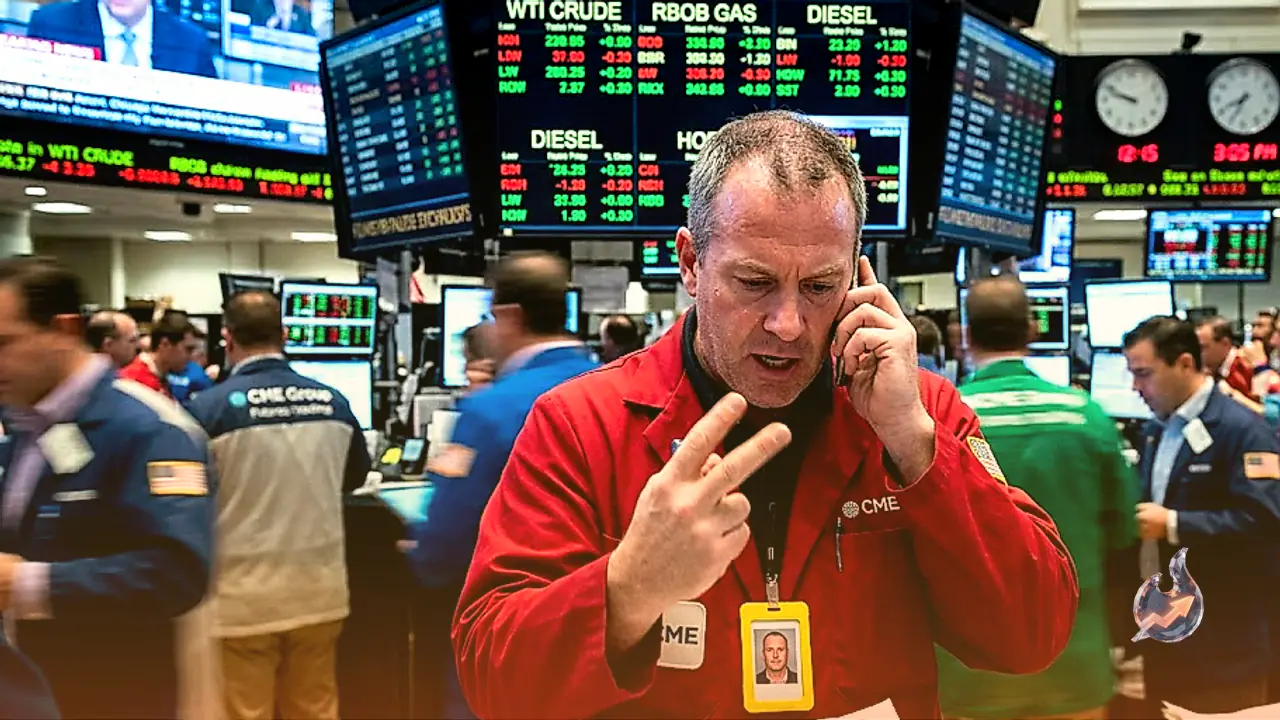
In contrast, energy markets presented sharp movements in refined product differentials. The US diesel crack spread, measuring the premium of ultra-low sulphur diesel futures over WTI crude, broke past $100 per barrel for the first time on record, touching an intraday peak slightly above $102.00 per barrel. This record surge reflects tight refining dynamics and strong middle-distillate demand.
Cryptocurrency Movements and Federal Reserve Outlook
Digital assets traded on a firm footing on Thursday, buoyed by Bitcoin advancing toward the $80,000 mark. Broader cryptocurrency markets mirrored this positive trend, with Ethereum holding levels above $2,500 and Ripple continuing to trade above its key $1.40 support level.
Market attention is now centered on Federal Reserve Chair Kevin Warsh as he prepares to deliver his inaugural Jackson Hole address in his leadership role this Friday. Investors are analyzing whether monetary policy signals will indicate interest rate adjustments or an extended pause during the upcoming September policy meeting.