






















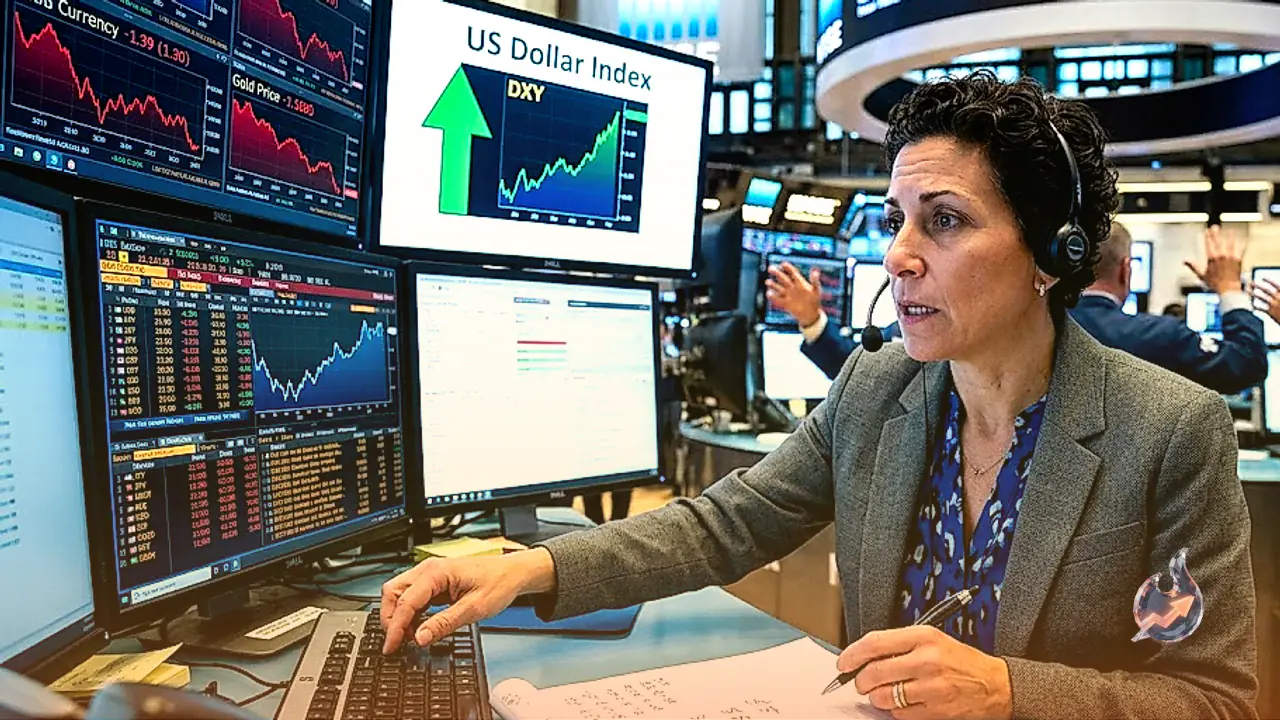

A determined tightening posture from the Federal Reserve alongside a fresh 25-basis-point interest rate increase has extended the recovery of the greenback, lifting the US Dollar Index (DXY) to around 100.3. Market strategists point out, however, that substantial monetary tightening has already been factored in by market participants, meaning any softening in upcoming American macroeconomic figures could renew downside pressure on the currency.
Inflation Pressures and Federal Reserve Policy Path
Federal Reserve leadership maintained an unyielding concentration on price pressures throughout the rate-setting process. Warsh underscored that recent indicators demonstrated little improvement in underlying inflationary trends. Alongside this evaluation, the economy was seen strengthening and the labour market remained around full employment, prompting the rate increase to be characterized as removing a dose of accommodation.
According to strategist Christopher Wong, the upward movement in the greenback is particularly striking because extensive tightening had already been priced in ahead of the policy meeting. A relatively muted repricing across US Treasury yields indicated that the central bank did not materially outpace longer-term market forecasts. Because the Federal Reserve reinforced a hawkish trajectory and kept front-end yields elevated, the greenback may maintain modest backing over the near term. Nevertheless, with significant tightening expectations thoroughly reflected in the yield curve, market focus is pivoting directly toward incoming data. Any visible deceleration in economic activity, cooling employment conditions, or easing inflation could trigger an unwinding of interest rate projections and reopen room for the currency to decline.
Australian Dollar Rebounds on Risk Appetite and Rate Bets
In Thursday's Asian trading session, the Australian Dollar attracted fresh buyers, allowing AUD/USD to reclaim the 0.7100 threshold. The move materialized as the US Dollar paused its Federal Reserve driven advance, which had previously hoisted the greenback to its highest level since late July. At the same time, growing expectations of an interest rate hike by the Reserve Bank of Australia (RBA) combined with optimism surrounding diplomatic engagements between the United States and Iran helped lift general market sentiment, offering solid backing to the risk-sensitive currency.
Japanese Yen Firms Ahead of Bank of Japan Meeting
The USD/JPY currency pair rebounded from a brief drop beneath 156.00 during Thursday's Asian trading, attempting to halt a three-day winning streak that had driven the pair to a near two-week peak a day earlier. The pause in the greenback following its climb to seven-week highs came as investors priced in a more hawkish path for policy normalization by the Bank of Japan, lending firm support to the Japanese Yen.
This ongoing repricing capped the upward potential of USD/JPY, with broader market attention shifting firmly toward the Bank of Japan's monetary policy verdict scheduled for Friday. Ultra-low domestic interest rates in Japan historically funded trillions of dollars in worldwide investments across more than ten years, establishing the Japanese Yen as one of the cheapest capital borrowing avenues across the globe. While the majority of prominent central banks executed sharp interest rate increases, Japan stood apart as a rare global exception. With expectations building that the Bank of Japan will tighten policy settings again this week, the historical funding advantage appears to be crossing into an entirely new phase.
Gold Bounces from Lows Amid Yield Pullback
Gold maintained an intraday recovery throughout the early European session, pushing upward from the near six-week low recorded during the prior trading day. A mild retreat in US Treasury bond yields triggered profit-taking in the US Dollar, generating immediate upward momentum for the precious metal. Even so, the Federal Reserve's restrictive monetary outlook, combined with escalating geopolitical friction across the Middle East, is expected to curtail deep losses in the safe-haven dollar while capping the upside for non-yielding bullion.