
























Global financial markets are undergoing significant volatility following the Federal Reserve's latest monetary policy decision, which has propelled the US Dollar to new heights. The AUD/USD currency pair is currently trading lower at 0.7093, representing a daily decline of 0.46% compared to its previous close of 0.7126. This downward movement is highly significant as the pair is now trading below its 50-day Exponential Moving Average (EMA), which currently sits at 0.7106. This key level had acted as a reliable floor for the currency pair since early August, but its breach on Wednesday has shifted the overall bias firmly to the bearish side, exposing the pair to further downward momentum.
The Federal Reserve's Hawkish Hike and US Dollar Rally
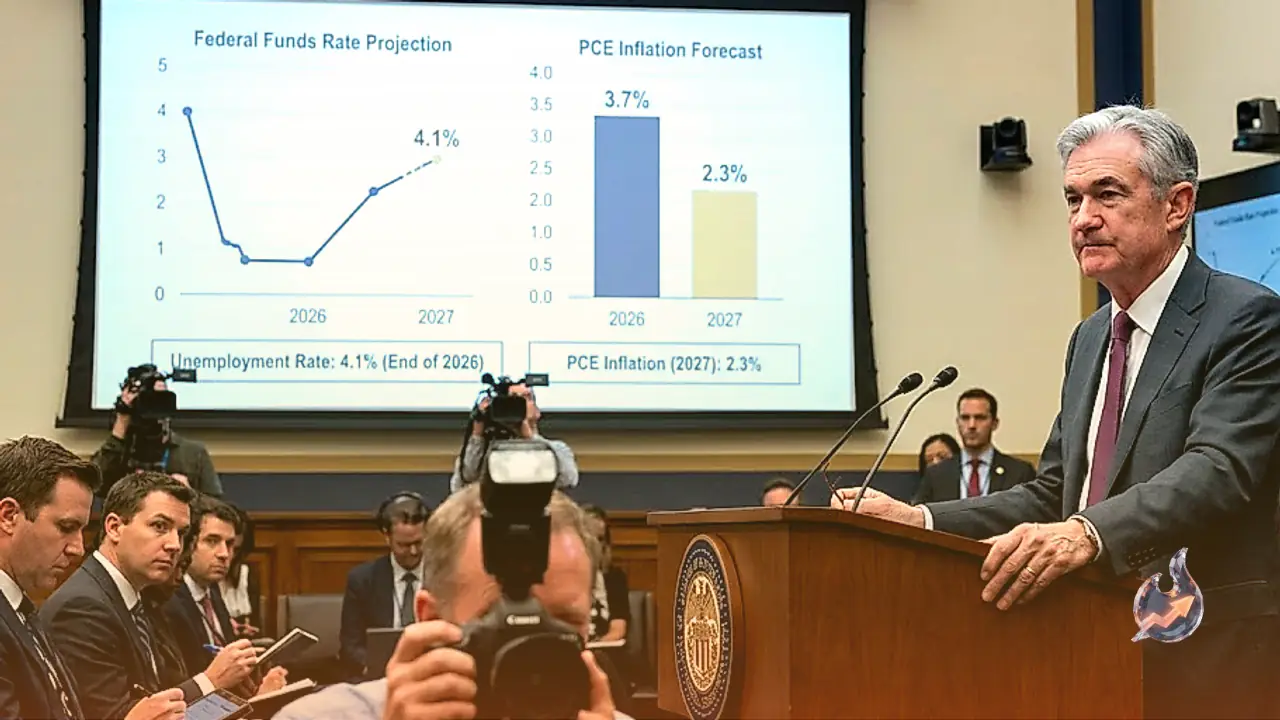
The US central bank delivered a widely expected 25 basis point (bps) interest rate hike, elevating the benchmark federal funds rate to a new range of 3.75% to 4.00%. While the rate hike itself was priced in by market participants, the hawkish tone of the subsequent press conference caught many by surprise. Federal Reserve Chair Kevin Warsh expressed ongoing concerns regarding stubborn inflation pressures, fueling market expectations that the central bank might not be done raising rates and could implement further hikes before the end of the year. This hawkish stance triggered a sharp rally in the US Dollar Index, weighing heavily on risk-sensitive currencies and commodity-linked assets globally.
Policy Divergence Between RBA and the Fed
The interest rate differential between the Reserve Bank of Australia (RBA) and the Federal Reserve remains a key fundamental driver for the Australian Dollar. Currently, the RBA cash rate stands at 4.35%, which is still higher than the upper bound of the Fed's new 3.75% to 4.00% target range. However, with the Fed maintaining an aggressive posture, this yield advantage is narrowing in real terms. Market participants are now shifting their focus to RBA Governor Bullock, who is scheduled to deliver a closely watched speech on Thursday at 23:30 GMT. The RBA's next monetary policy and interest rate decision is scheduled for September 29, and traders will be looking for any signs of hawkishness to counter the Fed's aggressive policy outlook.
Technical Analysis: Critical Support and Resistance Zones
From a technical standpoint, the AUD/USD pair is facing intense selling pressure. The 14-day Relative Strength Index (RSI) is currently positioned at 42, reflecting solid bearish momentum with plenty of room to fall further before reaching oversold territory. This bearish outlook is supported by the Stochastic indicator, where the fast line has plunged to 1 and the signal line is at 12, indicating a deeply stretched bearish trend. Additionally, the MACD indicator is exhibiting bearish characteristics with both the MACD and signal lines converging at 0.00.
Traders should keep a close eye on the following technical levels
- Resistance Levels: Immediate resistance is located near the 50-day EMA at 0.7106 (psychologically aligned near 0.7100). A recovery above this level could push the price toward 0.7150, followed by the September swing high of approximately 0.7239 to 0.7250. Only a daily close above 0.7150 would invalidate the current bearish narrative.
- Support Levels: On the downside, immediate support is identified at the 20-day support level of 0.7092. Below this, the next critical support level rests at Wednesday's low near 0.7050. A clean break below 0.7050 would expose the major psychological level of 0.7000, which marks the starting point of the summer rally initiated in July.
The Role of Commodity Prices and Iron Ore Exports
As a resource-rich country, Australia's economic performance and its currency are highly sensitive to commodity prices. The primary driver among these commodities is Iron Ore, which is Australia's largest single export. According to historical trade data from 2021, Australian iron ore exports were valued at a massive $118 billion annually, with China being the predominant destination. Consequently, the global price of iron ore directly impacts the demand for and valuation of the Australian Dollar. Rising iron ore prices typically lead to appreciation in the AUD due to increased aggregate demand for the currency, whereas falling commodity prices depress the currency's value and negatively impact Australia's overall terms of trade.
Furthermore, China's economic health plays a crucial role in determining the Australian Dollar's trajectory. Given that China is Australia's largest trading partner, any positive economic indicators or growth surprises coming out of the Chinese economy generally translate into higher demand for Australian raw materials, which in turn boosts the AUD. Conversely, a slowdown in Chinese industrial activity or disappointing economic data dampens demand for Australian exports, leading to a depreciation of the AUD against major currencies like the US Dollar.
Trade Balance and Global Market Sentiment
The Trade Balance, which measures the difference between the value of a nation's exports and its imports, is another critical macroeconomic indicator influencing the Australian Dollar. When Australia maintains a trade surplus by exporting high-demand goods, foreign buyers must purchase AUD to settle transactions, creating upward pressure on the currency. A positive net Trade Balance therefore strengthens the AUD, whereas a narrowing surplus or a trade deficit has a depreciating effect.
Additionally, broader global market sentiment is a major factor. The Australian Dollar is widely regarded as a barometer for global risk appetite. In a "risk-on" environment where investors are willing to take on more risk in pursuit of higher yields, capital flows into high-beta currencies like the AUD. However, when geopolitical or macroeconomic uncertainties trigger a "risk-off" sentiment, investors seek safety in traditional safe-haven assets like the US Dollar, leaving the AUD vulnerable to steep sell-offs.
Impact on Gold and the USD/JPY Currency Pair
The ripples of the Federal Reserve's hawkish policy decision were felt across various financial markets. Gold (XAU/USD) completely erased its intraday gains and turned negative following the central bank's announcement. The precious metal briefly surged past the $4,360 mark before reversing sharply, accelerating its slide toward the $4,250 support zone. The hawkish commentary from Chair Kevin Warsh bolstered US bond yields and fueled bets on additional rate hikes, reducing the non-yielding asset's appeal.
Similarly, the USD/JPY currency pair rallied to fresh weekly highs, trading around the 156.00 level early on Thursday as the greenback dominated. For over a decade, Japan's ultra-low interest rates made the Japanese Yen one of the cheapest and most popular sources of global investment funding. However, with the Bank of Japan widely expected to tighten its monetary policy further this week, this historical carry trade advantage may be entering a critical new phase. While almost all other major global economies hiked interest rates aggressively over the past couple of years to battle inflation, Japan remained the world's primary monetary policy outlier, a status that appears to be shifting rapidly.