
























The Japanese Yen has surrendered more than half of its early September rally against the US Dollar after the Federal Reserve delivered a 25 basis point interest rate increase and signaled that borrowing costs could stay higher for longer. The greenback climbed for a third consecutive trading session, logging its largest advance on Wednesday to push the currency pair toward the 156.50 barrier. According to live market data, USD/JPY is trading around 156.19, up 0.59 percent from its prior close of 155.27, reflecting sustained demand for the dollar following the policy announcement.
This renewed dollar strength has reversed a substantial portion of the Yen's recent advance. Having started September near 160.00, the Yen surged approximately 4 percent during the first half of the month on tightening speculation, dragging the cross down to a low near 153.00. However, the subsequent dollar rebound has retraced roughly 50 percent of that downward move, pulling the exchange rate back into the upper half of its monthly range.
Widening Gap and Central Bank Trajectories
Market participants are now turning their attention to the Bank of Japan's critical monetary policy gathering on Friday. Financial markets have fully priced in a 100 percent probability of a 25 basis point rate hike, which would elevate Japan's benchmark policy rate to 1.25 percent. Japan's current rate of 1 percent already represents its highest borrowing cost since 1995. Yet, despite this domestic tightening, the currency has failed to capitalize because the Federal Reserve executed an identical rate increase, lifting the federal funds target range to 3.75-4.00 percent with a midpoint of 3.875 percent.
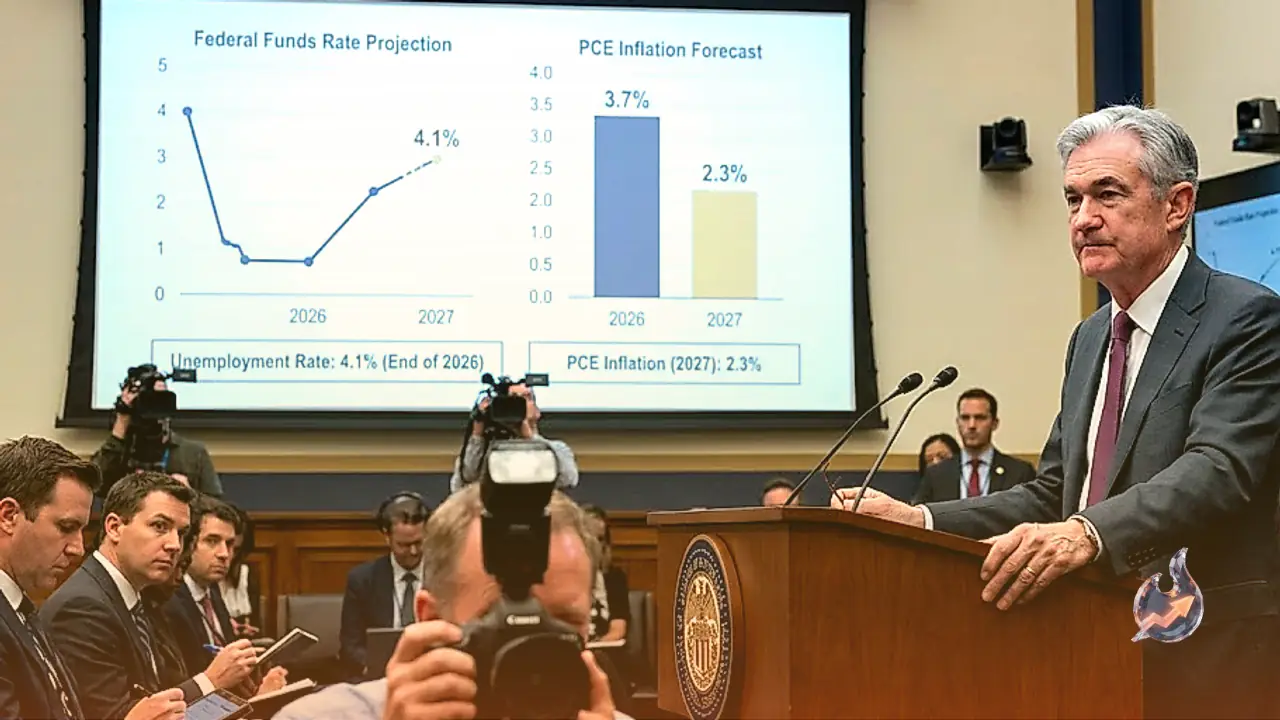
Consequently, the structural yield differential between the two nations remains essentially unchanged at roughly two and five-eighths percentage points, or approximately 2.625 percent. Simultaneous quarter-point rate hikes on both sides of the Pacific have left the interest rate spread intact. Looking ahead, market projections price the Bank of Japan at 1.48 percent by December and 1.85 percent by mid-2027. Conversely, Federal Reserve projections show the US policy rate resting at 4.1 percent at the end of 2027 without any anticipated rate cuts before that time. With the rate advantage firmly anchored in the greenback's favor, speculative buying of the Yen has struggled to maintain momentum.
Broader Financial Market Reactions
The post-meeting commentary from Federal Reserve Chair Kevin Warsh added fuel to the dollar's rally. In the subsequent press conference, Warsh highlighted persistent concerns regarding inflation, prompting investors to price in the possibility of further rate increases before the current year concludes. The hawkish undertone reverberated across international asset classes.
The Australian Dollar dropped below the 0.7100 mark during early Asian trading hours as the US currency gathered pace. Commodity markets experienced a parallel pullback, with gold erasing its earlier intraday gains. After briefly surpassing the $4,360 per ounce threshold, bullion turned negative and accelerated lower toward the $4,250 zone. Meanwhile, currency traders are awaiting Japan's national inflation figures for August, scheduled for release on Thursday at 23:30 GMT, which will offer the final fundamental input prior to the Bank of Japan's rate decision.
Technical Structure and Key Chart Levels
Technical indicators reflect a bullish tilt for USD/JPY above the 155.00 support area. The 14-period Relative Strength Index sits at 46, while the stochastic momentum indicators show the fast line at 44 and the signal line at 32, confirming upward trajectory from previously oversold levels. The daily Stochastic Relative Strength Index stands at 26 and is pointing upward, suggesting that the current rebound possesses room to expand further. The Average True Range indicates a daily volatility cushion of 1.54, with the Average Directional Index reading 45, pointing to a well-defined trending environment.
On the upside, immediate resistance is positioned at 156.50, aligned just above Wednesday's peak and near the R1 level of 156.80. Above that, the 200-day Exponential Moving Average at 157.62 and the R2 pivot at 157.41 serve as significant hurdles, followed by 158.00, which marks the lower boundary of the consolidation band from late August. Additional moving average benchmarks include the 50-day EMA at 158.24 and the 200-day Simple Moving Average at 158.40. On the downside, support rests at 155.20 to 155.00, followed by the S2 barrier at 154.21 and 154.00. A daily close below 154.00 would effectively negate the prevailing bullish rebound, opening the door toward the September low near 153.00.
Monetary Divergence and the Yen Carry Trade Legacy
The Japanese Yen ranks among the most actively traded currencies in global finance, with its valuation traditionally driven by Japan's economic performance, bond yield differentials with US Treasuries, and broader investor sentiment. Historically viewed as a premier safe-haven asset, the Yen tends to attract capital during periods of geopolitical friction and market turbulence due to Japan's net creditor status and perceived financial stability.
Between 2013 and 2024, the Bank of Japan sustained an unprecedented ultra-loose monetary policy framework, keeping rates near zero while other major central banks embarked on substantial tightening cycles. This protracted policy divergence created a massive yield disparity that made the Yen the primary funding currency for global carry trades, financing trillions of dollars in offshore investments. Although the Bank of Japan's decision in 2024 to gradually dismantle negative rates and commence policy normalization has narrowed that historical gap, the persistent gap between US and Japanese rates continues to limit the Yen's appreciation, keeping the dollar in the driver's seat.