
















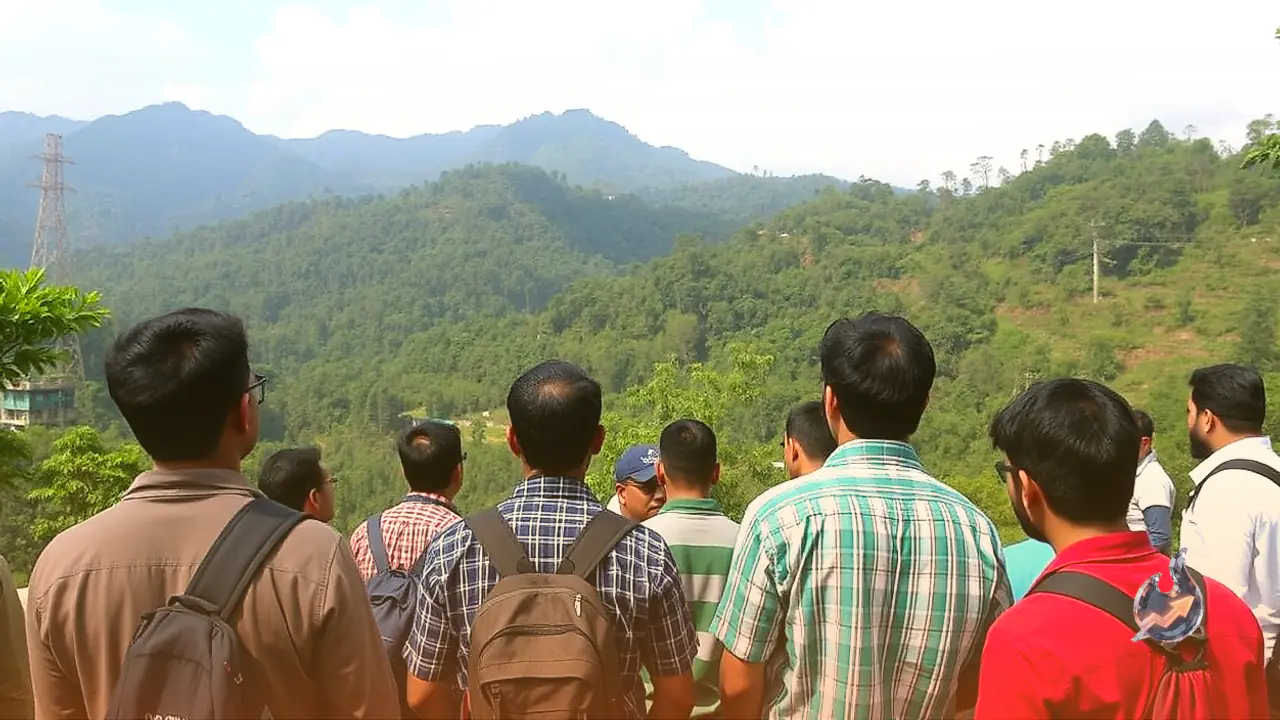

Mounting concerns over the preservation of vital water networks and rich natural habitats have prompted a call for urgent federal action in Meghalaya. Barkos Warjri, former Chief Secretary of Meghalaya, has formally approached the Ministry of Environment, Forest and Climate Change, seeking comprehensive safeguards for the forest tracts along Shillong Peak. Emphasizing that this reserve serves as both an ecological refuge and a drinking water foundation for the state capital, he underscored the need to prevent any damage to this heritage landscape.
A Century-Old Gravity Water Network That Still Serves the City
Explaining the historical significance of the upland water catchments, Barkos Warjri noted that the springs emerging from Shillong Peak once fulfilled the water requirements of the entire urban settlement. It was only about 30 years ago that authorities added the Umiam River, also referred to as Umiam Mawphlang, under the Greater Shillong Water Supply Scheme to supplement urban provisions. He pointed out that these upland sources had long delivered pristine, uncontaminated drinking water across the hill station.
The infrastructure collecting this water dates back to the colonial era, when engineers constructed storage chambers using porous sandstone masonry. Water filtered naturally through the permeable stone blocks into sheltered reservoirs protected by sturdy roofs, after which dedicated distribution conduits conveyed it downhill. Major holding installations were established at strategically located neighborhoods, notably at Lachaumiere and at the primary commercial hub of Iewduh.
Durable Engineering Operating Without Daily Repairs
Remarkably, this engineering network has remained operational for roughly 120 years without demanding routine servicing. The piping was carefully aligned along gradual inclines to eliminate air pockets and guarantee uninterrupted gravitational flow. Even today, several established residential sectors continue to receive their water from these historic springs, including Malki, Nongthymmai, Lachaumiere, the vicinity surrounding Tripura Castle, and the perimeter of Raj Bhavan.
Wildlife Haven and Fragile Upland Ecosystem
Beyond its municipal utility, the reserve forest covering the slopes of Shillong Peak shelters diverse fauna and plant life. Recounting an excursion into the hills, Barkos Warjri described observing a pair of black pheasants within the wooded terrain. The reserve also functions as a sanctuary and transit corridor for multiple bird varieties, wild cats, and flying foxes.
Plant life on the peak adds seasonal vibrancy to the landscape, particularly during April when blossoming rhododendron branches carpet the forest floor in deep crimson. He observed that the woodland provides essential environmental balance while enhancing the aesthetic character of the surrounding hills.
Citizens Urged to Join the Save Lum Shillong Initiative
Stressing that this unique natural and historical legacy must not be sacrificed, Barkos Warjri appealed to the Ministry of Environment, Forest and Climate Change to prohibit any destructive activities within the catchment basin. Alongside his representation to policymakers, he invited the wider community to support the cause by contributing their signatures to the ongoing Save Lum Shillong movement to secure long-term protection for the peak.