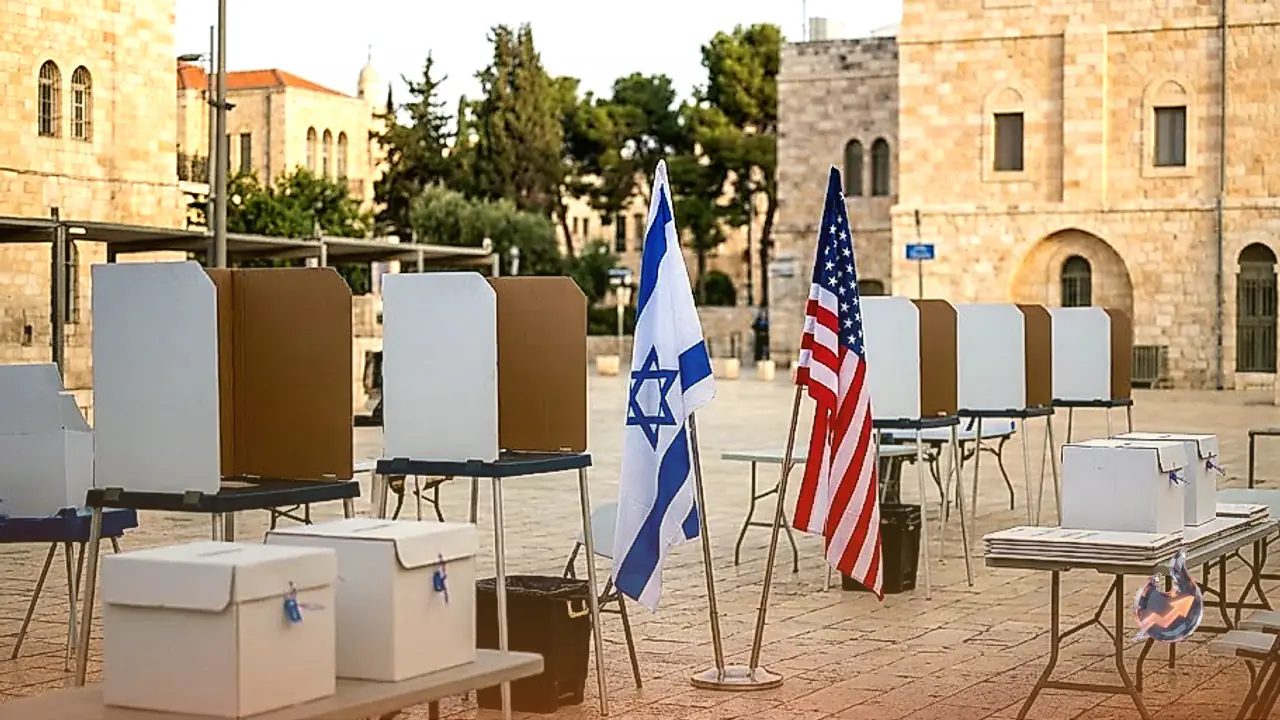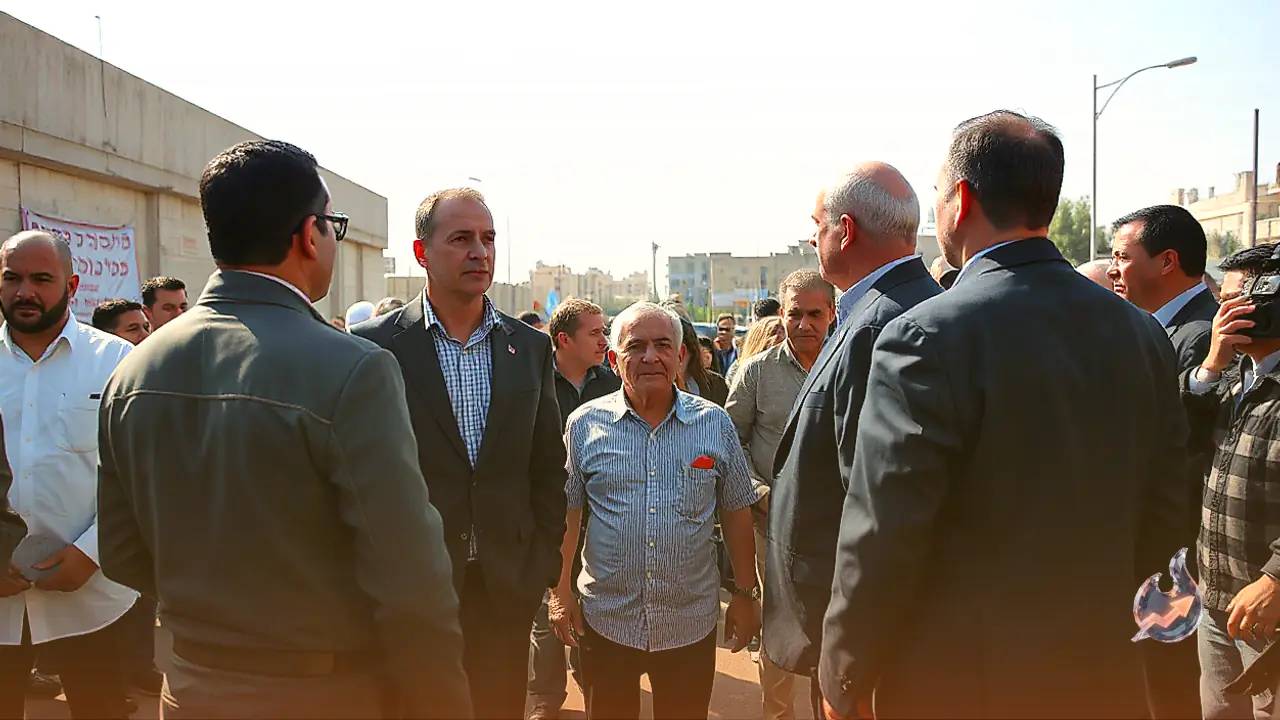























Israel's critical general election has concluded without delivering a decisive mandate to any single political bloc, according to exit polls released after voting ended on Tuesday. Projections indicate that neither long-serving Prime Minister Benjamin Netanyahu nor former military chief Gadi Eisenkot has managed to secure the 61-seat threshold required for a governing majority in the 120-seat Knesset. Despite the split figures, leaders from both opposing camps quickly stepped forward to assert victory, signaling that the nation may be heading into a protracted and grueling phase of coalition negotiations.
Parliamentary Projections and the Exit Poll Numbers
Broadcasters across the country painted a picture of an extraordinarily tight race. Initial projections from two television networks placed Eisenkot's Yashar party alongside three Jewish opposition partners in the Change Bloc at 51 seats, exactly matching the 51 seats projected for Netanyahu's Likud party and its far-right and ultra-Orthodox allies. A third network gave Netanyahu a slight three-seat edge. As Wednesday morning arrived, networks refreshed their data: Kan and Channel 13 showed both main blocs locked in a dead heat at 51 seats each, while Channel 12 adjusted its forecast to give Netanyahu's bloc 52 seats against 49 seats for Eisenkot's alliance.
Even with Likud projected to maintain its position as the single largest individual faction in the legislature, the math for building a working government remains profoundly complicated for both sides. The earlier exit numbers from Kan, Channel 12, and Channel 13 had initially placed the Change Bloc ahead with 52 to 53 seats compared to 50 for the governing coalition, triggering widespread celebrations that later gave way to careful recalculation as revised figures showed a tightened margin.
Rival Gatherings in Tel Aviv and Jerusalem
At the campaign headquarters of Yashar in Tel Aviv, supporters greeted the earliest forecasts with roaring cheers, chanting slogans urging Netanyahu to step aside. Addressing the gathering, Eisenkot proclaimed that their movement had made history, vowing to translate the public vote into a stable and good Zionist administration dedicated to every citizen of Israel. His political partner in the Beyachad party, former prime minister Yair Lapid, declared that Netanyahu's alliance had suffered a crushing defeat.
In Jerusalem, the mood inside Likud headquarters remained combative despite noticeable apprehension among the party faithful. Supporters acknowledged the stress of waiting for confirmed ballots, with one attendee, Itzik, remarking that the contest was far from over while admitting to feeling the pressure. Foreign Minister Gideon Saar cautioned that early celebrations from the political left were premature. National Security Minister Itamar Ben-Gvir, who leads the far-right Jewish Power party, urged his followers to pray for final results that would yield a full-on right-wing government. Netanyahu himself subsequently took the stage at Likud headquarters, insisting that his right-wing bloc commanded a great majority and urging the rapid establishment of a strong national right-wing administration.
Arab Factions Positioned as Crucial Kingmakers
The political arithmetic highlights the decisive leverage now held by Arab representation in parliament. Projections indicate that two Arab factions, the United Arab List and the Joint List, are poised to capture a record 18 or 19 seats. This outcome follows an exceptionally strong showing at the ballot box by Arab Israelis, who make up roughly one-fifth of the total population and frequently identify as Palestinian citizens of Israel. With the mainstream Jewish alliances deadlocked, these parties stand as potential kingmakers.
Mansour Abbas, leader of the United Arab List, voiced hope that the ultimate numbers would allow the Change Bloc and his party to combine forces and achieve the necessary 61-seat threshold. Abbas previously brought his faction into the governing coalition formed by Naftali Bennett and Yair Lapid following the 2021 election, an arrangement that governed for twelve months before fracturing. Meanwhile, Yousef Jabareen, chairman of the Joint List, issued a firm reminder that their collective representation cannot be bypassed under any post-election scenario. However, assembling such an alliance remains fraught, as only one faction within the broader opposition has publicly endorsed formal governing cooperation with Arab parties.
Decades-High Turnout and Decisive Campaign Battles
Voter engagement throughout Tuesday reached levels unseen in recent memory. The Central Elections Committee confirmed that turnout stood at 77.7% when voting concluded at 22:00 local time, marking the highest participation figure recorded at that hour since 1999. In the closing phases of the evening, Likud and allied right-wing groups petitioned authorities to prolong voting beyond the 22:00 deadline, an effort characterized by rivals as a display of anxiety over turnout patterns. The Central Elections Committee dismissed the request, determining that circumstances did not warrant an extension and emphasizing that the high turnout demonstrated robust public dedication to the electoral system.
This election stands as the first national poll since the lethal Hamas-led attacks of 7 October 2023 and the subsequent multi-front military conflicts across Gaza, Lebanon, and Iran. Citizens across the political spectrum viewed the ballot as one of the most momentous in modern history, tasked with determining not merely the nation's political leadership, but whether the state will persist along its hard-line, religious-nationalist course. Major debates throughout the campaign focused on institutional accountability for the intelligence and defense failures of 7 October, the strategic management of regional conflicts, equitable distribution of military conscription burdens, judicial restructuring initiatives, and the nation's international standing.
Voter sentiment reflected sharp domestic polarization. Outside a polling center in northern Tel Aviv, an opposition stronghold, 88-year-old Zivit Abramson explained her support for Eisenkot by arguing that Netanyahu was causing severe damage to the nation and acting purely out of self-interest. In contrast, Claire Tugendhaft cast her ballot for Netanyahu, stating her belief that he remains the most capable figure to steer the nation on the world stage. Recognizing the high stakes, Netanyahu had spent the final hours mobilizing his base via video messages, warning that low turnout would result in a left-wing government backed by Arab factions and extreme elements.
The Coalition Formation Timeline Ahead
The definitive composition of the next Knesset will become clearer as counting progresses over the coming days. While preliminary tabulations begin through the night, an estimated 600,000 absentee ballots—predominantly submitted by military personnel and accounting for nearly 10% of all votes cast—will not be entirely processed until Thursday. Historically, these military and absentee tallies have the potential to tip marginal seats and alter the final bloc totals.
Once all tallies are certified, the president of Israel will conduct mandatory consultations with representatives from every elected party. The president will then formally invite the faction leader deemed to possess the highest probability of building a viable coalition to attempt government formation. This complex bargaining phase typically extends over multiple weeks. Should the selected candidate prove unable to pull together an absolute majority of 61 lawmakers, the country could ultimately be forced back to the ballot box for yet another general election.