















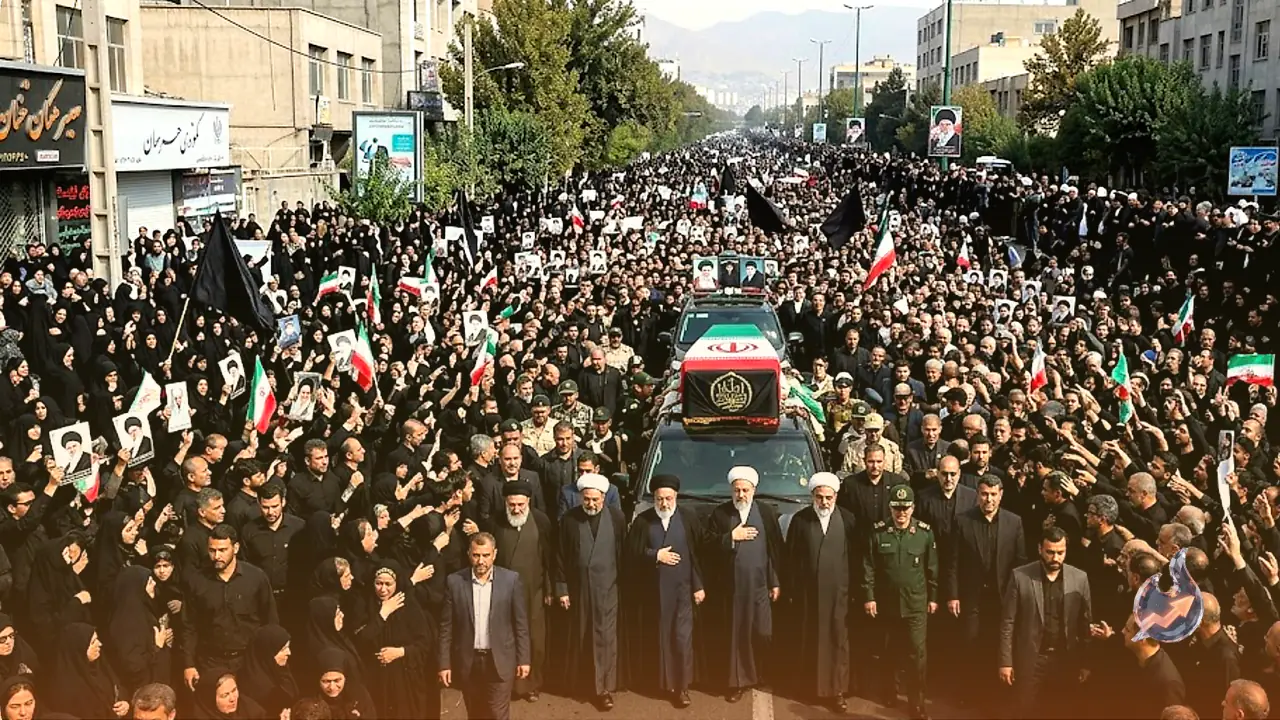

Tens of thousands of grieving Iranians packed the streets of Tehran on Sunday as the flag draped coffin of supreme leader Ayatollah Ali Khamenei was carried through the capital on a lorry, marking the last of three days of public mourning before his body begins a journey to three more cities across two countries.
Khamenei was killed on the first day of the war between Iran and the joint forces of the United States and Israel, and his funeral procession has become the most visible display yet of a nation processing both grief and fury. State television footage showed the crowd stretching along a ten kilometre, or six mile, route that ran through the capital's landmark Enghelab Square, with state media later reporting that millions of mourners filled the boulevards and pressed in around the black lorry carrying his coffin.
A Ten Kilometre March Through a Grieving Capital
The procession began at Imam Hossein Square in the eastern part of Tehran and wound slowly westward to Azadi Square, tracing a route that cut through the heart of the city and past some of its most recognisable public spaces. Alongside Khamenei's coffin, the lorry also carried the remains of four family members, underlining how the strike that killed him also claimed people close to him. The scale of the turnout, described by state media as being in the millions, reflected the extraordinary nature of the moment: a sitting supreme leader killed in an act of war, and a capital city turning out in force to mark his passing.
Two Days Lying in State, and a Son Who Stayed Away
Before the procession, Khamenei's body had lain in state for two days at Tehran's Grand Mosalla mosque, where mourners filed past to pay their respects. On Sunday, three of his sons were seen praying beside the coffin. Notably absent was Mojtaba, the son who succeeded his father as supreme leader. Mojtaba has not been seen in public since he was reported to have been seriously wounded in the same Israeli air strike on Tehran, on 28 February, that killed both his father and his mother, Khamenei's wife. His continued absence from public view, even at his own father's funeral rites, has left an open question hanging over the succession at a moment when the country is trying to project unity and continuity.
Flags, Vengeance Banners and a Billboard Attacked
Anger at the two countries blamed for the strike ran through the crowd. Many mourners waved Iranian flags alongside red banners symbolising vengeance, a colour long used in Iranian political culture to signal a vow of retaliation. Placards reading We must rise were held aloft, and others called outright for the death of US President Donald Trump, who together with Israeli Prime Minister Benjamin Netanyahu ordered the joint attack on Iran four months earlier that triggered the war in which thousands of people were killed. In one particularly charged moment, mourners were seen throwing stones at a large billboard bearing Trump's face that had been hung from a bridge over the procession route. The billboard carried the words: The US killed our father. We won't let you go!
A Former President Reappears, a Sitting President Walks Among the Crowd
The procession also drew notable political figures out into the open. Former president Mahmoud Ahmadinejad was seen among the mourners, according to local media, in what appeared to be his first major public appearance since the war began, a conflict during which three of his own bodyguards were reportedly killed in a strike near his home. Iran's current president, Masoud Pezeshkian, was filmed walking among a group of mourners on a Tehran street, a gesture that placed him directly among ordinary citizens rather than at a remove from the crowd. Earlier, Pezeshkian had written on the social platform X that Khamenei had taught everyone in Iran that the country's greatest asset was its people and their unity. He promised that Iranians would continue the path of Iran's honour, progress, and glory.
Israel's Defence Minister Defends the Killing
From the Israeli side came a blunt public justification for the killing. Defence Minister Israel Katz said Khamenei had been eliminated by Israel because he had threatened the country's existence, and went further with a direct warning aimed at whoever might follow him. Any Iranian leader who will again try to pursue plans to destroy Israel will be killed as well, Katz said. The statement, delivered even as Tehran mourned, underscored how far apart the two sides remain on the meaning of the killing, one side marking a martyrdom, the other openly defending an assassination as a matter of policy.
A Fragile Truce and the Fight Over Hormuz
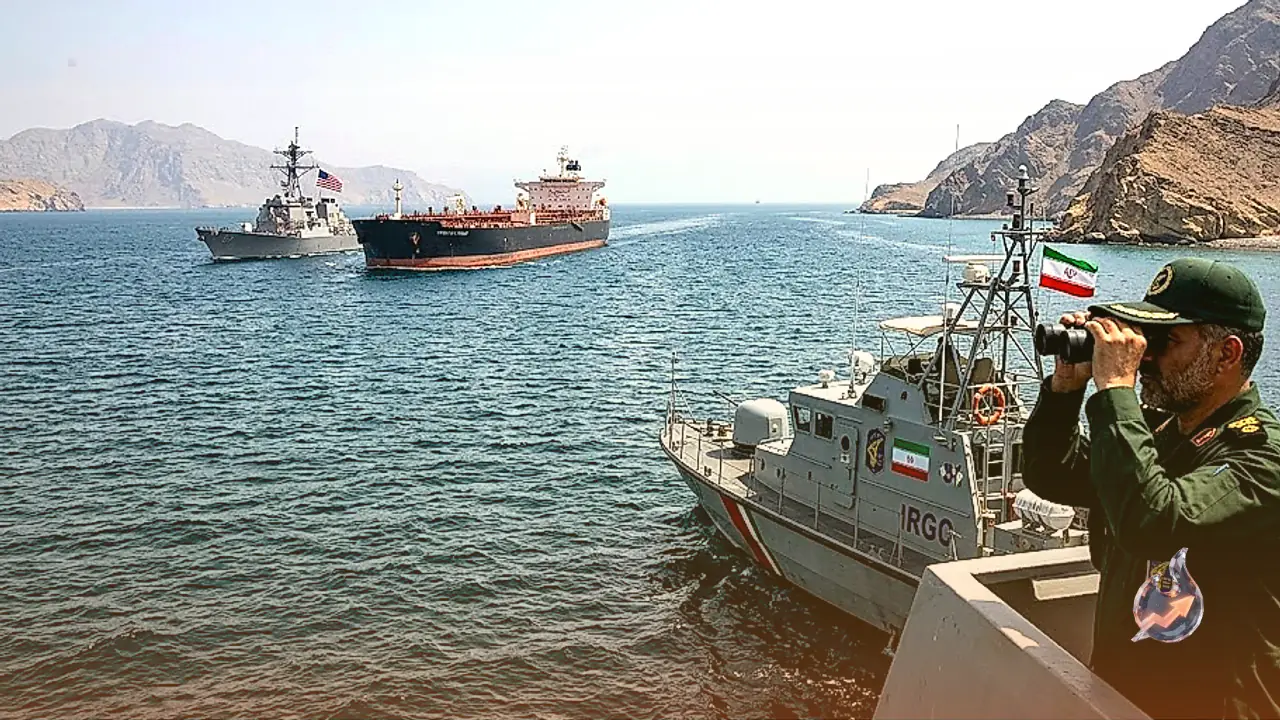
The funeral ceremonies are unfolding less than three weeks after Iran and the United States signed a preliminary agreement to end the war and reopen the Strait of Hormuz, the narrow waterway through which roughly 20% of the world's oil and gas shipments pass. Under that preliminary agreement, the two countries gave themselves a two month window to negotiate a final settlement, one that would need to cover Iran's nuclear programme, the web of US sanctions imposed on Iran, and the terms of a permanent truce. Qatar, acting as mediator between the two sides, said Iranian and US negotiators had made positive progress during indirect talks held in Doha last week, talks that followed a four day exchange of strikes between the two countries. Qatar added that the next round of negotiations would be scheduled only after the conclusion of the mourning events for Khamenei, a sign that both sides are, for now, allowing the funeral rites to proceed without the added pressure of parallel negotiations.
Three More Days of Mourning Ahead
Tehran's farewell to Khamenei is only the first stop on a longer itinerary. On Tuesday, a further funeral procession and prayers are set to take place in the central city of Qom, which sits at the centre of Iran's Shia Muslim clerical establishment and carries deep religious significance for the country's leadership. The following day, Wednesday, the ceremonies will cross the border into Iraq, moving to the shrine cities of Karbala and Najaf, both central to Shia Islam and long linked to Iran's clerical and political networks. The mourning period will finally conclude on Thursday, when Khamenei is buried at the Imam Reza shrine in his home city of Mashhad, in north eastern Iran, bringing to a close a four day, two country farewell for a leader whose killing helped ignite the war that is still, tentatively, being negotiated to an end.