




















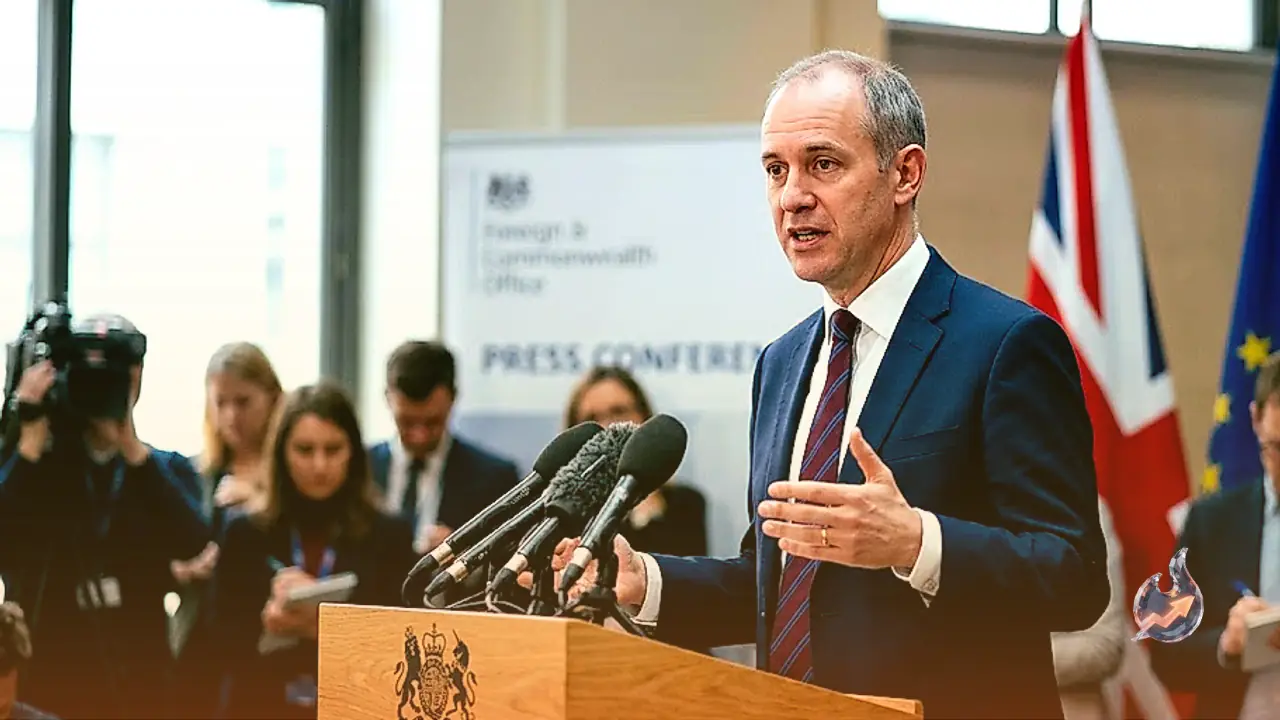

British Foreign Secretary Ed Miliband has firmly defended the government's decision to impose sanctions on trade linked to illegal Israeli settlements in the occupied West Bank. He explicitly rejected warnings from UK Chief Rabbi Sir Ephraim Mirvis, who argued that the measures would heighten security risks for Jewish communities across Britain. Speaking as a proud British Jew, Miliband emphasized that he respects the Chief Rabbi but fundamentally disagrees with his assessment, maintaining that combating antisemitism and standing up for core British values are mutually reinforcing duties.
Disagreement Between Cabinet Minister and Faith Leadership
The implementation of restrictions on settlement-related commerce has sparked intense debate between political leaders and prominent religious figures. Chief Rabbi Sir Ephraim Mirvis previously criticized the decision, labeling it a deeply disappointing move that risks fueling anti-Israel rhetoric and emboldening extremist elements. He cautioned that punitive policies of this nature contribute to a increasingly hostile domestic environment rather than resolving underlying disputes.
Responding to these concerns, Ed Miliband stressed his personal esteem for the Chief Rabbi while maintaining a distinct position on the policy. In an interview on BBC Radio 4's Today program, Miliband asserted that holding British Jews or Jewish people worldwide accountable for decisions made by the Israeli government is an act of clear antisemitism. He reiterated that advocating for international fairness should not be conflated with compromising the safety of local religious communities.
Spike in Antisemitic Incidents and Heightened Security Measures
This policy clash unfolds against the backdrop of rising hate crime statistics within the United Kingdom. Data compiled by the Community Security Trust (CST), an organization dedicated to Jewish communal protection, revealed 1,926 recorded incidents of antisemitic hate during the first six months of 2026. This figure reflects a 21 percent surge compared to the corresponding period in 2025, underlining heightened anxiety surrounding communal safety.
In response to these figures and ahead of the upcoming festival of Rosh Hashanah, law enforcement agencies are strengthening protective operations. Greater Manchester Police Chief Superintendent Dave Meeney announced that additional police resources and high-visibility patrols will be deployed throughout the Jewish High Holy Days. Authorities confirmed they are working closely with community representatives to maintain robust security around places of worship and neighborhood centers.
Parliamentary Support and International Reactions
Prime Minister Andy Burnham defended the government's stance in Parliament, declaring that the United Kingdom must stand against perceived injustice and support communities facing displacement. He stated that Britain has a responsibility to protect vulnerable groups stripped of their homes. Concurrently, the Palestinian presidency welcomed the UK sanctions package, viewing it as a meaningful measure against settlement expansion and rights violations in Palestinian territories.
Opinions within the UK Jewish community remain diverse. The Jewish Leadership Council warned that the policy risks evolving into an indirect boycott of Israel, accusing the government of caving to political pressure. Conversely, the Jewish group Na'amod endorsed the sanctions, asserting that Jewish perspectives on Israeli policies are not monolithic and rejecting claims that the measures worsen antisemitism. The Movement for Progressive Judaism similarly noted that targeted settlement restrictions should be clearly distinguished from hostility toward Jewish people.
Diplomatic Countermeasures and NGO Entry Restrictions
The announcement has triggered a severe diplomatic dispute between London and Jerusalem. In retaliation, Israel closed the British consulate in East Jerusalem and barred 11 British Members of Parliament along with a prominent campaigner from entering the country. Furthermore, Israel's Diaspora Minister Amichai Chikli submitted formal recommendations to border authorities advocating entry bans on representatives from several UK-linked non-governmental organizations.
The institutions highlighted for potential entry restrictions include Oxfam, Save the Children, the Norwegian Refugee Council, Islamic Relief Worldwide, and Medical Aid for Palestinians. Israeli officials argue that the activities and advocacy of these organizations contribute to adversarial stances against the state.
Scope of Sanctions and Implementation Timeline
Elaborating on the measures in the House of Commons, Ed Miliband pointed to planned construction under the controversial E1 settlement project as a catalyst for intervention. The proposed development threatens to sever the connection between East Jerusalem and the West Bank, effectively splitting the territory. Miliband highlighted reports of settler violence driving Palestinian families from their lands, alleging that Israeli authorities have repeatedly failed to intervene.
The UK sanctions target entities and individuals involved in constructing, financing, or servicing illegal settlements, alongside a ban on advertising settlement properties within the United Kingdom. Implementation of the legal framework is expected to take up to nine months. Britain's actions coincide with similar trade restrictions enacted by international partners, including Canada and France, as part of a coordinated diplomatic response.