





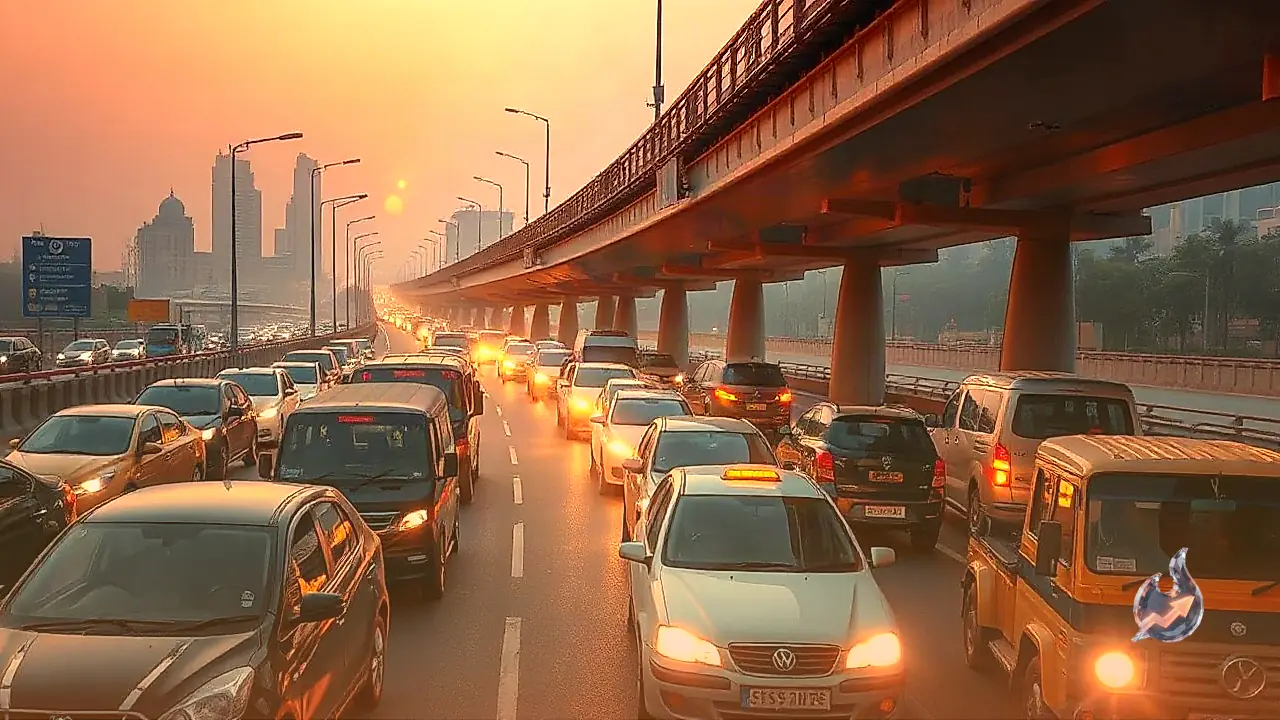















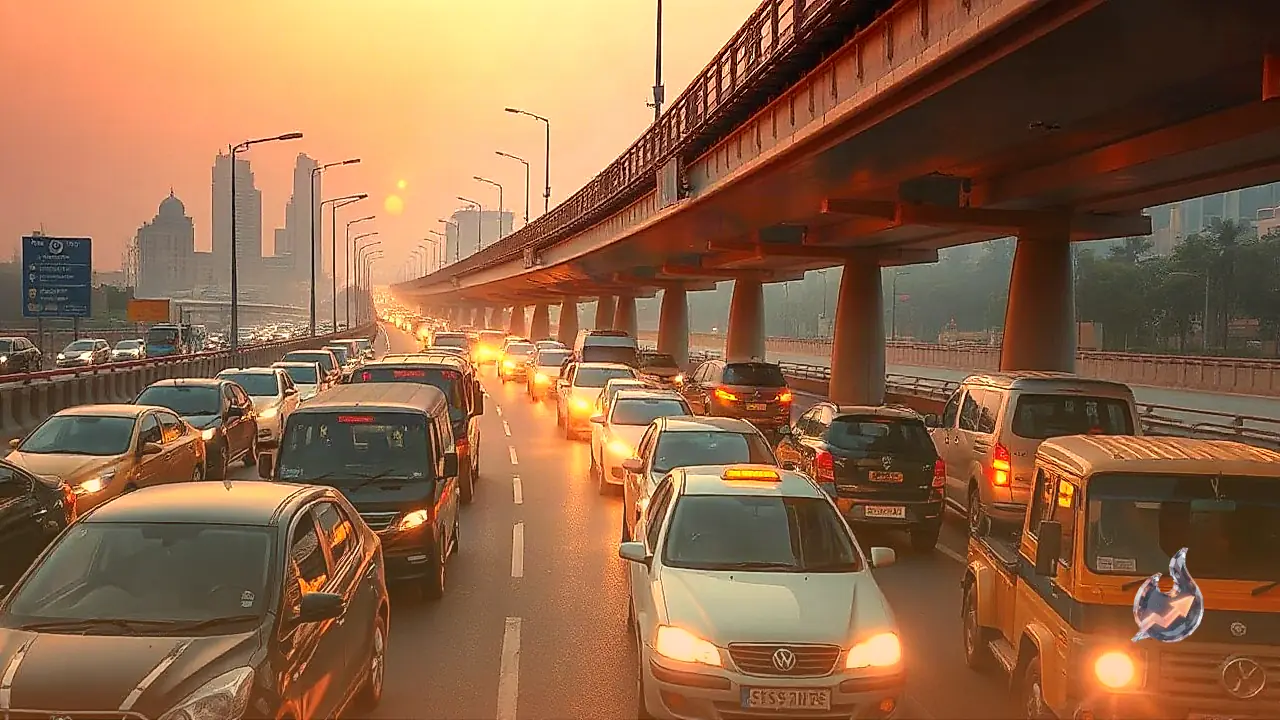

A major infrastructure push aimed at unclogging commuter transit in Delhi hit an immediate snag as the newly operational Barapullah Phase-3 elevated corridor experienced severe traffic congestion on its very first full day of public use. The signal-free stretch, inaugurated on Tuesday to reduce an otherwise grueling 40-minute commute down to just 15 minutes, saw long lines of stationary vehicles on September 30. Commuters traveling across the roughly 9-kilometer span from Mayur Vihar Phase-1 to AIIMS encountered heavy snarls instead of the swift journey that had been anticipated.
Surge in Commuter Numbers and Existing Arterial Load
Traffic specialists observe that the Barapullah route has historically functioned as one of the most heavily burdened transport arteries in the capital. While the entire rationale behind constructing Phase-3 was to alleviate chronic congestion, the operational reality on day one raised urgent logistical questions. Thousands of daily commuters travel between East Delhi neighborhoods such as Mayur Vihar and Laxmi Nagar toward key South Delhi destinations, including AIIMS and South Extension. During morning and evening peak hours, vehicular pressure spikes drastically. With the launch of the new flyover, thousands of drivers abandoned their conventional detour routes simultaneously to take advantage of the newly opened corridor, triggering an acute surge in vehicular volume.
Choke Points at Key Junctions and Inflow Bottlenecks
Another structural hurdle directly contributing to the tailback lies in the complex intersection zones located near Sarai Kale Khan and Ashram Chowk. Multiple major thoroughfares converge at these critical nodes. As streams of vehicles approach the entry and exit ramps, their momentum slows markedly to navigate lane changes and branching turns. When sheer traffic volumes exceed the throughput capacity of these entry and exit bottlenecks, deceleration compounds rapidly, leading to prolonged queues that spill backward onto the main elevated carriage.
Transition After Extended Delays and Mixed Traffic Composition
The prolonged construction schedule of Phase-3 also played an indirect role in Wednesday's paralysis. Because the project remained incomplete over an extended duration, nearby alternate roads had absorbed regular traffic patterns. Once the infrastructure finally opened, motorists rushed to adapt to the new path, causing a sudden, uncalibrated spike in density. Additionally, the presence of mixed traffic categories sharing identical road space hampered flow. The simultaneous movement of high-speed passenger cars, two-wheelers, heavy buses, and occasional pedestrians or cyclists naturally interrupted continuous speeds and dragged down the overall flow.
Interdependence with Ring Road and NH-24
The Barapullah corridor does not operate in isolation; it remains inextricably tied to high-capacity routes like the Ring Road and NH-24. Any minor vehicular disruption, sudden slowdown, or merge failure originating on these adjoining highways causes a domino effect that back-propagates across Barapullah. Even though signal-free corridors are designed to provide long-term travel efficiency once patterns stabilize, urban mobility observers advise that commuters may still need to exercise caution during peak rush hours and retain secondary route choices when pressure mounts.