
















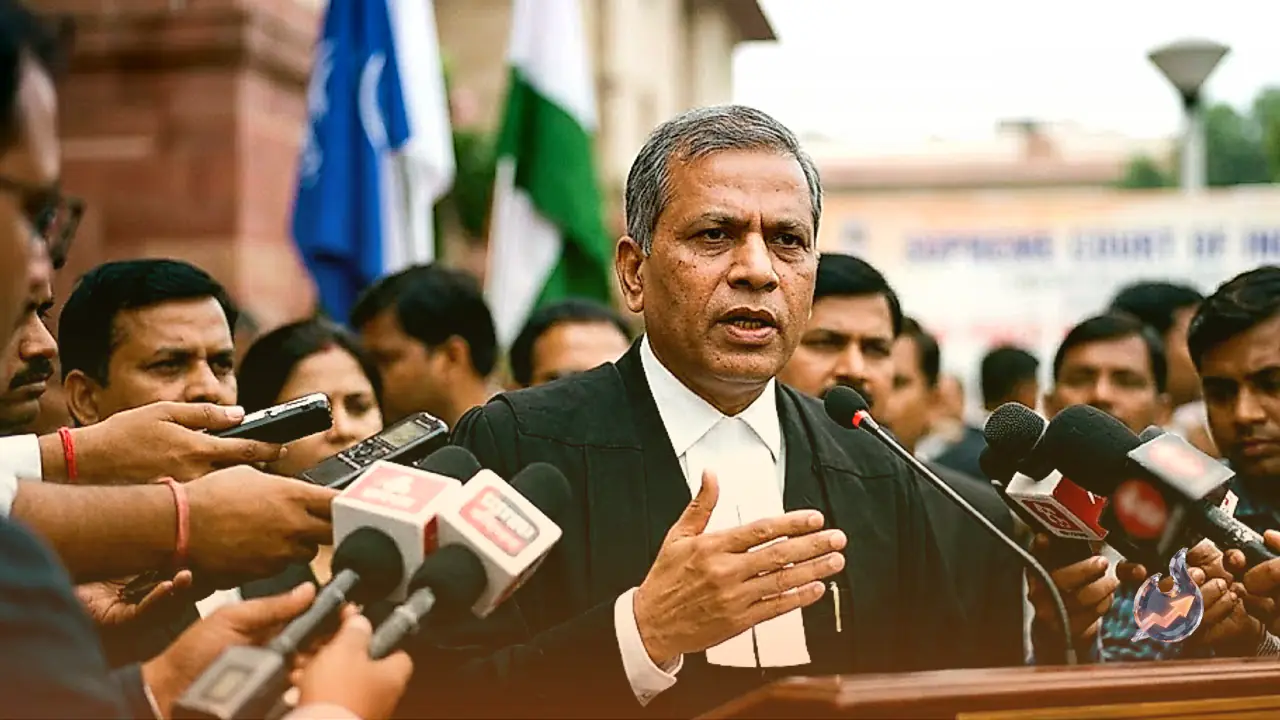

Chief Justice of India (CJI) Suryakant has clarified his widely discussed remarks regarding a protest at Jantar Mantar, expressing strong displeasure with media coverage of the proceedings. Addressing the issue on Friday, the CJI pointed out that news outlets misrepresented the courtroom interaction by claiming he had refused to list a petition concerning police action against demonstrators.
No formal petition was ever filed in the Supreme Court
CJI Suryakant emphasized that a mere representation does not equate to a legally registered petition. To double-check the facts, the Chief Justice revealed that he had personally directed the Supreme Court registry to verify the records. The registry confirmed that no official documents, petitions, or paperwork associated with the Cockroach Janata Party (CJP) protest had been submitted or filed. The Chief Justice criticized the rush to publish stories without verification, noting that people began reporting on the matter without understanding that no formal case existed on the court docket.
The courtroom drama of July twenty-second
The background of the controversy dates back to July 22, when a lawyer made an unscheduled mention of the Jantar Mantar protests before the bench. The advocate claimed that students protesting at the historic site were subjected to brutal police action during their march to Parliament. He urged the bench to list the matter urgently, asserting that he possessed video evidence to substantiate the claims of police brutality.
During this exchange, the lawyer also brought up other pressing issues. He demanded that the government ensure a fair and transparent conduct of the National Eligibility cum Entrance Test (NEET). He further argued that the National Testing Agency (NTA) should be dissolved immediately due to continuous paper leak incidents that have plagued recent examinations.
The context behind the Chief Justice's viral remarks
In response to the lawyer's persistent requests to view the footage, CJI Suryakant had made the remarks that went viral. The Chief Justice told the lawyer, "Please do not waste our time and yours too." He added that the advocate's time was actually more valuable than that of the bench.
Even as the Supreme Court moved on to call the next case on the board, the lawyer continued to press his point, offering to play the video clips showing police excesses against the student protestors. This prompted the CJI to state clearly that the bench had no interest in watching the videos and lacked the time to do so. This specific statement was widely shared and debated online, drawing criticism from various quarters. By providing this clarification on Friday, the Chief Justice aimed to set the record straight regarding legal procedures and media responsibility.