





















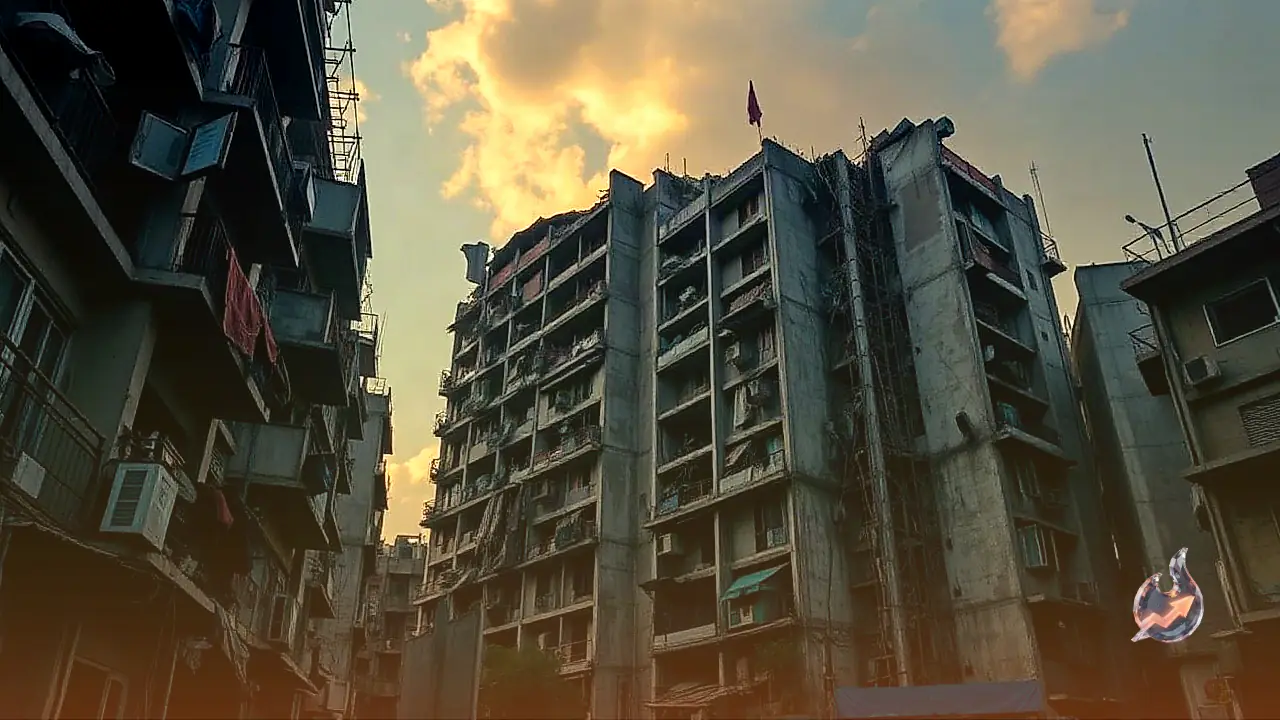

A five-storey hostel building came crashing down in Delhi's Satya Niketan area on Sunday, killing seven students so far, while several injured students remain under treatment in hospital. Rescuers fear that more students could still be trapped beneath the debris, which is why relief and rescue operations are continuing on a war footing. Investigations have also revealed that the structure was raised without the necessary approvals, making it an entirely illegal construction. In the aftermath of the tragedy, a bigger question is now gaining ground: what do Delhi's laws actually say about the number of floors and the height allowed when building a house?
Floor limits depend on the size of the plot
Under Delhi's building bye-laws, if a plot measures more than 50 square metres, the owner is allowed to construct up to five floors. There's a condition attached, though: stilt parking on the ground floor is mandatory for that fifth floor to be permitted. If a family chooses not to build stilt parking, construction is capped at four floors instead. The rules also clearly fix an absolute height ceiling: no building, no matter how large the plot, can rise beyond 17.5 metres, or roughly 57.4 feet. This height limit ensures that a structure cannot keep climbing arbitrarily just because the land beneath it is large, keeping some balance in the city's overall building fabric.
Smaller plots face even tighter restrictions
For plots smaller than 50 square metres, the allowance shrinks further. Owners are permitted to build only the ground floor plus two more floors, meaning a maximum of three storeys in total. This restriction exists to stop tall, crowded structures from coming up in densely packed lanes and narrow plots, where they could create safety hazards and add to congestion.
A house built without an approved map is treated as illegal
Before starting construction of any new house in Delhi, getting the building plan cleared by the Municipal Corporation of Delhi, or MCD, is a compulsory step. Anyone who builds without this approval ends up with a structure that is legally classified as illegal, and such buildings can later face demolition action. Construction also requires clearance from the Delhi Development Authority, or DDA. In certain cases, a no-objection certificate from the fire department is required as well, along with mandatory registration on the Dust Control portal. The building that collapsed in Satya Niketan is believed to have bypassed precisely these approvals, which is why the entire enforcement system is now under scrutiny following the accident.
Rescue operation continues as Chief Minister issues a warning
Twelve students have been pulled out safely from the collapse site so far. Delhi Chief Minister Rekha Gupta arrived at the spot in person and stayed to review the rescue operation as it unfolded. She said that whichever officials are found responsible for allowing this illegal construction will face strict action once the investigation is complete. Rescue teams, the fire brigade and local administration officials continue to clear the debris at the site, working to safely pull out any student who may still be trapped inside.