






















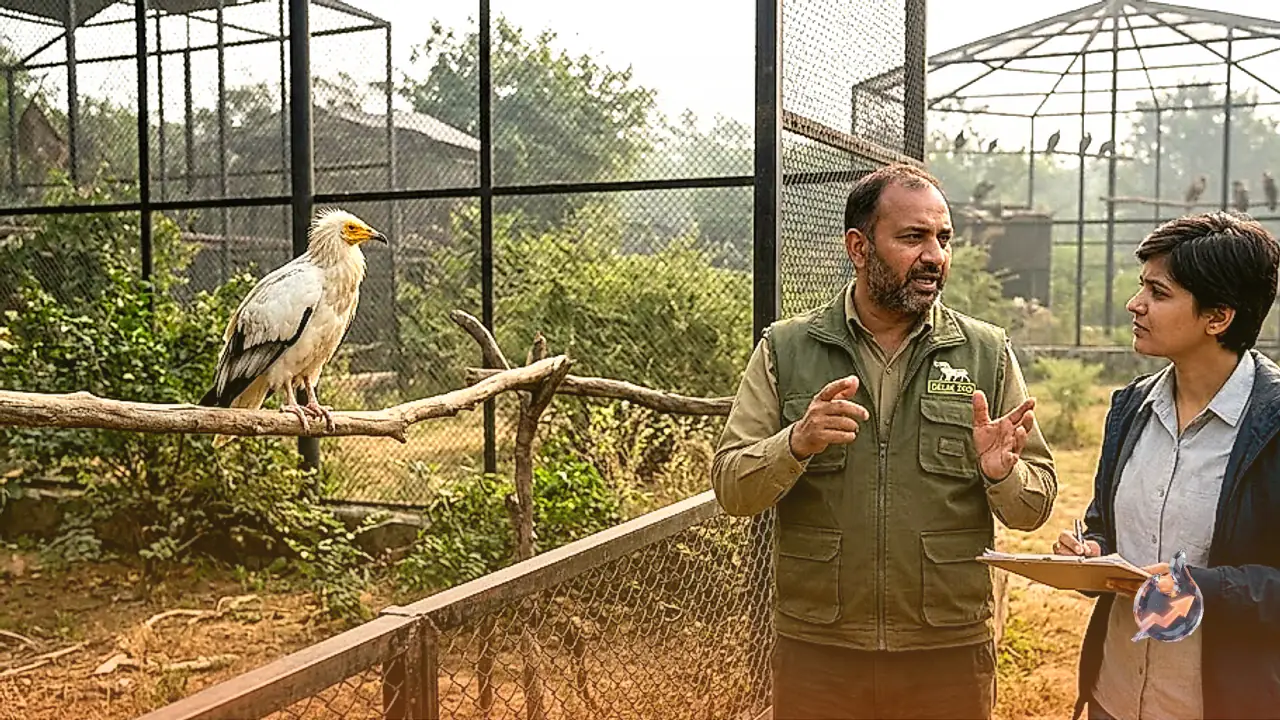

The National Zoological Park in the capital is preparing to bring companionship back into the life of a rare Egyptian vulture named Jatayu, who has been living in isolation for over two decades. Delhi Zoo authorities have officially launched an effort to find a suitable female mate for the bird, ending more than 20 years of solitary existence. To achieve this, zoo officials are actively reaching out to zoological parks in other states to locate a compatible partner for the long-time avian resident.
Rescued During Migration Decades Ago
Jatayu's journey to the Delhi Zoo is a remarkable story of wildlife rescue. More than 20 years ago, the bird arrived in the Delhi region during its seasonal migration route. After encountering distress in the wild, wildlife rescue teams stepped in to save the bird, eventually bringing him to the National Zoological Park for care and shelter. At that time, authorities did not anticipate that the visiting migratory bird would end up spending over two decades as a permanent inhabitant of the facility.
During his early years at the zoo, Jatayu shared his enclosure with a few other vultures. However, over time, those companion birds succumbed to old age and related health complications. As the other vultures passed away one by one, Jatayu was left completely alone in the enclosure, spending several consecutive years without any avian company.
Consultations with Other Zoos and Pinjore Centre
The quest to find a mate for Jatayu has now picked up momentum across state boundaries. According to senior zoo officials, discussions are currently underway with authorities at two different state zoos. Since negotiations remain in their initial stages, officials have withheld the names of the specific facilities involved in the talks.
Simultaneously, Delhi Zoo administrators are focusing their attention on the specialized vulture conservation and breeding facilities located in Pinjore, Haryana. A dedicated team of zoo officials is scheduled to visit the Pinjore facility on September 6. During this official visit, the team will inspect the ongoing vulture conservation and captive breeding programs to evaluate the possibility of securing a suitable female Egyptian vulture for Jatayu.
Monogamous Nature and Shared Nesting Duties
Ornithologists and zoo administrators emphasize that finding a mate is critical for the natural well-being of Egyptian vultures. In the wild, birds of this species typically form long-term monogamous pair bonds, remaining with a single partner throughout their lives. They reach sexual maturity and begin breeding at four to five years of age.
Egyptian vultures are also known for their highly collaborative parenting habits. Both the male and female birds take equal turns in incubating eggs and sharing the responsibilities of feeding, protecting, and rearing their chicks until they fledge. Extended solitary living deprives the bird of these fundamental natural behaviors, making the search for a partner a priority for zoo caretakers.
Solitary Animals Across 16 Species in Delhi Zoo
Jatayu is not the only animal facing loneliness at the National Zoological Park. Zoo records indicate that approximately 16 different species currently lack compatible opposite-sex partners within the sanctuary. In these cases, animals are either living as single individuals or kept alongside partners of the same gender.
For instance, two male ostriches at the zoo have been living without a female companion for several years. Similarly, a nine-year-old female rhea has spent a considerable period without a mate. Zoo authorities are also actively seeking partners for several other species, including the Indian Grey Hornbill, Grey Langur, Small Indian Civet, and Black Swan.