



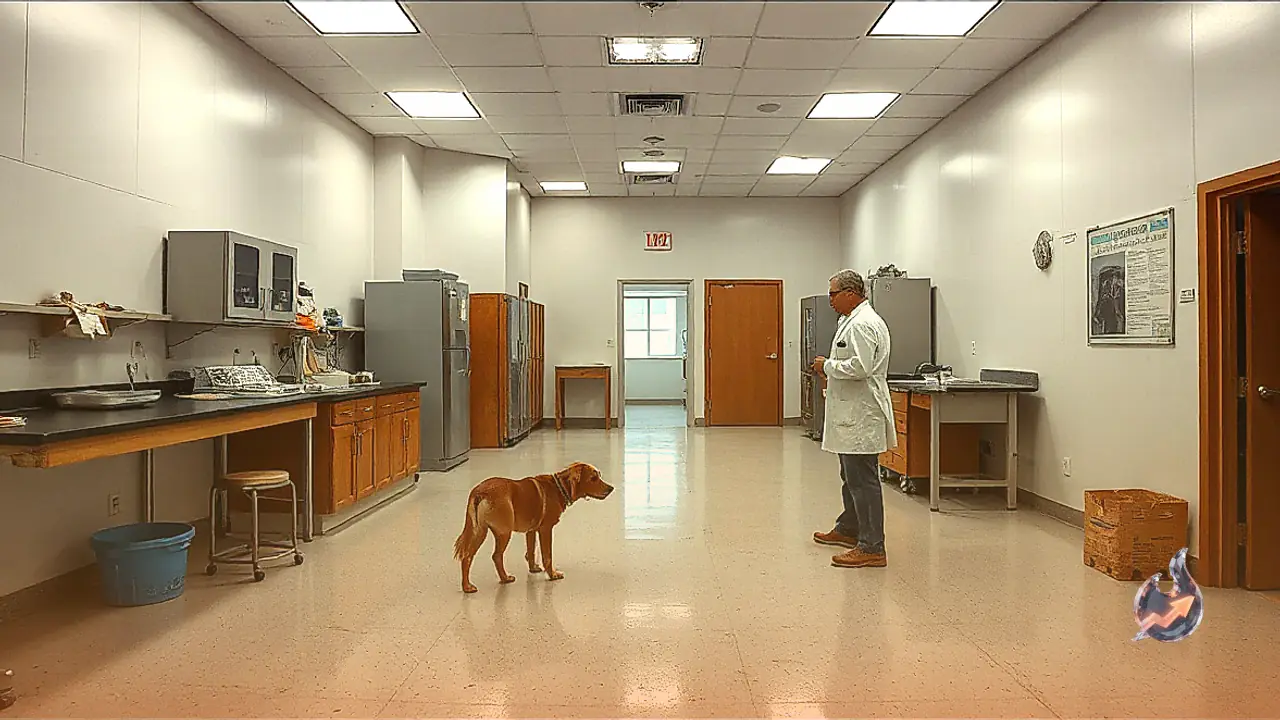




















A sharp nationwide debate has erupted across the scientific and animal protection communities over the central government's proposed regulatory framework for using animals in laboratory research. The draft notification, unveiled on October 6, introduces significant modifications that authorities describe as necessary reforms to accelerate biomedical research and drug discovery. However, animal protection advocates argue that the proposed rules severely dismantle independent oversight and strip captive creatures of vital protections. Anjana Agarwal, scientist and research policy adviser at PETA, has raised critical objections to the draft, urging policymakers to withhold approval and pointing out that roughly 95 percent of animal studies collapse entirely when transitioning to human clinical trial stages.
Concerns Over Diluted Scrutiny and Self-Policing
The central contention within the proposed draft centers on the fundamental shift in supervisory authority. Under the existing framework, the Committee for the Purpose of Control and Supervision of Experiments on Animals (CCSEA) exercises centralized oversight over experimental proposals. In contrast, the new proposal transfers core evaluation and monitoring powers directly to institutional animal ethics committees. Anjana Agarwal warned that this decentralization effectively establishes a regime of self-approval and self-policing, completely devoid of objective external scrutiny. Without independent audits, ethical compliance risks deteriorating into a rubber-stamping formality, leaving laboratory practices largely unchecked.
Threat to Protected Wildlife Species
Another deeply concerning provision highlighted by welfare experts is the potential exposure of everyday protected wildlife species to laboratory procurement. If the draft is formally notified, protected wild animals encountered in daily environments could be captured for scientific experimentation. Agarwal stressed that wild populations lack documented medical histories, past health records, or baseline physiological data. Scientists testing compounds on captured wildlife would have no awareness of pre-existing infections, underlying ailments, or genetic anomalies. Consequently, the data collected from such haphazard trials suffers from compromised reliability, undermining the scientific value of the work itself.
Psychological and Physical Toll on Caged Animals
The artificial confines of research laboratories inflict profound physical and mental damage on living subjects. Housed in cramped, sterile cages, animals are stripped of the environmental enrichment, natural habitats, and social bonds essential to their well-being. Capturing wild creatures and thrusting them into these barren spaces induces severe anxiety, panic, and persistent depression. Caged subjects routinely exhibit pathological behaviors, pacing repetitively, biting themselves, and attempting desperate escapes.
Furthermore, artificial lighting routines disrupt natural day-and-night cycles, wreaking havoc on internal circadian rhythms. The complete absence of normal social interactions with conspecifics compounds this distress. The chronic physiological and hormonal stress caused by confinement alters baseline biological metrics, introducing volatile distortions into the experimental data that scientists seek to measure.
The Bleak Reality After Experiments End
The fate of animals used in laboratory testing remains grim throughout the process. Anjana Agarwal pointed out that many subjects perish during rigorous experimental protocols, while those surviving the ordeal are frequently subjected to euthanasia. Although Indian regulatory guidelines stipulate mandatory post-experimental care, rehabilitation, and adoption wherever feasible, compliance remains obscure.
Publicly verifiable information regarding real-world rehabilitation outcomes is practically nonexistent. While the responsibility to maintain and publish comprehensive records rests with the CCSEA, no transparent public database exists to track how many animals are procured, how many survive, and how many are successfully rehabilitated into suitable care environments.
Why 95 Percent of Animal Studies Fail Human Trials
Agarwal challenged the fundamental premise that animal experimentation guarantees breakthroughs for human medicine, pointing to extensive peer-reviewed literature. A landmark study published in the British Medical Journal back in 2004 questioned the tangible evidence supporting the presumption that animal experiments directly benefit human healthcare. Building on those findings, a comprehensive meta-analysis published in 2024 evaluated more than 100 separate studies and concluded that approximately 95 percent of animal research programs fail during human clinical trials.
A mere 5 percent successfully navigate the rigorous pipeline to achieve final regulatory clearance. The underlying biological divide between species explains this massive failure rate. Fundamental differences in metabolic pathways, organ physiology, and genetic expression mean that drug reactions observed in rodents or other animals rarely translate faithfully to humans. When compound failure rates remain near 95 percent, continued dependence on archaic animal models poses an inefficient bottleneck to real medical breakthroughs.
Viable Non-Animal Technologies: Chips, Organoids, and AI
Modern biomedical technology now provides robust alternatives capable of replacing live animal testing while offering superior translational relevance. Researchers can increasingly deploy organ-on-a-chip platforms, miniaturized human organoids grown from patient cells, computational modeling tools, software simulations, and advanced artificial intelligence algorithms. These tools examine cellular and systemic drug behaviors directly within human-relevant biology.
Institutions within India have already initiated projects utilizing non-animal methods, while medical schools and training facilities progressively adopt high-fidelity simulation models instead of live tissue drills. By channeling investment and institutional backing into these modern modalities, the scientific establishment can ensure sustained research advancements while ending animal exploitation.
Global Trajectories Toward Phasing Out Animal Testing
International regulatory authorities are progressively moving away from reliance on animal models. India established an admirable benchmark in 2014 by enacting a nationwide ban on animal testing for cosmetics, yet corresponding momentum across broader pharmaceutical and chemical sectors has remained sluggish. Leading economies like the European Union and the United States are actively formalizing reduction pathways.
In the United States, the Environmental Protection Agency (EPA) has adopted a binding policy framework aiming to completely phase out the use of mammals in chemical toxicity testing by 2035. Rather than adopting relaxed oversight, animal welfare scientists advocate that India should reject the current draft and construct a progressive framework that strengthens independent protections while accelerating the transition to cutting-edge non-animal scientific methodologies.