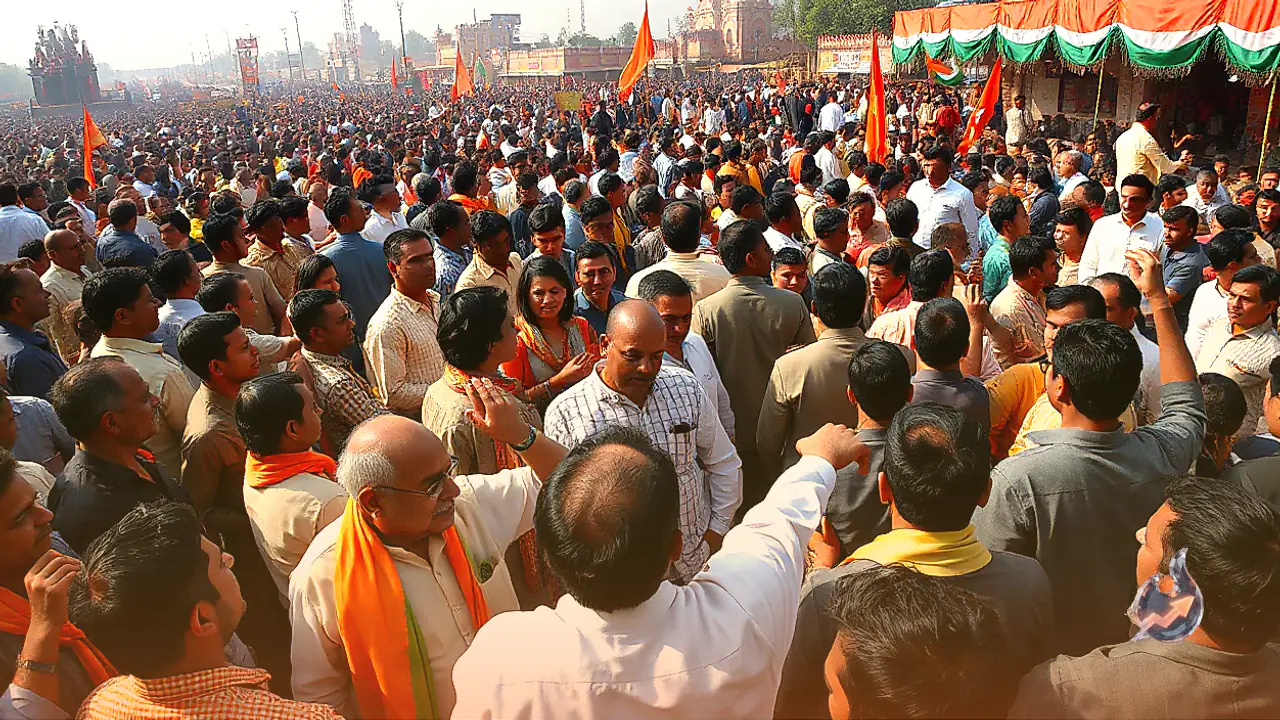





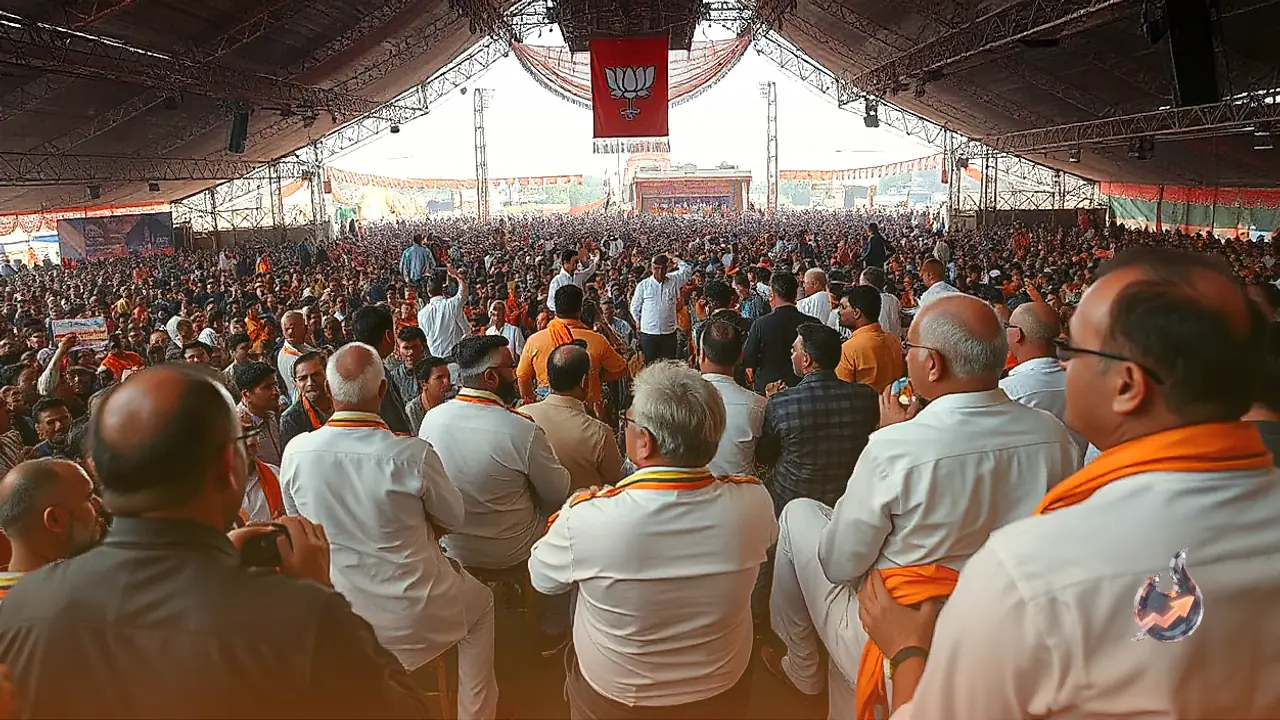















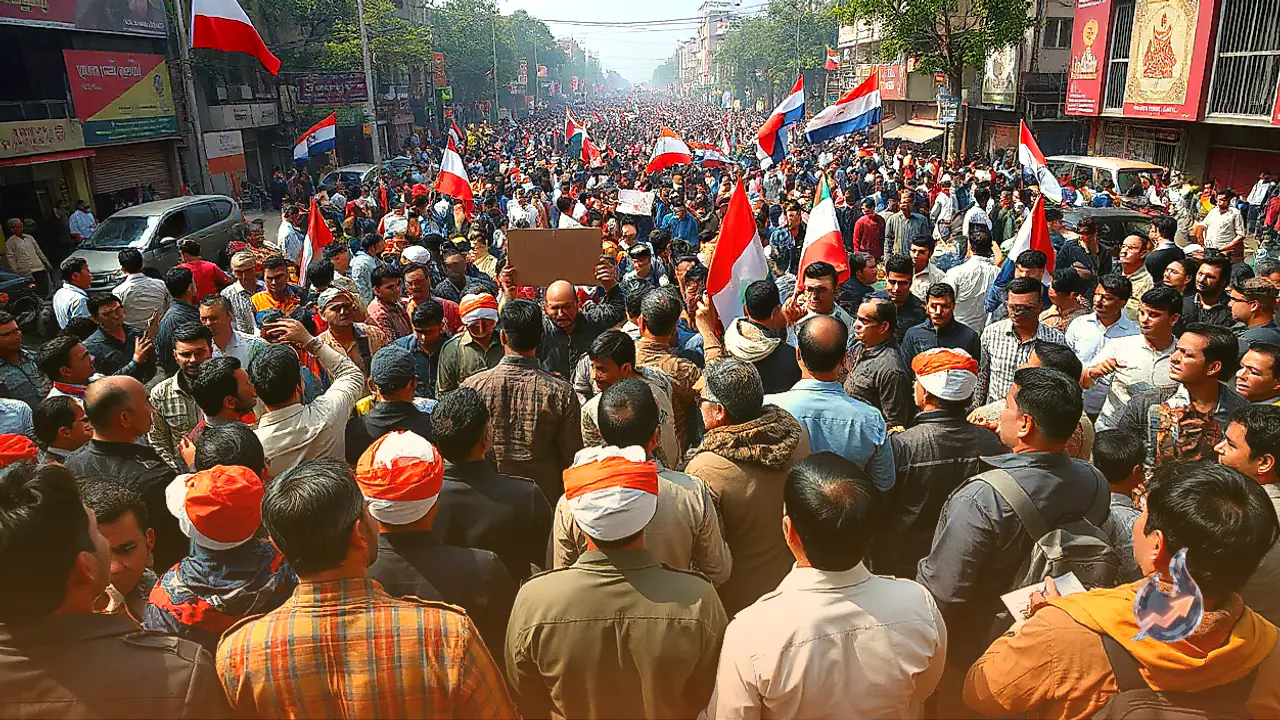

A massive opposition rally organized at the historic Ramlila Maidan in New Delhi recently brought electoral integrity back to the center of the national political discourse. Addressing the large gathering, leaders of the opposition coalition demanded the immediate resignation of Chief Election Commissioner Gyanesh Kumar while raising sharp objections over matters concerning voter rolls, SIR, and the credibility of Electronic Voting Machines, commonly known as EVMs. Speaking from the platform, Congress leader and Leader of the Opposition in the Lok Sabha, Rahul Gandhi, openly termed the 2024 Lok Sabha general elections fraudulent. He further alleged that serious irregularities and manipulation occurred in numerous state assembly elections conducted over the past two years following the 2024 national polls. On the back of these sweeping claims, Rahul Gandhi pushed for the complete cancellation of assembly elections in several states and demanded fresh polls.
This is not the first instance where the opposition has expressed deep reservations about the electoral framework. Congress leaders on multiple prior occasions had already questioned the conduct of the 2024 general election as well as state assembly polls concluded during the preceding two-year span. Escalating their campaign, a delegation of opposition leaders recently submitted a formal memorandum to President Droupadi Murmu, officially requesting that state assembly elections held across the country in the last two years be annulled. The specific regions where the opposition is pressing for fresh polls notably include the assembly elections of West Bengal, Bihar, Delhi, Madhya Pradesh, Haryana, Chhattisgarh, and Maharashtra. Alongside the demand to cancel these elections, the opposition has reiterated its call for the removal of the Chief Election Commissioner and an immediate return to traditional paper ballots.
Can Elections Be Overturned Based on Political Demands Alone?
With opposition parties mounting a sustained push to scrap past election outcomes and hold fresh polls, a fundamental constitutional question has surfaced across the nation: is such a wholesale annulment legally feasible? Given that voters in numerous Indian states exercised their franchise over the last two years, it becomes essential to examine the statutory landscape governing the cancellation of state legislative elections. India functions under a deeply entrenched democratic system that places immense emphasis on free, fair, and transparent balloting. Whenever serious allegations arise regarding electoral fraud, corrupt practices, bogus voting, booth capturing, or grave counting discrepancies, both the Constitution of India and the Representation of the People Act, 1951 provide clear, institutional mechanisms to challenge election results.
However, cancelling a democratic election in India is deliberately designed not to be a casual or arbitrary affair. Legal statutes ensure that no election process can be summarily halted or fresh polls arbitrarily ordered merely because a political party, a candidate, or a voter registers a complaint. Any attempt to set aside an election demands strict adherence to prescribed statutory procedures and requires presenting incontrovertible judicial evidence substantiating the alleged malpractice. Without concrete proof vetted through established legal channels, general political grievances cannot alter electoral outcomes.
Article 329(B) and the Strict Boundary on Court Intervention
Article 329(B) of the Constitution of India establishes the definitive constitutional mechanism for challenging an election. Under this provision, no election to either House of Parliament or to the legislature of a state can be called into question before any court except through an election petition presented in the exact manner prescribed by statutory law. This clause was explicitly designed to safeguard the electoral timeline, ensuring that ongoing polling and counting operations cannot be indefinitely held hostage by a flurry of premature legal challenges. By directing all grievances into the post-election petition route, the Constitution guarantees that election disputes are adjudicated solely after the declaration of results and through a designated judicial forum.
Section 80 and Section 81 of the Representation of the People Act, 1951
The substantive statutory foundation for challenging election results is codified under Section 80 of the Representation of the People Act, 1951. The section categorically states that an election can be disputed exclusively through an election petition. In practical terms, this means that if an individual candidate feels that polling in their specific assembly or parliamentary constituency was compromised by illegality or that the final result suffered from grave statutory non-compliance, filing an election petition remains the only permissible path. Simply voicing grievances or leveling unverified accusations carries no legal weight under Section 80; the petitioner carries the evidentiary burden of proving precisely which legal requirement was breached and explaining the exact legal grounds warranting the nullification of the result.
Complementing this requirement, Section 81 of the Representation of the People Act, 1951 defines who is legally empowered to lodge such an election petition, as well as the applicable limitation period. According to Section 81, standing to challenge an election is tightly restricted to two specific classes of individuals: a contesting candidate who participated in that specific race, or an elector, meaning a registered voter enrolled in that particular constituency. Consequently, third parties, external organizations, or political parties operating at a collective institutional level lack statutory standing to file blanket petitions challenging multiple constituencies simultaneously.
Section 100 and the High Court Authority to Nullify Elections
Section 100 of the Representation of the People Act, 1951 details the substantive criteria and exact circumstances under which an election outcome may be declared void. Under this section, the High Court of the respective state holds statutory jurisdiction to review the petition. Should the court find, upon examining the evidence, that severe statutory non-compliance, corrupt practices, improper acceptance or rejection of nominations, or other defined legal violations occurred to materially affect the outcome, it possesses the legal authority to declare the election of the returned candidate null and void. This power, however, is applied strictly on an individual seat-by-seat basis after full judicial trial.
Article 324 and Provisions Governing Repolling
When evaluating the opposition's broader call for re-elections across entire states, legal provisions clearly separate executive administrative remedies from post-result judicial challenges. Under Article 324 of the Constitution, the Election Commission of India exercises plenary powers of superintendence, direction, and control over elections. Should extreme disruptions, large-scale violence, technical failures of voting machines, or booth capturing occur on polling day itself, the Commission is empowered to countermand polling at specific affected booths or regions and order a repoll. Once the results have been formally certified and declared, however, Article 324 cannot be invoked to arbitrarily scrap certified outcomes. The jurisdiction shifts entirely to the High Court via an election petition. As a result, overturning election results across a whole state or multiple states demands an explicit, binding verdict delivered by a competent judicial authority rather than an administrative decree.
Supreme Court Precedents on Collective Assembly Poll Challenges
The Supreme Court of India has established firm and consistent jurisprudence regarding attempts to invalidate legislative assembly elections en masse. According to the apex court, a general assembly election cannot be treated as a single, indivisible composite unit for the purpose of a legal challenge. In India's single-member constituency system, each assembly seat constitutes an independent, distinct electoral contest with its own returning officer, voter list, and set of contestants. Consequently, to overturn an election, irregularities must be proven separately and specifically for each individual constituency. The Supreme Court has repeatedly affirmed that sweeping political allegations, collective memorandums, or generalized public dissatisfaction cannot serve as lawful grounds to annul the results of an entire state, let alone multiple states simultaneously.