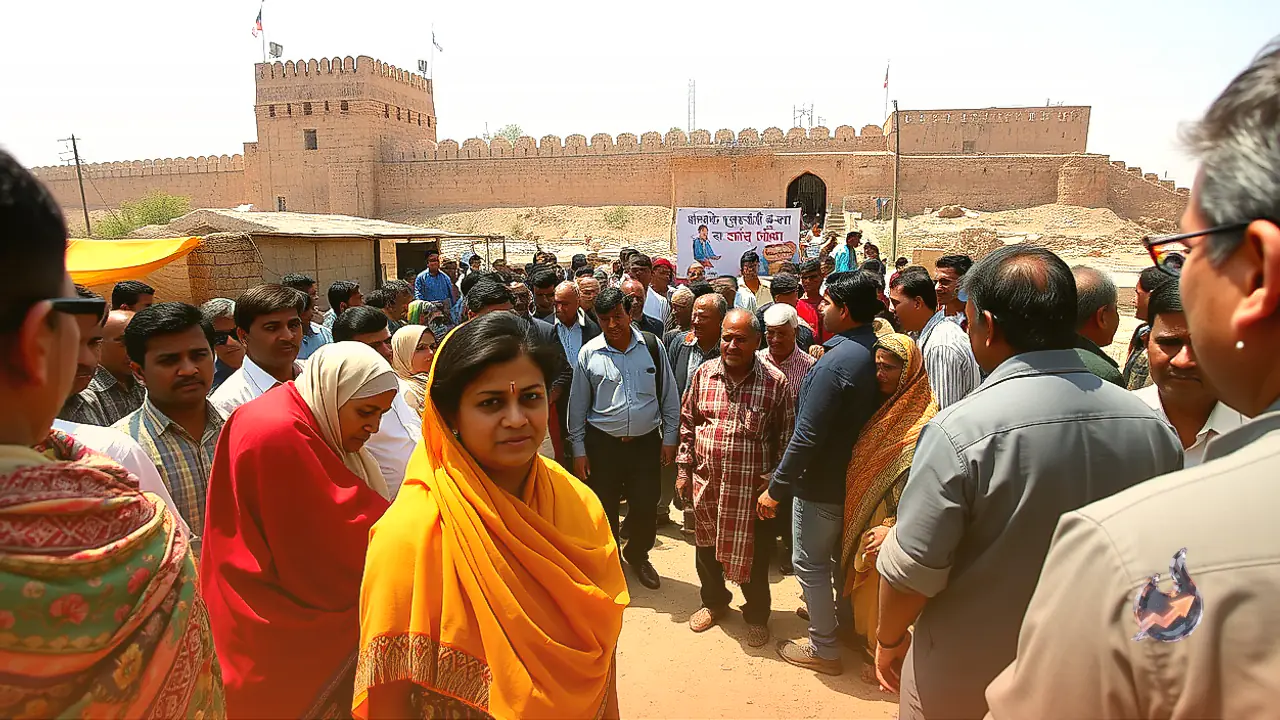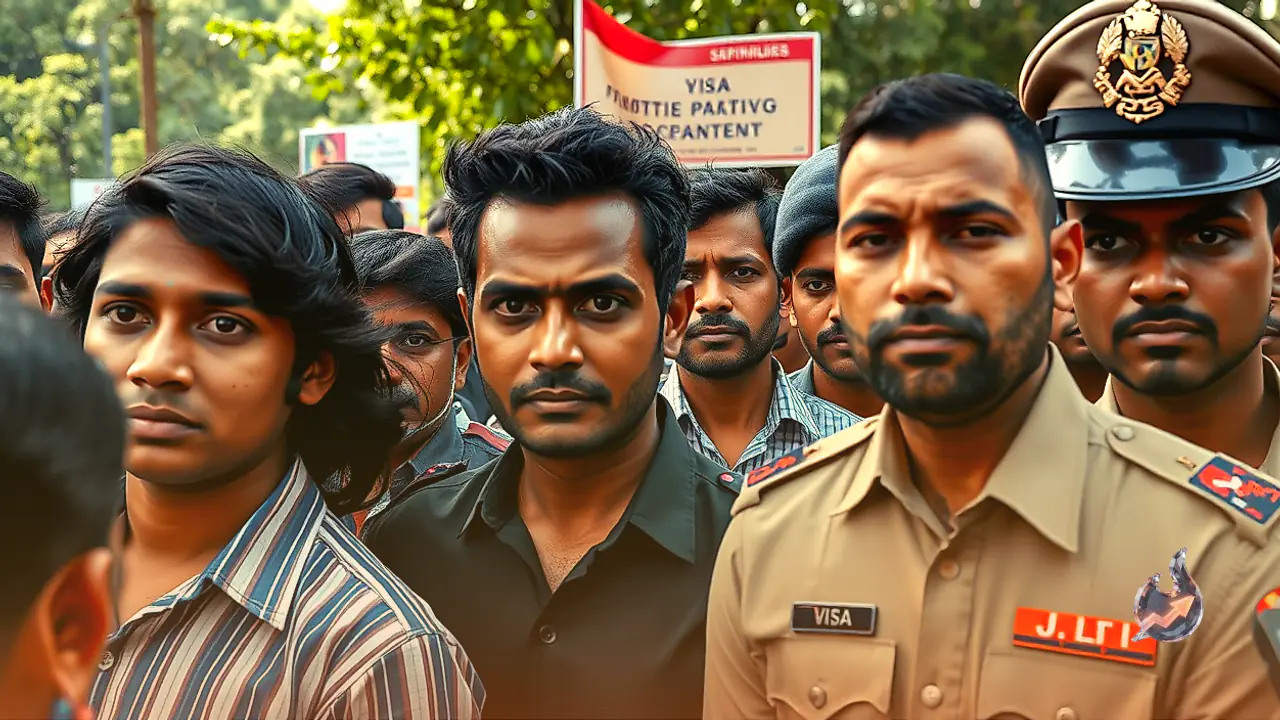



















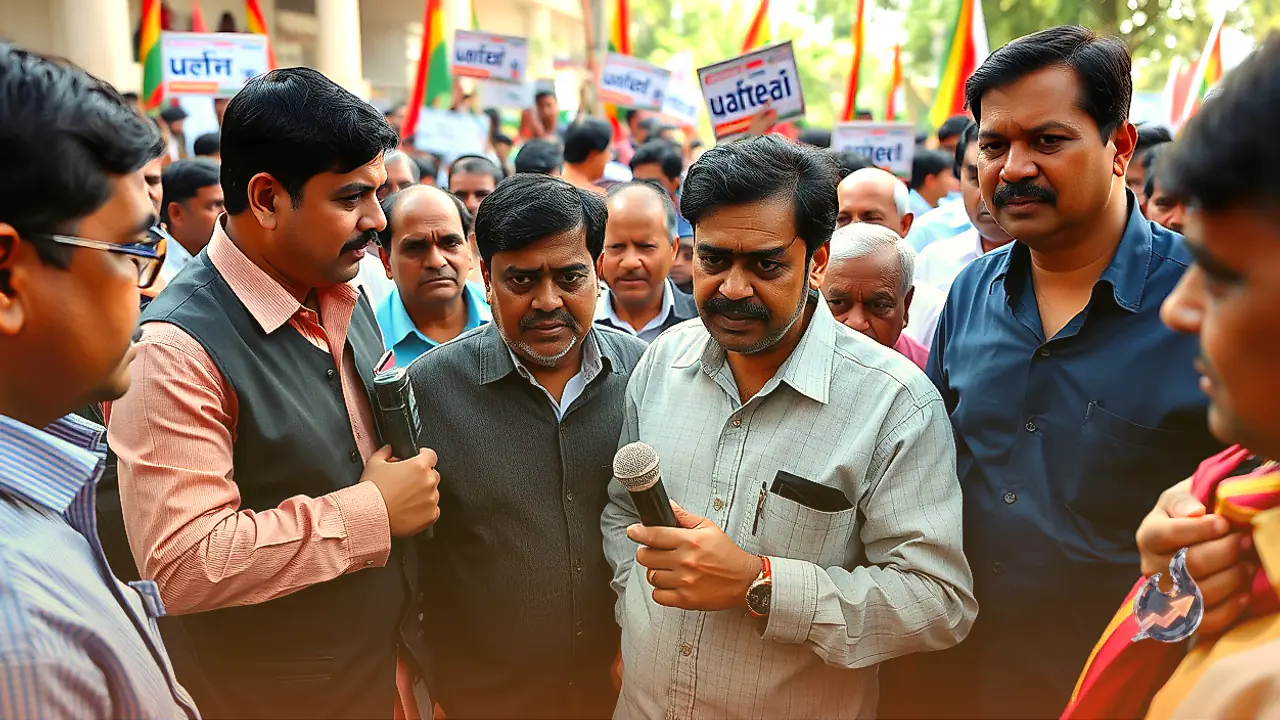

Protests by the opposition INDIA bloc against the Election Commission and Chief Election Commissioner Gyanesh Kumar entered their third consecutive day, reflecting intensifying political friction over institutional credibility. Rahul Gandhi, Leader of the Opposition in the Lok Sabha, has spent months levelling grave accusations of voter fraud against the poll panel and its chief. His primary target has been the Special Intensive Revision, known as SIR, of the electoral rolls, which he claims has been manipulated to benefit the Bharatiya Janata Party. Labelled in harsh terms by the opposition leader alongside demands for his immediate resignation, the Chief Election Commissioner finds himself at the centre of a concerted campaign backed by several opposition parties. However, a close examination of administrative rules, election data, and factual timelines reveals a very different reality behind these claims.
Electoral Math and Shifting Seat Shares
The core allegation advanced by Rahul Gandhi asserts that decisions taken during the SIR process and rulings by the commission directly tilt the electoral scales in favour of the BJP, causing systemic disadvantage to opposition parties through alleged collusion. Yet, the foundational facts of the 2024 Lok Sabha elections fundamentally contradict this narrative. Gyanesh Kumar was not the Chief Election Commissioner during the 2024 national polls. He was inducted as an Election Commissioner in March 2024 and took over as CEC only in February 2025. In that very 2024 general election, the BJP saw its tally fall from 303 seats won in 2019 down to 240 seats. The ruling party's electoral momentum dates back to 2014, when it secured 282 seats on its own, followed by 303 in 2019, long before Gyanesh Kumar held the top post.
Had the commission been systematically operating to orchestrate outcomes for the ruling party, the BJP would not have fallen short of an outright parliamentary majority in 2024, absorbing a significant drop of 63 seats. Assembly elections across various states during this period have similarly yielded mixed outcomes rather than a one-sided pattern, with the BJP facing defeat or reduced margins in several contests. Administrative additions and deletions during the revision process occurred uniformly across constituencies held by diverse political outfits. The commission has reiterated that weeding out duplicate entries, deceased individuals, and migrated voters is a routine administrative necessity rather than partisan favouritism. Without verifiable documentary evidence, attributing these shifts to systemic bias remains unsubstantiated.
The Mechanics of Special Intensive Revision
Opposition leaders have characterised the deletion of crores of names from the draft electoral roll under the SIR exercise as a deliberate plot to disenfranchise citizens. The Election Commission, however, has maintained that the sole objective of the intensive revision is to sanitize outdated registries and eliminate erroneous data. Names removed from the draft rosters primarily pertained to deceased citizens, those who had permanently relocated, or duplicate registrations appearing in multiple locations. Statutory procedures provide an explicit mechanism for claims and objections, enabling any affected voter to challenge an erroneous exclusion. Across several states, significant numbers of deleted names were reinstated following verification through these prescribed channels.
The regulatory authority has repeatedly emphasized that under established statutory guidelines, no voter's name can be struck off without due process and a formal hearing. Where localized discrepancies or procedural oversights were detected, specific administrative directives were issued to rectify them immediately. While reports of internal administrative deliberations surfaced, the official stance of the poll body remains that all policy decisions are taken collectively. Consequently, the sheer volume of deletions cannot be classified as electoral theft without establishing that voters supporting a specific political party were deliberately and selectively excised.
Timeline of Appointment Under the 2023 Law
Questions have also been raised regarding the selection and appointment of Gyanesh Kumar, who is the first CEC appointed under the Chief Election Commissioner and other Election Commissioners Act, 2023. Under this statutory framework, the selection committee comprises the Prime Minister, a Union Cabinet Minister, and the Leader of the Opposition. However, the chronology of major elections undermines the argument linking his elevation to past electoral victories. The three major general elections of 2014, 2019, and 2024 took place prior to his appointment as CEC, with the 2024 polls conducted under the tenure of Rajiv Kumar.
While Gyanesh Kumar was part of the three-member commission during the 2024 polls as an Election Commissioner, the primary executive mantle of the institution came to him only upon assuming the post of CEC in February 2025. Although legal challenges regarding the constitutionality of the appointment procedure remain pending before the Supreme Court, attributing prior national election verdicts to his leadership as CEC does not align with recorded dates.
EVM Scrutiny and Assembly Election Outcomes
Rahul Gandhi also alleged that the 2024 general election and subsequent state assembly elections were secured through electoral misconduct. The Election Commission has categorically rejected these assertions as groundless and false. Under current safeguards, no citizen can have another voter removed through an arbitrary online submission, as every deletion requires mandatory verification and hearing. In rare instances where genuine irregularities were flagged, such as in Aland in Karnataka, the commission took proactive legal steps by lodging first information reports.
Furthermore, standard legal recourse for candidates alleging widespread malpractice requires filing formal election petitions before respective High Courts. Following the 2024 elections, very few such petitions were instituted across the country. Electronic Voting Machines have repeatedly faced scrutiny, yet judicial forums up to the apex court have found no proof of systematic tampering. Importantly, state-level democratic outcomes also challenge claims of institutional capture, as non-BJP administrations were successfully formed in states such as Kerala, Karnataka, Telangana, Himachal Pradesh, and Jharkhand where opposition parties secured clear mandates.
Grievance Redressal and Delegation Protocols
Another point of contention raised by the opposition is that the Election Commission ignores representations from non-ruling parties. On the opening day of the agitation, Rahul Gandhi complained that a delegation of Members of Parliament was denied an audience with the poll body. In response, the commission pointed out that it routinely logs, processes, and formally replies to memorandums from all registered political parties. Clarifying the incident through an official statement, the commission noted that it only learned of the MPs' desire to meet under the leadership of the Leader of the Opposition via the police, rather than through a formal request for an appointment submitted in advance according to established protocol.