























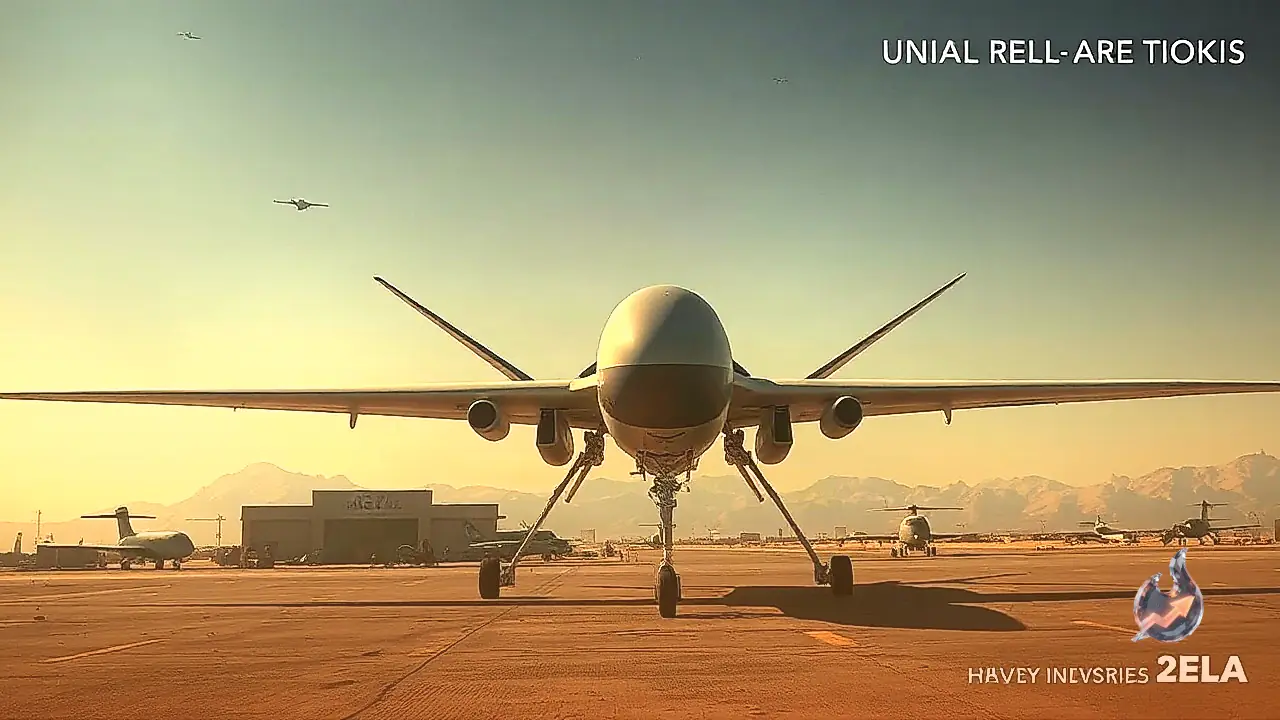

Pakistan's defense sector has publicly displayed a new long-range Unmanned Aerial System (UAS) named the Delta Wing Loitering (D-248), developed through Heavy Industries Taxila. Visually appearing as a near-identical twin to Iran's Shahed-136 loitering munition, this development signals Islamabad's push to enhance its long-range aerial strike capabilities amidst persistent domestic economic strains. However, the ambitious performance specifications highlighted during its unveiling have triggered widespread debate among international military analysts regarding the technical authenticity of the project.
High Range Claims and Technical Skepticism
Initial claims surrounding the D-248 project suggest an operational strike range spanning between 2,200 kilometers and 3,000 kilometers, coupled with a continuous flight endurance of 12 to 14 hours. If these performance figures prove accurate, the drone's reach would extend far beyond Pakistan's existing strategic arsenal, surpassing both the Babur cruise missile series and Shaheen ballistic missile variants. Such an operational reach would bring major urban centers across India, including the national capital Delhi, well within its targeted strike radius. Despite these bold projections, military experts remain cautious because Pakistan has not released official documentation or empirical verification regarding its propulsion setup, guidance electronics package, or current operational deployment status.
Design Similarities with Iranian and Chinese Hardware
Architecturally, the D-248 features a distinctive triangular delta wing configuration, a streamlined compact fuselage body, rear-mounted flight control surfaces, and a pusher-propeller engine layout. This structural footprint heavily mirrors the exterior design of Iran's Shahed-136 suicide drone series while also carrying design traits seen in Chinese autonomous aerial vehicles. Over the past two decades, Pakistan's defense industrial infrastructure has remained closely integrated with Chinese aerospace and missile technology protocols. Although direct physical evidence has not been made public, defense researchers suspect that key internal subsystems—including flight control computers, satellite navigation modules, composite material structures, and specialized propulsion systems—may rely on Chinese technology suppliers.
Combat Performance of the Shahed Drone Baseline
The Iranian Shahed-136, first introduced in 2021, gained global attention due to its extensive employment by Russian armed forces throughout the ongoing Russia-Ukraine conflict. Classified as a suicide or kamikaze drone, the aircraft carries an integrated explosive payload directly into designated coordinates upon impact. Operating within a tactical range of 1,000 kilometers to 2,500 kilometers, the primary strategic advantage of the Shahed lies in its remarkably low manufacturing cost combined with its capacity to overwhelm sophisticated air defense umbrellas. In Ukraine, large waves of these economical drones forced high-value surface-to-air defense systems, such as the US-supplied Patriot missile defense batteries and THAAD networks, to expend multi-million-dollar interceptors. Furthermore, during regional escalations in the Middle East, Shahed variants succeeded in bypassing Israel's Iron Dome multi-layered defense architecture, causing notable tactical disruption to regional air defense networks.
Strategic Implications for Regional Air Defense Security
The introduction of loitering munitions modeled after proven kamikaze drone platforms represents a significant shift in regional aerial threats. Unlike traditional ballistic or cruise missiles, long-range loitering drones fly at lower altitudes and speeds, making them difficult for conventional radar systems to detect and intercept efficiently. If Pakistan succeeds in mass-producing the D-248 with its advertised endurance and range, air defense planners across South Asia will need to re-evaluate their radar surveillance networks and anti-drone interceptor deployments to counter potential low-cost swarm attacks.